Tens of thousands rally in Prague against Babis plan to scrap public media fee
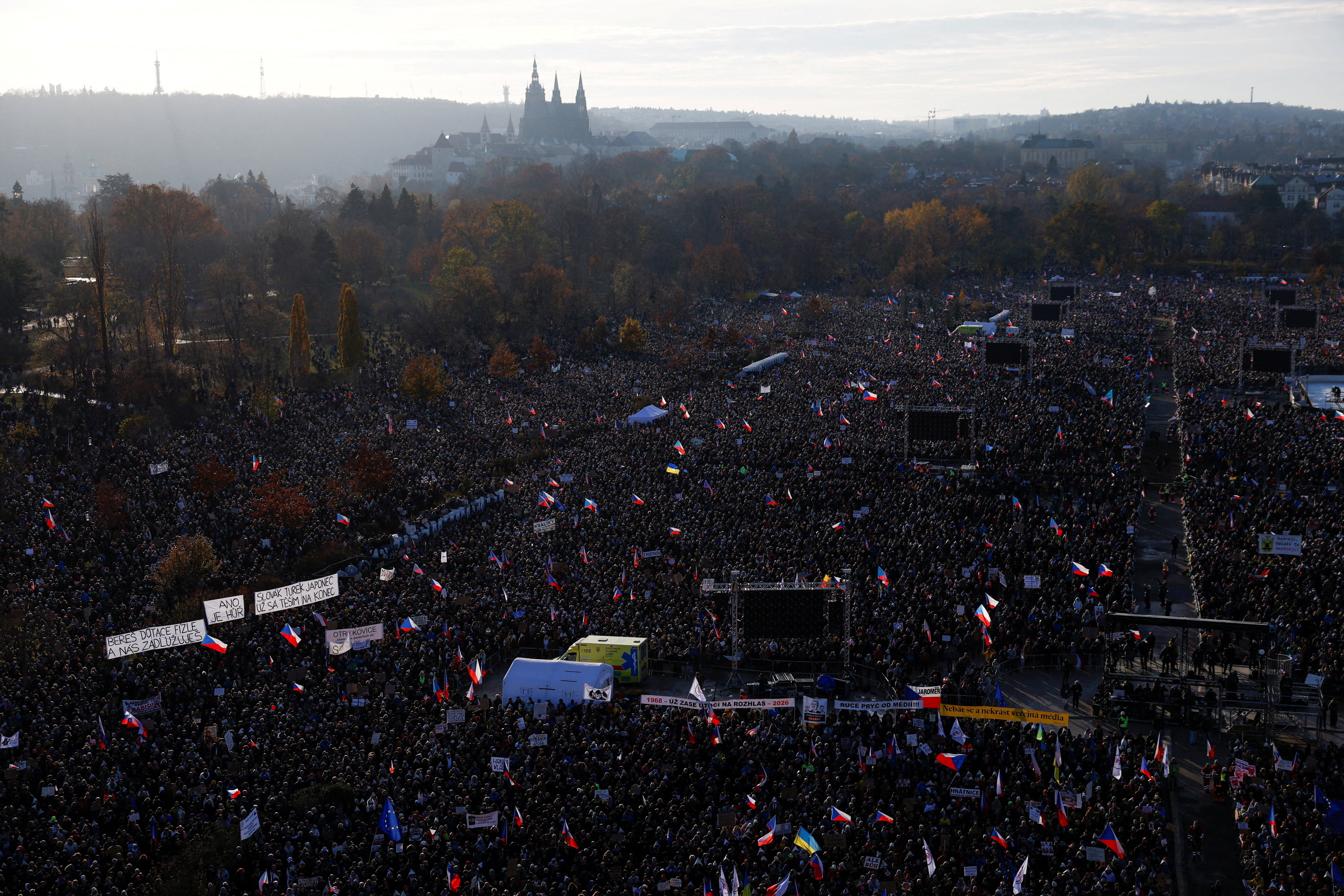
Organizers said the protest could be the largest since the 1989 Velvet Revolution, as critics compared the bill to Viktor Orban’s moves against Hungary’s media.
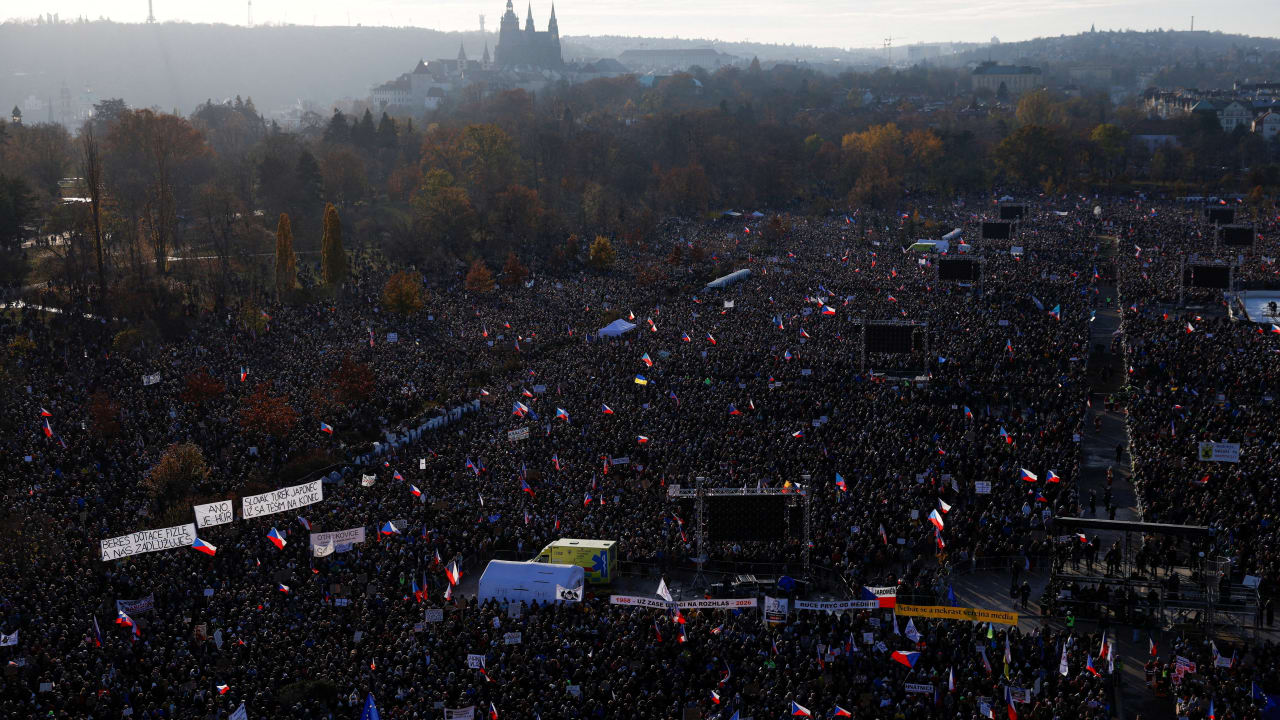
Tens of thousands of Czechs rallied in Prague on Sunday against a government plan to cut a public media fee and move funding to the state budget — a policy critics say would dent the broadcasters' independence and viability.
Organizers said Sunday's turnout already exceeded an anti-government protest of more than 200,000 people in March and predicted it could end up as the largest demonstration since the Velvet Revolution in 1989 that swept away Communist rule and propelled dissident playwright Václav Havel to power.
Critics have compared the government's media bill to changes in Hungary under former prime minister Viktor Orban, who built an array of pro-government media.
Opposition parties and civic groups also slammed the government for rushing through the initial bill in the middle of the night in October, calling for the ruling coalition to rescind the law.
"An elected government has the right to govern, but it does not have the right to do whatever it wants and to dismantle democratic institutions," said Mikulas Minar, chairman of the civic group Milion Chvilek (A Million Moments) that organized Sunday's protest.
"Show that your aim is not to take control of them and let experts propose genuine safeguards for their independence from political power."
The populist government of billionaire Prime Minister Andrej Babis, backed by the far-right SPD and the euroskeptic Motorists parties, accuses Czech private and public media of bias.
Its draft bill would cancel a 205-crown ($9.26) monthly household broadcasting fee currently used for funding. The bill has passed a preliminary vote and awaits further debate.
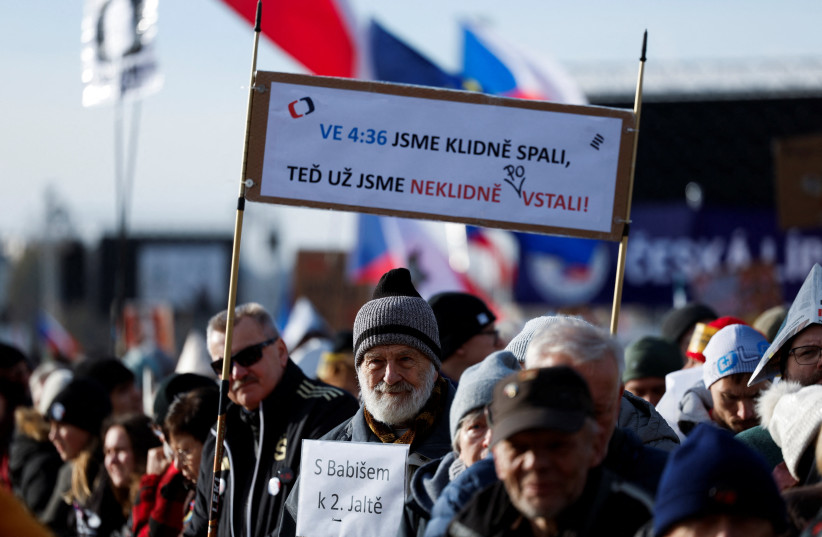
Protesters, carrying signs that read "Hands off the media" and "Let media deal with politicians," clogged nearby metro stations and filled Letna park overlooking the Czech capital. Speakers included students, soldiers and former dissidents who signed the Charter 77 initiative.
Many at the protest, staged days before a public holiday on November 17 that commemorates the start of the Velvet Revolution, wore pointed hats folded out of newspapers as a tribute to an animated character who has introduced Czech Television's nightly children's bedtime stories for decades.
"I know that our entire Czech Television is a guarantee of truth and objectivity," pensioner Milana Rudolfova, 72, told Reuters. "If we do not have public television and radio, then unfortunately we will not be able to believe anything anymore."
Earlier this month, Czech public television and radio workers escalated the fight with a one-day strike that led to broadcast curbs and protests backed by artists and students.
Critics say shifting funding to the state budget would undercut the media's relationship with paying viewers and make the sector susceptible to political pressure.
A 15% financing cut proposed as part of the change would reduce television's nominal budget to the level of 2008 and that of radio to 2005. Media say that is unworkable.
Babis says the government is merely meeting a promise to lighten the financial burden on people.
KioskNews shows a cleaned-up reading view extracted from the publisher’s page — the original always lives on their site, not ours.