Why Mumbai’s elite gymkhanas may soon pay market rent, open doors to non-members
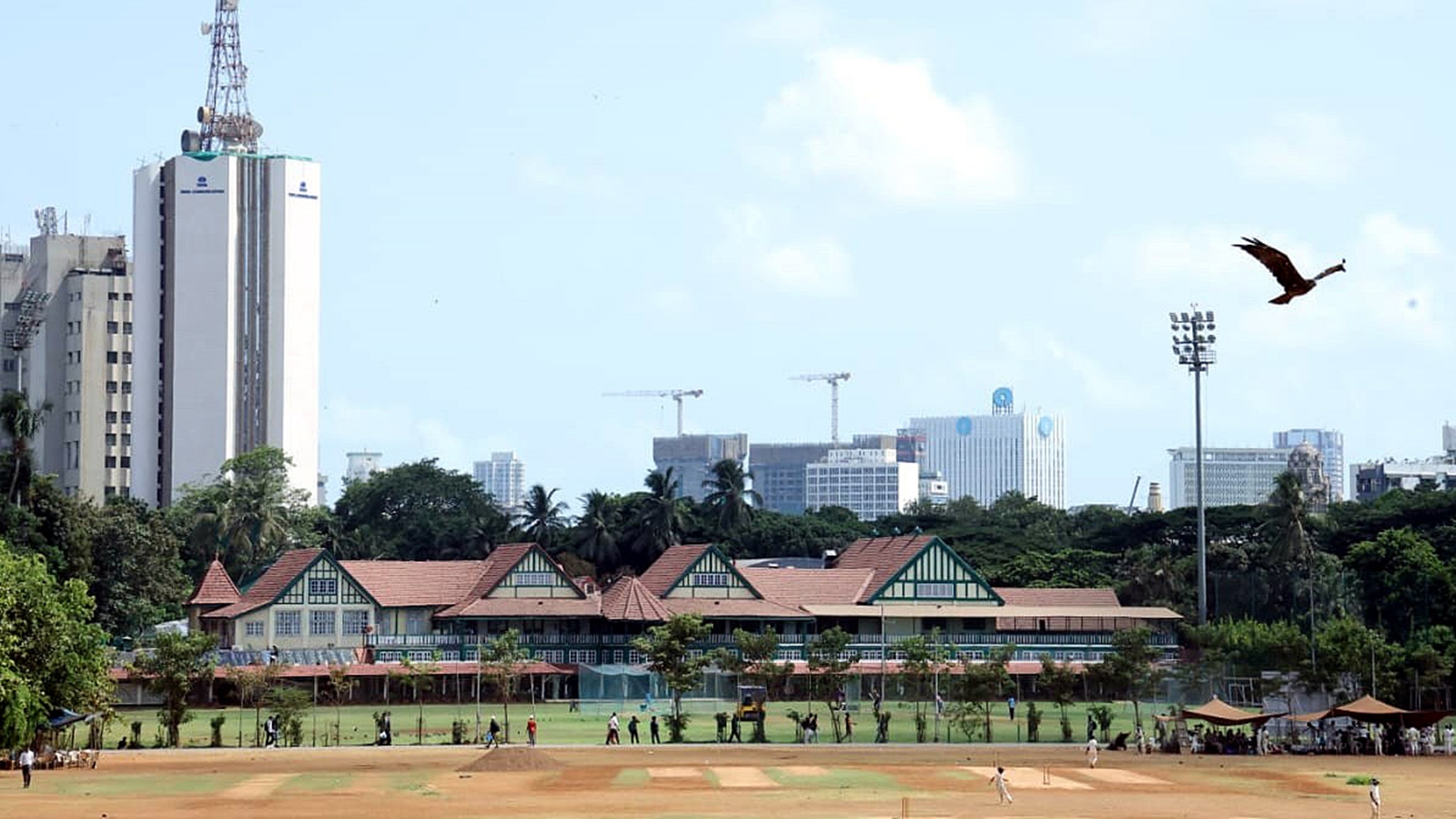
The committee submitted its fact-finding report to the state revenue department last month. (Express Photo by Ganesh Shirshekar)
Mumbai’s gymkhanas on government land may soon have to pay market-rate rent, revised every five years, and a minimum licence fee of Rs 1.5 lakh for every event they host, a state committee has recommended. The panel also wants the government to be able to hold its own programmes on the premises, use the grounds during disasters or elections, and open the clubs to people who aren’t members.
The recommendations follow six months of inspections that, sources said, found illegal construction at several clubs, including an extension that blocked a building’s emergency exit, and banquets, concerts and conferences held without the district collector’s knowledge. The committee submitted its fact-finding report to the state revenue department last month.
What the panel found
Nine teams of government officials visited each of the gymkhanas several times over the past six months, multiple sources told The Indian Express. Many clubs, they said, had altered their premises without approval, in violation of their lease and licence agreements.
In one gymkhana, inspectors found that an additional swimming pool and restaurant area had been built. In another, part of the premises had been extended in a way that blocked the building’s emergency exit, the sources said.
Officials also said many clubs regularly rent out their premises for wedding banquets, concerts and private conferences. Sources alleged that much of this income is kept off the books so that more of the revenue stays with club members.
“The larger objective behind setting up the Gymkhanas was to promote a culture of sports. However, it has been observed that these Gymkhanas have become largely a recreational hub. Sporting events have not been held in many of these Gymkhanas for a very long time and due to the arbitrary membership conditions, these events are not inclusive,” an official said on condition of anonymity.
After the inspections, office bearers of several gymkhanas were called for hearings at the collector’s office. Many gave written undertakings to pull down some of the unauthorised structures, sources said, and some said their accounts would be reviewed and submitted.
What the panel wants
Story continues below this ad
At present, the gymkhanas pay only a nominal rent for the land and no licence fee for events. The committee has recommended that rent be fixed at current market rates and revised every five years, and that clubs pay a minimum of Rs 1.5 lakh per event, officials said.
The government would also get the right to hold its own programmes and public events at the gymkhanas, and to use the land during natural disasters or elections.
The panel has also recommended that the premises no longer be reserved for members alone, and that the policy be changed to give ordinary citizens better access. Membership at some clubs costs up to Rs 1 crore, and applicants at many wait more than two decades for a membership window to open.
That access matters in a city short of open space. According to a report by the Observer Research Foundation (ORF), gymkhanas and VIP clubs occupy 664 acres, nearly a fifth of Mumbai’s 3,780 acres of open space. Mumbaikars get an average of just 1.28 square metres of open space each, the report says.
Why now
Story continues below this ad
Sixteen gymkhanas stand on collector’s land in Mumbai, leased out by the colonial government in the 19th and 20th centuries for setting up the clubs. The leases of the Bombay, Parsee and Hindu Gymkhanas have already run out and are up for renewal, and others expire in the next few years. The state has proposed a set of conditions the clubs must meet for their leases to be renewed.
In February, the government set up the committee to review how the gymkhanas use the land leased to them. Its report will form the basis of a new gymkhana policy, which is expected to give the state more control over the land and propose a fair-use framework.
The report also comes months after the Union Ministry of Housing and Urban Affairs’ Land and Development Office asked the century-old Delhi Gymkhana Club, in May, to vacate its leased premises on Safdarjung Road. State officials said the two developments are unrelated, pointing out that Maharashtra issued its first notification on gymkhana lease conditions in July 2025.

Pratip Acharya is a seasoned journalist based in Mumbai reporting for The Indian Express. With a career spanning over a decade, his work demonstrates strong Expertise and Authority in critical urban issues, civic affairs, and electoral politics across Eastern and Western India. Expertise & Authority Current Role: Journalist, The Indian Express (IE), reporting from Mumbai. Core Authority: Pratip's reporting focuses sharply on local democracy and development, specializing in: Urban Governance and Civic Affairs: Providing in-depth analysis of municipal decision-making, city planning, and local infrastructure, essential for informed urban reporting. City Politics and Environment: Covering the political dynamics of Mumbai and surrounding areas, alongside critical environmental challenges impacting the metro region. Electoral Coverage (High-Stakes Experience): He has extensive experience in high-stakes political reporting, having covered major elections, establishing his Trustworthiness in political analysis: National: Lok Sabha elections in 2014 and 2019. State: West Bengal Assembly elections in 2016 and Maharashtra Assembly elections in 2019. Major Assignments (Ground Reporting): Pratip demonstrated commitment during crises by conducting ground reporting throughout the Covid-19 pandemic since its breakout in 2020, offering first-hand accounts and analysis of the public health crisis. Experience Extensive Experience: Starting his career in 2014, Pratip has built his foundation across multiple prominent English dailies: Started at The Times of India in Kolkata (2014). Relocated to Mumbai (2016) and worked with The Free Press Journal and Hindustan Times before joining The Indian Express. Pratip Acharya's diverse experience across major publications, coupled with his specialized focus on the intricate details of urban governance and a track record of covering major electoral and health crises, establishes him as a trusted and authoritative source for news from India's critical metropolitan centres. ... Read More
Stay updated with the latest - Click here to follow us on Instagram
KioskNews shows a cleaned-up reading view extracted from the publisher’s page — the original always lives on their site, not ours.