Exclusive: Why Israel Scrambled Jets To Tackle flydubai Plane Hijack Scare
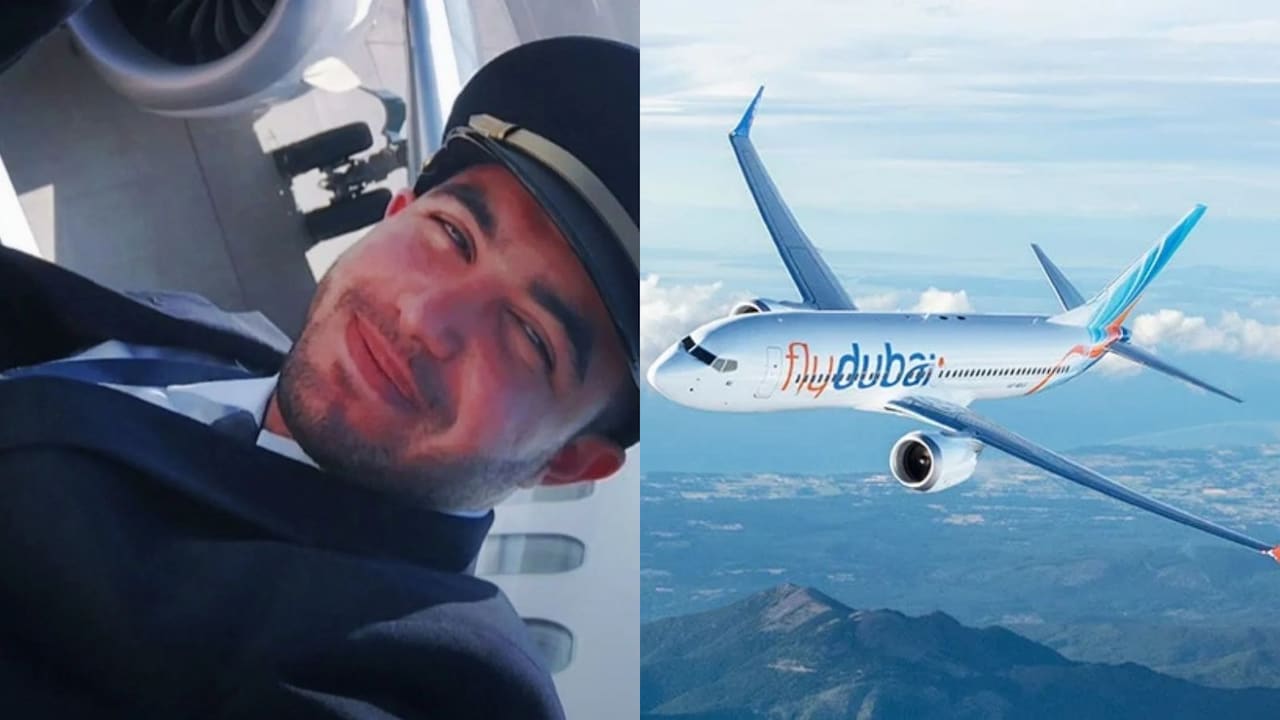
In an exclusive insider account, Israeli air defence officer Maj. (Res.) D. has revealed how a hijacking signal, conflicting information and uncertainty over a flyfubai flight bound for Tel Aviv triggered an emergency military response.
A hijacking emergency signal from a flydubai passenger aircraft bound for Tel Aviv triggered the scrambling of Israeli fighter jets and an urgent effort to prepare for multiple worst-case scenarios, the officer told NDTV's Foreign Affairs & National Security Editor Aditya Raj Kaul in a rare interview.
Maj. (Res.) D., who described his role as a first responder in the Israeli Air Force's air traffic control system, offered a glimpse into the decisions made as authorities attempted to establish what was happening aboard the aircraft and whether it posed a potential threat to Israeli airspace.
"The first time we saw the aircraft was after it came to this height," Maj. D. said, explaining that his team identified the flight and established that it was scheduled to land in Tel Aviv. "A few minutes later we identified that the plane was transmitting the hijacking signal. So at that moment we decided to scramble fighter jets to be prepared for any scenario."
The account highlights the challenge facing air defence personnel when an emergency signal indicates possible unlawful interference, but the circumstances behind it remain unclear.
Conflicting Information, Multiple Scenarios
Maj. D. said the aircraft was heading southwest over Saudi Arabia, near the Jordanian border, when his team first detected it. By then, the plane had already descended significantly, a development the Israeli team had not witnessed in real time because the aircraft was still far away.
As information arrived, the team struggled to determine whether the aircraft was experiencing a hijacking or a confrontation between the pilots.
"During the event we experienced a lot of uncertainty," he said. "It wasn't always clear to us if the aircraft was in communication with local air traffic control."
He added that some incoming information proved incorrect, complicating the assessment. The aircraft's decision to turn away from Israel added another layer of uncertainty.
The team responded by preparing for different possibilities rather than relying on a single explanation.
"We tried to create certainty," Maj. D. said. "My team and I prepared for a variety of scenarios like in the war games."
Israeli Airspace Cleared, Airports Put On Alert
The officer said the team worked to keep Israeli airspace clear so that scrambled fighter jets could operate if necessary. Authorities also prepared for the possibility that the aircraft might approach or attempt to land in Israel.
"We did talk to several airports in Israel to make sure that they may be prepared to accept it," he told NDTV, while declining to discuss all the operational scenarios considered.
He explained that communication is central to handling unauthorised aircraft approaching Israeli airspace. Some aircraft may deviate from their routes accidentally, including to avoid storm clouds, and can be escorted according to established procedures.
In the flydubai incident, however, Israeli controllers did not have direct communication with the aircraft. The crew was communicating with Saudi air traffic control, but Maj. D. said his team had no direct link with its Saudi counterparts.
That meant Israeli authorities had to prepare for possible developments without a complete picture of what was happening aboard the plane.
Why The Alert Continued After The Plane Turned Away
Even after the aircraft headed towards Saudi Arabia, the Israeli Air Force remained on standby until the team could verify that the plane had landed safely and the emergency was under control.
Maj. D. said the response took time to wind down because officials needed to confirm the outcome rather than assume that the danger had passed.
The aircraft eventually landed in Tabuk, Saudi Arabia, after an alleged confrontation aboard the flight. Subsequent reporting identified the incident as a violent cockpit altercation involving the co-pilot and Indian captain Smit Machchhar. Two off-duty pilots aboard the aircraft reportedly took over the controls, helping bring the plane to a safe landing.
The distinction is important: the hijacking signal prompted Israel's emergency response, but the signal itself was not proof of a confirmed hijacking.
"You Stick To The Protocol"
Asked what went through his mind when the hijacking signal appeared, Maj. D. said the response was driven by procedure.
"When the hijacking signal appeared, you act by protocol," he said.
He described the pressure of the moment but said teamwork and established procedures helped the personnel remain focused.
"There's a lot of pressure, but by sticking to the protocol and working together as a team, that's what keeps you grounded."
Only after the incident, he said, did he think about the personal implications. His brother was travelling abroad with his family, and he wondered whether they could have been on the aircraft.
The account offers a rare view of the human side of air defence operations: decisions must be made quickly, even when those responsible have incomplete or conflicting information.
Post-October 7 Readiness
The interview also addressed how Israel's aerial defence posture has changed since the October 7, 2023, attacks.
Maj. D. said the Israeli Air Force had examined its performance and improved its preparedness over the intervening years. He described detecting and responding to aerial threats, including missiles and drones, as part of the force's responsibilities.
He also said the incident would be reviewed for lessons that could improve future responses.
"In any scenario, we could do better," he said.
The flydubai episode demonstrates the importance of rapid threat assessment, coordination and contingency planning when a civilian aircraft's behaviour raises security concerns. Maj. D.'s account does not disclose every operational detail, but it shows how Israeli air defence personnel responded to an uncertain situation with the possibility of a far more serious emergency still in view.
For an air defence team, he suggested, the priority is to prepare for what might happen next-not to wait until every question has been answered.
KioskNews shows a cleaned-up reading view extracted from the publisher’s page — the original always lives on their site, not ours.