Despite deadly Krakow shooting, local Jews say they still feel safe in Poland
KRAKOW — As Poland reels from the shock of Saturday’s mass shooting in Krakow, where six people were killed and 15 others wounded, people involved with the city’s Jewish community say they don’t think the attack represents a sign of a growing antisemitic threat.
Poland opened a terrorism investigation into the mass shooting in Krakow, at the historic Old Town Main Square, after it was revealed that the suspect held extreme nationalist views. There was no indication Sunday that the suspect had affiliations to extremist groups.
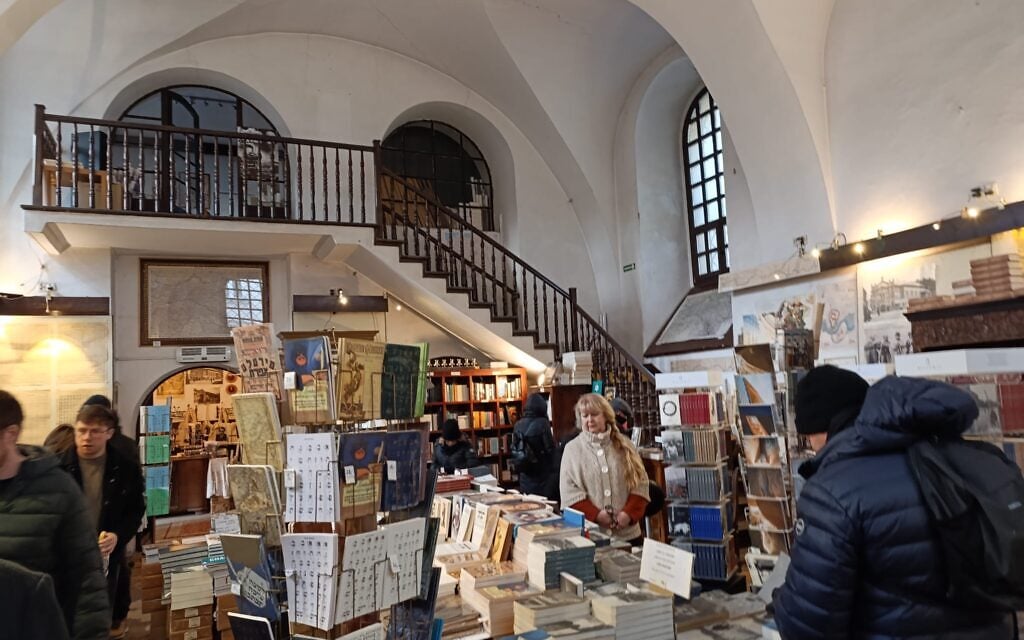
Lucy Les, the owner of a Jewish bookstore in Krakow’s Kazimierz Quarter, said she was shocked by the attack, but didn’t think it indicated any sort of trend.
0:00 / 0:00
Promoted: American Technion Society

“Poland is generally safe, and I was always grateful that I live in a very quiet and safe city,” said Les, who opened the bookstore with her late husband in 1991 to provide information about Jewish heritage to visitors of the historic Jewish Quarter. “At first, I was worried that the shooter would be found to be Ukrainian [indicating the attack might be ideologically motivated], but he was just a crazy Polish person.”
Antisemitic incidents in Poland have increased sharply since the October 7, 2023, Hamas attack on Israel, but at a smaller scale and scope than in many other Western European countries. The country’s strict immigration policies have kept the growth of Muslim and pro-Palestinian populations low, and policymakers have made Holocaust awareness a prominent issue in society.
Get The Times of Israel's Daily Edition by email and never miss our top stories
By signing up, you agree to the terms
Only about 10,000 Jews are believed to live in Poland today, compared to more than three million before the Holocaust. A growing number of Poles see Jewish heritage as a critical aspect of Polish culture that should be preserved, Les and others told The Times of Israel during a visit to the city.
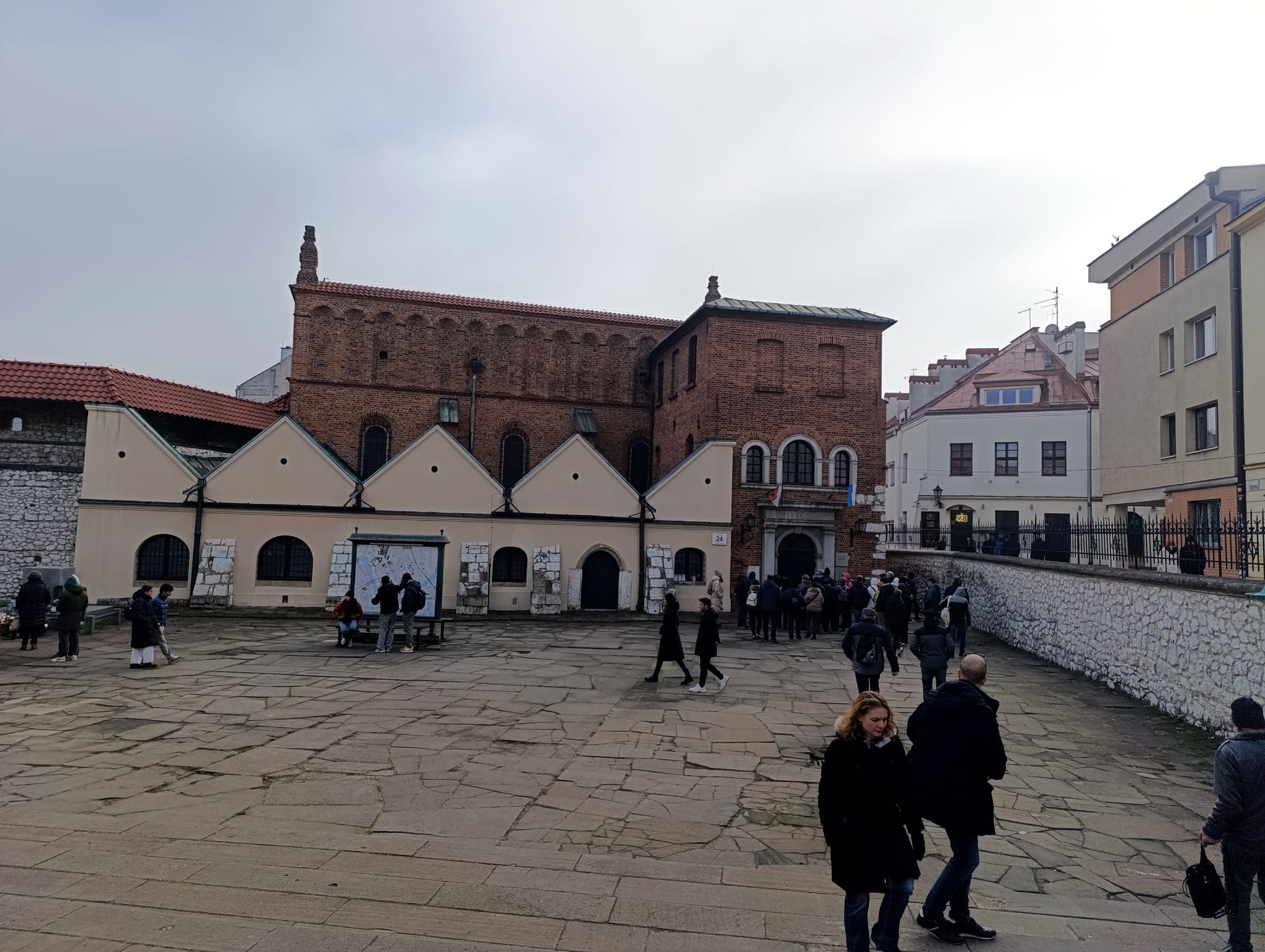
On a cold and sunny day, the Kazimierz Quarter was bustling with tourists visiting Jewish sites like the Remuh Synagogue and Cemetery in one of Europe’s best-preserved historic Jewish neighborhoods. Some speculated that the closure of the Main Square following the shooting pushed more visitors towards the Jewish Quarter, which occupies a central location in the city.
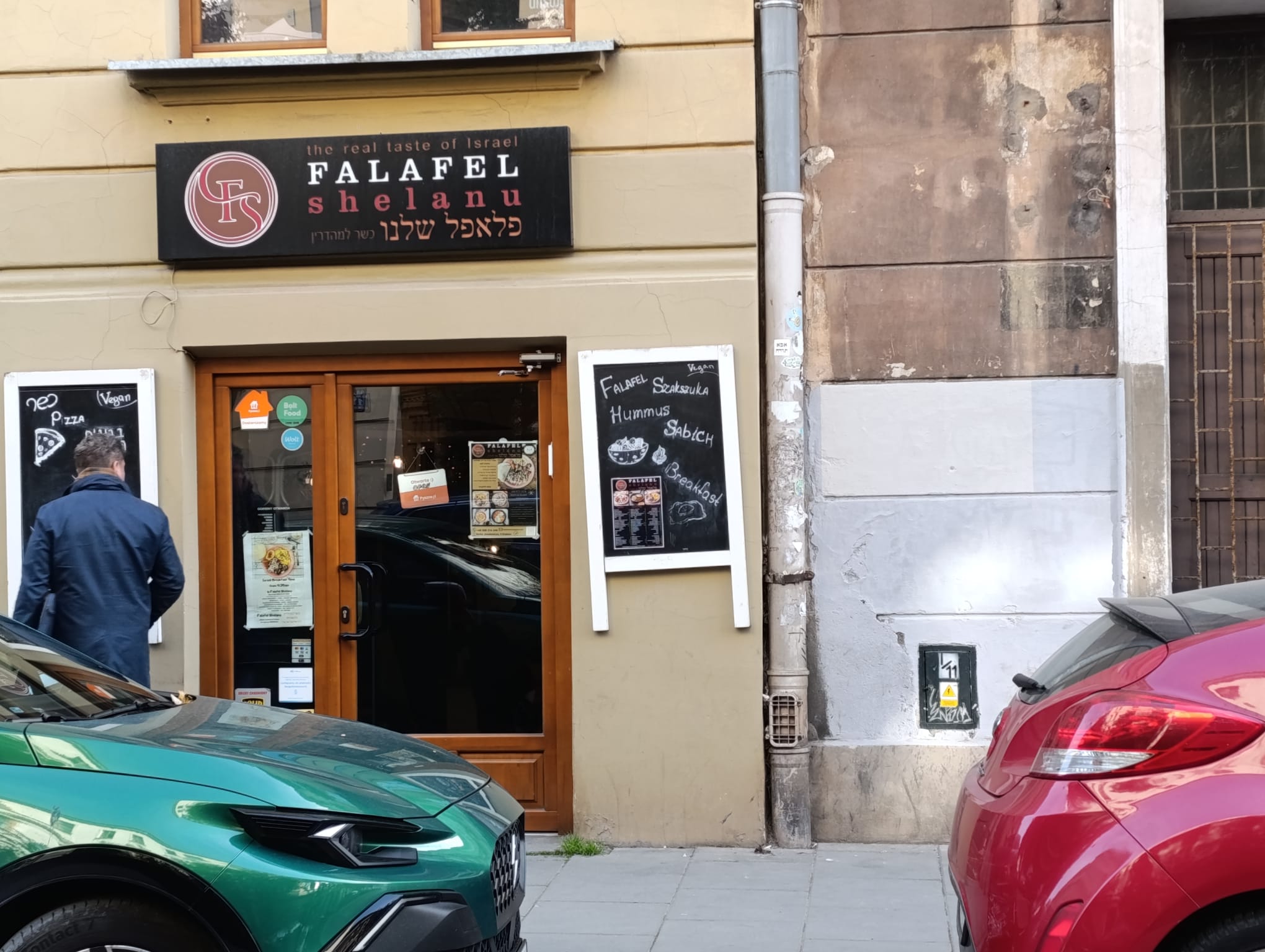
At Felafel Shelanu, a kosher restaurant in Krakow’s Jewish Quarter, several Israelis living near the city downplayed the significance of the attack. Gun violence is considered very rare in Poland.
Yarin, an Israeli man in his mid-20s who moved to nearby Katowice two months ago for work, said he was near the shooting, in the city’s historic Old Town Main Square, at the time of the attack.
“We were on the other side of the street, about 300 or 400 meters away, when we heard the shooting,” said Yarin. “We started to run, and we hid inside a nearby restaurant for more than two hours until after the situation was over.”
The area where the suspect was apprehended was still blocked off on Sunday, a day after the attack. Much of the main Square was sealed off with police tape, many cafes and shops remained closed, and police security was tight.
The attack was scary, “although not as much for me after what I’ve seen in Israel,” Yarin said. Most people he’d spoken with believe the shooting was a one-time event, he said.
Another couple at the restaurant agreed.
“It’s something that happens once in 40 years,” said Oded, a Jerusalem resident whose wife, Hanna, is studying in medical school in Katowice. “Every place has its crazy people.”
Hanna chose to study in Poland because the medical program she was looking for wasn’t available in Israel. She spends the school year in Poland while her husband and parents take care of their four kids in Israel. “It’s been difficult, but it’s almost over,” she sighed. “The people here are nice, but I miss Israel.”
Saturday’s attack took the city by surprise, and many people seemed to be recovering from the emotional shock. During a tour of the Kazimierz Quarter on Sunday, local guide Jakub Janeczko was describing life in the city during the Holocaust when he encountered some of the tourists he had guided the previous day — and who had fled the shooting alongside him.
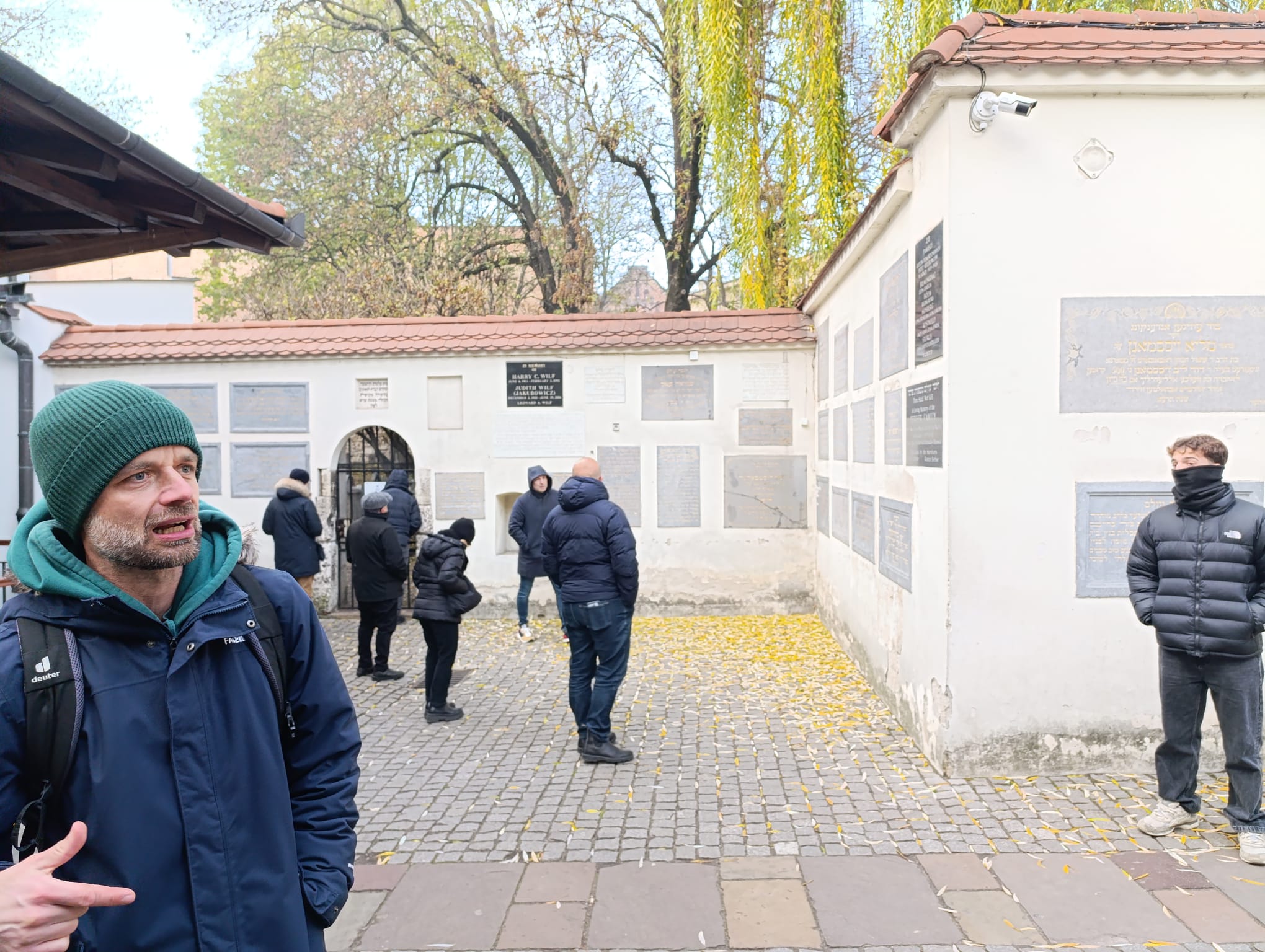
“We were standing in that square together, and we heard the shots two minutes before the shooter got to where we were standing,” he recalled. “We didn’t understand what was happening, but some American tourists near us started running, so we did, too. We all hid together in a nearby building. Thank God we were together.”
After recounting the previous day’s events, Janeczko returned to his historical account of the city.
“Anyway, life goes on,” he sighed.
Your next read: ToI Editors' Picks

LIMITED TIME OFFER: Join The Times of Israel Community today and you'll receive a physical book of your choice, carefully curated by our editors.
Choose between two must-reads: When We See You Again by Rachel Goldberg-Polin, a searing portrait of a mother’s grief and strength following unthinkable tragedy;
Or Out of the Sky: Heroism and Rebirth in Nazi Europe by Matti Friedman, the gripping and surprising tale of a forgotten moment during World War II.
As a Community member, you’ll also enjoy our DocuNation series of outstanding Israeli documentary films, an ad-free experience of our site and podcasts, commenting privileges, and more.
CHOOSE YOUR BOOK CHOOSE YOUR BOOK Already a member? Sign in to stop seeing this
If you’d like to comment, join
The Times of Israel Community.
KioskNews shows a cleaned-up reading view extracted from the publisher’s page — the original always lives on their site, not ours.