NGT indicates local officials, sand mafia may be working together in Madhya Pradesh
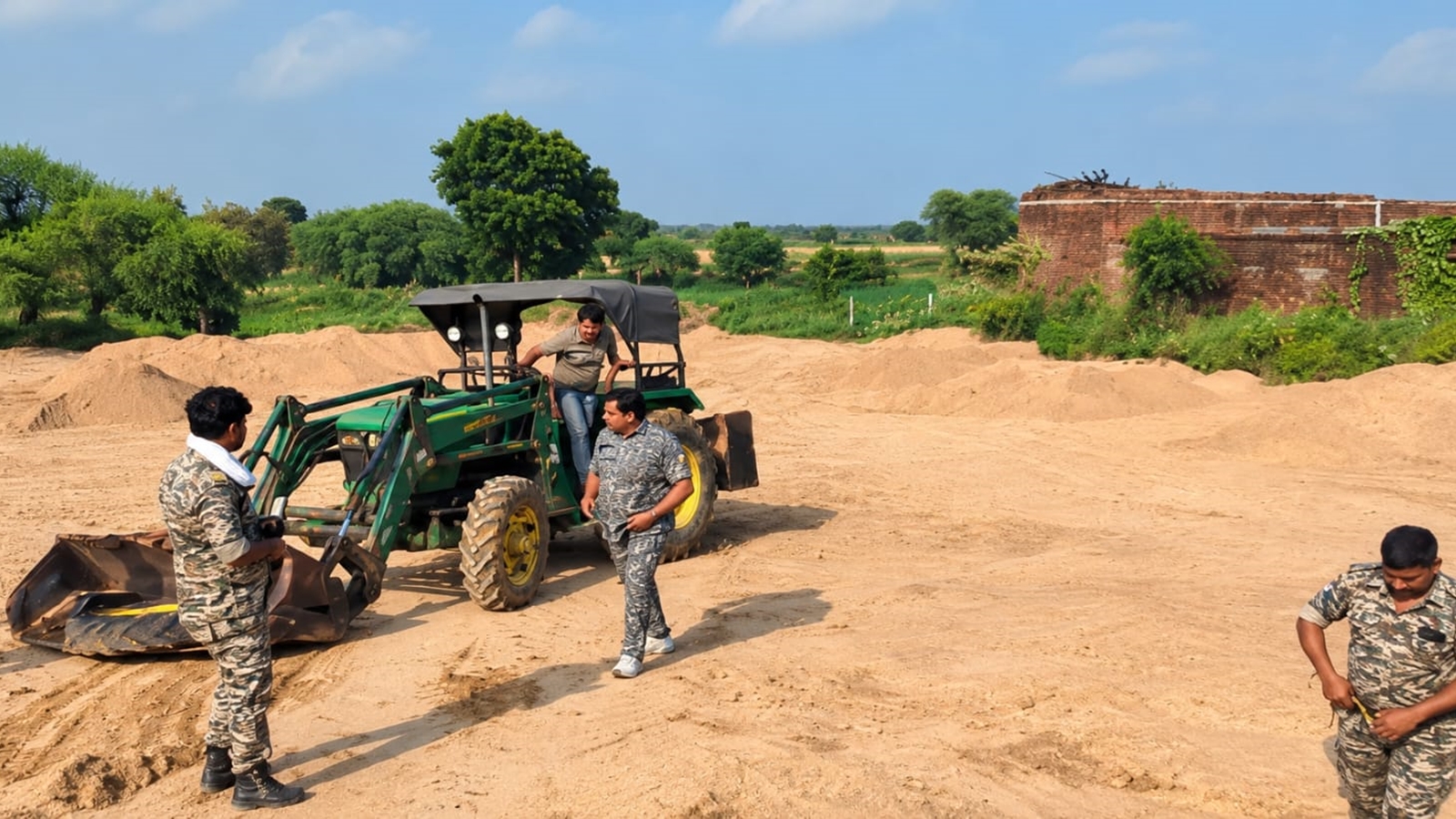
Raising concerns about possible connivance between local officials and illegal sand mining operators, an NGT-appointed committee has found that a taskforce set up by the Madhya Pradesh government to clamp down on the menace has not been effectively functioning on the ground level.
Sand mining in the sensitive ecologies in Madhya Pradesh had led the Supreme Court, in April this year, to pull up the ruling BJP government, observing that the “State cannot be permitted to plead helplessness or take shelter under its own inadequacies.” The top court had warned of stringent action, including a possible ban on mining and deployment of paramilitary forces if states fail to act.
The Madhya Pradesh government, in response, had promised to constitute a state-wide task force to clamp down on illegal sand mining.
However, the joint committee appointed by the National Green Tribunal (NGT) has flagged action taken against smaller stockpiles while letting larger ones slide, excavation within restricted zone, and absence of check posts as some of the lapses during its investigation into illegal sand mining along the Sindh River in MP.
Noting that the state task force has been constituted for the prevention and control of illegal excavation, transportation and storage of sand, the committee said in its recent report to the NGT: “However, the Task Force has not been found to be effectively functioning at the ground level.”
The committee raised concerns about possible connivance between local officials and illegal mining operators, saying authorities appeared to have acted against smaller sand stockpiles while failing to take similarly effective action against larger ones.
In addition, the committee found patches of alleged illegal excavation within a restricted zone near a bridge in Datia district, observed sand-transporting vehicles operating without visible or registered number plates, and reported that no check-posts had been established at the locations it inspected in Bhind and Datia.
Story continues below this ad
“Such selective enforcement raises serious concerns regarding dereliction of duty and possible connivance of local officials with persons involved in illegal sand mining and storage,” the committee said in its factual and action-taken report.
It said the matter “warrants immediate inquiry and fixation of responsibility such as (on) mining & police departments.”
The report, prepared by representatives of the Central Pollution Control Board (CPCB), MP State Environment Impact Assessment Authority (MPSEIAA) and MP Pollution Control Board (MPPCB), documents eight sand storage yards in Matiyawali village of Bhind’s Lahar tehsil and three in Rohera village in Datia.
The estimated stock across the 11 locations was 6,010 cubic metres, including 3,800 cubic metres in Datia and 2,210 cubic metres in Bhind. The committee recorded that action had been initiated against the identified yards and that one tractor-loader had been seized in Bhind.
Story continues below this ad
The NGT’s Central Zone Bench, comprising Judicial Member Justice Sheo Kumar Singh and Expert Member Sudhir Kumar Chaturvedi, had ordered the inquiry on August 7 in a case filed by Dr Govind Singh against the MP government.
‘Heavy machinery used in live river channel’
The application alleged large-scale, unauthorised and mechanised mining, using heavy earth-moving machinery and boats fitted with suction-dredging equipment in the live river channel, across 18 villages in Bhind and six in Datia. It also alleged that sand was transported, often without valid transit permits, into MP and Uttar Pradesh.
In Bhind’s Matiyawali village, the committee identified an estimated 1,000 cubic metres of sand at survey number 208 — the largest of the eight stockpiles it documented. Another 360 cubic metres was recorded across survey numbers 537, 543 and 547, while two other locations held an estimated 300 cubic metres each. The remaining stockpiles ranged from 20 to 100 cubic metres.
The committee said the Mining Department had initiated action against all eight yards and recorded the seizure of a tractor-loader.
Story continues below this ad
In Datia, the committee’s findings went beyond storage. It observed patches of alleged illegal excavation in the Sindh River near a bridge at Rohera village and said the location fell within a restricted zone under the Enforcement and Monitoring Guidelines for Sand Mining, 2020.
According to the data furnished by the Datia mining department, during the 2025-26 period, 17 cases of illegal excavation, 87 of illegal transportation and four of illegal storage had been registered. Of the district’s 30 sand mines allotted through e-auction, 26 had approved mining plans and environmental clearances, the report said.
The committee has proposed a regular surveillance committee, comprising the Revenue Department, district administration, police, Mining Department, Zila Panchayat, MP State Mining Corporation Limited, Gram Panchayat and Regional Transport Office, with monthly action-taken reports submitted through the district collector.
The committee also recommended an inquiry into the apparent disparity in enforcement and the fixation of responsibility wherever dereliction of duty is established.
Why the Sindh River matters
Story continues below this ad
Sindh River’s significance extends beyond Bhind and Datia. Originating in Vidisha district, it flows for roughly 470 kilometres through MP before joining the Yamuna in UP. Its catchment covering a large part of northern MP, the river is an important part of the region’s irrigation system.
The nearby Chambal river system is a stronghold for the critically endangered gharial, alongside mugger crocodiles, freshwater turtles, otters and the Gangetic river dolphin.
KioskNews shows a cleaned-up reading view extracted from the publisher’s page — the original always lives on their site, not ours.