Opinion: BLOG: 20 Years On, My LSR Memories Of Harassment Have Not Faded
The year was 2003. Fresh out of school, I came to Delhi with an enviable mark sheet and secured admission to one of the top colleges in India- Lady Shriram College (LSR).
I was a quintessential small-town girl. For 18 years, I had lived in the hill town of Shillong.
I scored extremely well in my board exams to secure a seat in every possible college of Delhi University. And I chose LSR for myself.
What I couldn't manage a seat in was the LSR hostel, which was filled beyond capacity.
My father managed to get me an accommodation right behind Lady Shriram College, at South Delhi's National Park, a quiet locality behind LSR.
For three years, 37, National Park, a three-storey building from where the Junejas ran a PG accommodation, would be my home.
For 3 years, I went on to live a life of uncertainty, subject to humiliation and harassment each time I went back to my accommodation from college.
The kilometre-plus long stretch from college to my PG accommodation was anything but safe.
There were days when eve-teasing was so routine that it almost became part of the landscape. There were also occasions when I saw men engaging in public sexual misconduct on the main road.
What stayed with me was not just the behaviour itself. It was the feeling that there was very little scrutiny and very little visible policing.
We would wait for our PG mates in college to get done with their lessons and walk back to the PG together. Most days, hopping on to a rickshaw and hoping for some protection (in case of any eventuality) from the rickshaw walla bhaiya was the norm.
Juneja Uncle often warned us, asking us to travel in groups and be safe. Teachers at college asked the girls not to venture out and move around in groups.
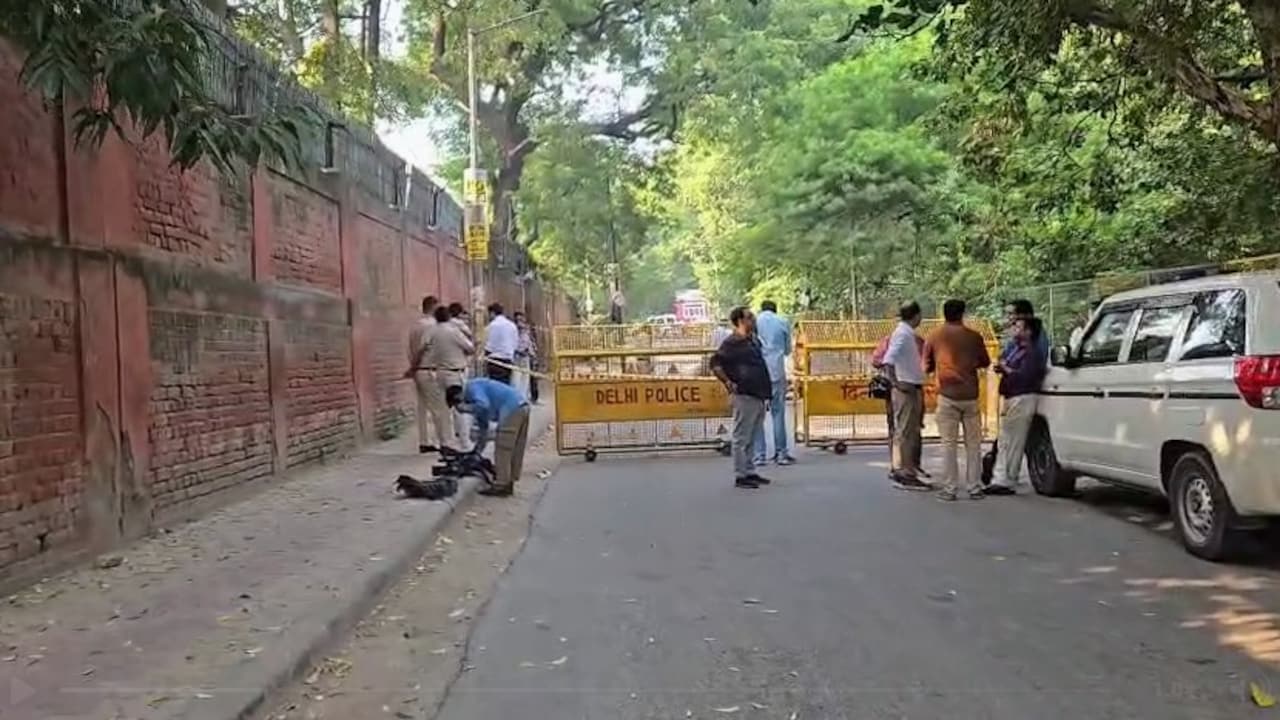
20 years later, LSR is in the news again. The prestigious college had to move classes online following the recent gang rape of a 17-year-old girl at Aastha Kunj Park, close to Lady Shri Ram College.
How safe are our streets for women?
The incident took place near an area that thousands of young women students pass through every day. For LSR students, the concern is not confined to what happens inside the college gates. It is about the roads, parks, metro routes, bus stops, paying guest accommodations and neighbourhoods surrounding the campus.
And I say this not just as a journalist, but as someone who lived there.
My first reaction was: Really?
To be fair, the college said the decision was taken keeping student safety in mind. It also sought increased police patrolling around the campus, particularly near the back gate and adjoining lanes and parks.
But the fact that physical classes were suspended raises a larger question.
Why does the burden of an unsafe environment so often end up being placed on women?
Don't go there.
Don't walk alone.
Avoid the back gate.
Don't stay out late.
And now, don't come to college.
The LSR Students' Union itself has argued that women's safety cannot be addressed simply through advisories telling women to be more careful. Students have flagged concerns including dark roads, inadequate police presence, a non-functional Pink Booth, unsafe pedestrian pathways and vulnerable stretches used by students.
That is the heart of the issue.
The problem is not that women are using public spaces. The problem is that some public spaces are not being made safe enough for them to use.
A college is not just a classroom.
It is a place where young women learn to live independently. They walk to the Metro station. They attend society meetings. They leave campus after rehearsals. They live in PGs. They go to cafés, markets and libraries. They return home in the evening.
You cannot make all of that disappear by putting a lecture on Zoom.
And there is an important distinction here.
Moving classes online for one day, immediately after a serious incident, may be a reasonable emergency precaution. LSR did exactly that on September 23 and resumed offline classes on September 24.
But an emergency precaution cannot become the definition of a safety strategy.
The real response has to happen outside the laptop screen.
Where are the police patrols?
Are the dark stretches properly lit?
Are the vulnerable routes between PGs, Metro stations and colleges being mapped?
Are CCTV cameras functional?
Is there reliable last-mile transport?
Are emergency points actually operational?
And when students repeatedly flag a particular stretch as unsafe, who is responsible for fixing it?
These are not unreasonable demands.
In fact, LSR students have already been asking for precisely this kind of location-specific safety audit.
The recent incident should therefore not be treated as an isolated crime near a college. It should force authorities to look at the ecosystem around educational institutions.
Because a woman does not become safe simply because she enters the college gate.
And she does not become unsafe because she walks out of it.
Safety has to travel with her.
From her PG to the Metro.
From the Metro to college.
From college back home.
Through the streets, the parks and the last mile.
And if our answer to unsafe streets is to ask women to stop using them, we haven't solved the safety problem.
We've simply changed the victim's route.
The question should not be, Why can't these girls stay inside?
KioskNews shows a cleaned-up reading view extracted from the publisher’s page — the original always lives on their site, not ours.