Trump’s Russian diesel deal: What it means for fuel prices
Trump says Russia will supply 300,000 tonnes of diesel at once, and the US has paused some sanctions. Zelenskiy calls it a weak decision, and analysts doubt prices will fall far.
8 min readOct 10, 2026 09:34 AM IST First published on: Oct 10, 2026 at 09:18 AM IST
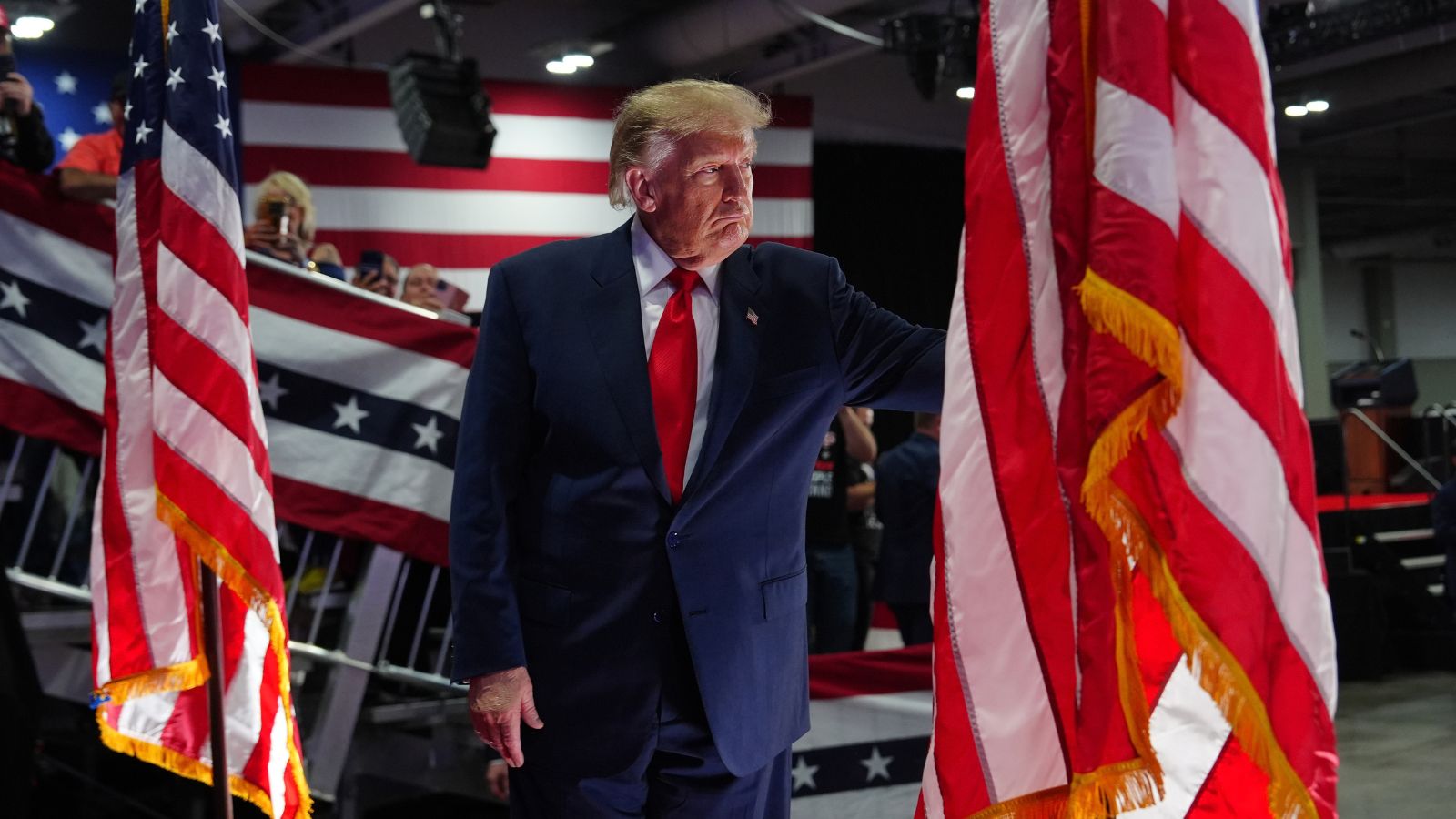
President Donald Trump departs a campaign rally at the Oncenter. (Photo: AP)
US President Donald Trump said on Friday, 9 October, that Russia has agreed to supply diesel to the United States and global markets, in a bid to bring down fuel prices, Reuters said. His administration also paused US sanctions on Russian fuel for a time. Those sanctions were set up to cut the money that funds Moscow’s war on Ukraine. Trump said Russia would send more than 300,000 tonnes at once, then 500,000 tonnes in November and 1 million tonnes soon after.
Diesel prices fell on the news, but analysts told Reuters the deal may not be enough to keep them down. Ukrainian President Volodymyr Zelenskyy criticised the move, which was announced while a Ukrainian team was in the US to discuss ways to end the war. The deal also lands less than four weeks before the 3 November congressional elections, in which Republicans are trying to keep their thin control of Congress.
Key points
- Zelenskyy called the US-Russia diesel deal “a weak decision on the part of strong partners”, Reuters said.
- He said the Ukrainian team in the US was being used as a front while the deal was announced.
- He made the comments on Friday, 9 October 2026.
What the deal says
Trump said on social media that he had a “highly successful” call with Russian President Vladimir Putin, Reuters said. The two agreed that Russia would at once supply more than 300,000 tonnes of diesel to US and global markets. That is about 2.25 million barrels. For comparison, the US exports about 1.5 million barrels of diesel a day, Reuters said.
Trump said a further 500,000 tonnes would follow in November, then 1 million tonnes “immediately thereafter”. He said more would come after that, depending on the state of Russian refineries, which have been hit by Ukrainian attacks.
The US Treasury Department issued a licence that lets Russian diesel enter the US until 7 April. Kirill Dmitriev, an envoy for Putin, praised the co-operation on X. Reuters said sources told it that Dmitriev had asked US officials, during a visit to Washington last month, for licences so that all major Russian oil firms could export diesel to the US.
President Trump thanks President Putin for the energy partnership. 🇷🇺🤝🇺🇸
— Kirill Dmitriev (@kadmitriev) October 9, 2026
The US put sanctions on Russian oil companies in October 2025 over the war that began in 2022. Reuters said the diesel sales could bring Moscow billions of dollars.
Story continues below this ad
Reaction from Ukraine and US lawmakers
Zelenskyy said on X that gifts to Putin will not bring peace, and that Russia would “repay” the diesel with more terror. He called the accord an investment in a war that should be ended, and asked for real de-escalation with Russia on a reciprocal basis.
Peace never comes through weakness. Today, representatives of the U.S. Congress were in Kyiv – a bipartisan delegation – and I am grateful to them for visiting Ukraine at such a difficult time. They asked: what is needed to end the war? The answer must be strong. There must be sanctions under the Lindsey Graham bill, there must be support for Ukraine in protecting lives, and there must be pressure on Russia for its war. And today, there was a conversation between the leaders of America and Russia. A conversation that leads to something different. Recently, there was a European decision to lift sanctions on Russian oligarchs. Since then, Russian strikes and the torment of people have only increased. This past week alone, there was a brutal Russian missile strike on a residential building in Pryluky, aerial bombs were dropped on Kramatorsk – on ordinary city buses – and there have been constant attacks on Kyiv’s energy infrastructure and on the life-sustaining infrastructure in Dnipro, Kharkiv, Odesa, and our other cities. Dozens of people have been killed and hundreds wounded. The Russians are compensating for their inability to achieve their objectives on the battlefield with this kind of terror. This year, Russia is weaker on the battlefield than at any other point in the war. That is why Putin is relying on terror. That is why he is relying on attempts to strike backroom deals to secure some form of pressure relief for Russia, in order to buy more time and more opportunities for war. Any easing of sanctions against Russia without a clear and lasting de-escalation agreement with Russia is an obvious weakness. It plays into Russia’s hands – allowing it to kill more, wage war for longer, have even less respect for America, and inflict even greater losses and damage on the world. Ukraine is ready to take symmetrical de-escalatory steps, and the American team knows our position. Our strikes on Russian oil refineries and other oil facilities are a response to Russia’s years-long campaign of terror against Ukraine’s energy sector. Ukraine will not set Russian oil refineries on fire if Russia does not destroy our energy infrastructure. This is the kind of agreement we are proposing to America, and we believe the United States has enough power to achieve such a compromise. Gifts to Putin will not bring peace or any benefit to the civilized world. Russia will “repay” the diesel with further terror and perfidy. Allowing Russia to sell petroleum products is an investment in a war that must be ended, not prolonged. What is needed is real de-escalation with Russia on a reciprocal basis. We count on America’s fair support for our defense of life, for our defense of people in Ukraine – and on the United States having a correspondingly strong conversation with Russia. A strong one, not a weak one.
— Volodymyr Zelenskyy / Володимир Зеленський (@ZelenskyyUa) October 9, 2026
Speaking to reporters on WhatsApp, he said the deal would give Moscow extra funds for the war and weaken any work towards a settlement. He said he believed his team was being used as a front. He described the deal as “a weak decision on the part of strong partners”, Reuters said.
Republican Representative Don Bacon also criticised the deal. He said it was time to use the sanctions that Congress passed recently, not to lift them, and that Putin should not be given more money while Russian forces keep killing Ukrainian civilians, Reuters said.
What does it mean for prices and the war?
For prices, analysts told Reuters the effect will probably be small. Diesel is used in farming, home heating and trucking. Prices are up 70% since the US and Israel began the war with Iran on 28 February, and the average US price reached $6.28 a gallon on Thursday, according to the motorist group AAA. US diesel futures fell almost 5% after the news, to $4.64 a gallon.
Rory Johnston, an oil market researcher and founder of CommodityContext.com, said on X: “I cannot overstate how much of a nothing burger this is.” He added that Russia usually exports far more diesel than the deal covers when its refineries are not under attack. Jim Mitchell of the consultancy Wood Mackenzie said the deal is not a fix, but one more source of supply for a very tight market.
I CANNOT OVERSTATE HOW MUCH OF A NOTHING BURGER THIS IS https://t.co/XaUOkyZqzy
— Rory Johnston (@Rory_Johnston) October 9, 2026
Trump has tried other steps. He pressed allies to release emergency stocks and widened access to red-dyed diesel, which is normally tax-exempt and used on farms. Prices stayed high. Three industry sources told Reuters that Trump will issue a directive in the next few days, possibly as a presidential memo, asking some department heads to find ways to control diesel prices. It would push officials to get around local and state rules that block energy output and to use the Cold War-era Defense Production Act to raise oil and fuel production.
Story continues below this ad
For the war, the main question is money. The sales could give Moscow income at the same time as Kyiv is seeking more pressure on Russia, which is why Zelenskyy and some US lawmakers object.
KioskNews shows a cleaned-up reading view extracted from the publisher’s page — the original always lives on their site, not ours.