6 Western Movies From the 2000s That Are 10/10 Masterpieces

Michael John Petty is a Senior Author for Collider who spends his days writing, in fellowship with his local church, and enjoying each new day with his wonderful wife and precious daughters. At Collider, he writes features, reviews, recaps, interviews, and breaking news on select occasion. In addition to writing about stories, Michael has told a few of his own, from supernatural thrillers to historical fiction. His Western short story, The Devil's Left Hand, received the Spur Award for "Best Western Short Fiction" in 2025 from the Western Writers of America, of which he is a member. Michael currently resides in North Idaho with his growing family.
Sign in to your Collider account
Over 100 years after the Wild West era officially ended, the genre continues to go strong. Maybe it's the mythic thrill of westward expansion or our fascination with the years immediately after the Civil War, but either way, the Western remains. Even in the 21st century, we continue to return to the 19th, hoping that by revisiting our nation's past we may be able to find some evidence to better understand our future. Or, maybe it's just as simple as that we love a classic shoot-'em-up — and there's nothing wrong with that.
When reviewing the Westerns of the early 2000s, a handful stood out as some of the most notable. From Oscar-winning adventures and popular remakes to revenge flicks and artistic dramas with little flare at all, the horse opera has always been able to command an audience. If you're looking for something to enjoy while riding across the dusty trail, then look no further than these stellar Westerns.
‘No Country for Old Men’ (2007)

Okay, let's get this one out of the way right now. Not everyone will consider No Country for Old Men a Western. That much is true. The Coen Brothers adaptation of Cormac McCarthy's famed novel (and perhaps the best adaptation of his work) is, admittedly, a neo-Western, as it's set a century after the traditional "Wild West" period. Nevertheless, No Country is about as "modern Western" as you can get, with stunning West Texas aesthetics and a tension between lawmen, outlaw, and cowboy that speaks to the heart of the genre.
The brilliant cast includes Josh Brolin, Tommy Lee Jones, and Javier Bardem as all three center around the same payday in some form or another. There are moments in No Country that feel as if the audience is transported back to the late 1800s, and there are others that firmly set it in the 1980s. Either way, there's an argument to be made that this Best Picture winner is as vital to the modern Western canon of films as any old-school picture out there.
‘Seraphim Falls’ (2006)

Although probably not a Western you thought you'd find on this list, Seraphim Falls is a stunning mix between a revenge-driven action flick and a survival picture set against an Old West backdrop. In the fallout from the American Civil War, Gideon (Pierce Brosnan) is on the run from former Col. Carver (Liam Neeson), who seeks his life after events that transpired during the war. With both men standing on opposite sides, they have no choice but to battle to the death.
Seraphim Falls is a highly-underrated Western. It's thrilling, bloody, and carried by the riveting performances of its leading men. With deeply spiritual undertones and strange themes one must decipher for themselves, Seraphim Falls reworks the classic "man vs. man" conflict into an engaging historical thriller, and it's better than most have ever given it credit for — and much of that can be credited to Brosnan and Neeson themselves.
Collider Exclusive · 8 Questions · 2 Minutes Which Western Icon Are You Most Like? No Name · Doc Holliday · Wyatt Earp · Mattie Ross
Pick your name, your gun, your horse and how you spend a night in town, and we will tell you which legend of the Old West you would have been. Four icons are waiting at the end of this: the stranger who never gives his name, the gambler who would die for a friend, the lawman who never wanted the badge, and the girl nobody has ever talked out of anything.
🚬No Name(Dollars Trilogy)
🃏Doc Holliday(Tombstone)
⭐Wyatt Earp(Tombstone)
🐎Mattie Ross(True Grit)
01
The town is about to learn your name. What do they call you? In a Western, what people call you is already half the character.
02
What are you carrying? Everything out here is character, right down to what is sitting on your hip.
03
What are you riding? A hero and their horse is one of the oldest relationships in cinema.
04
You have got one evening in town. How does it go? The saloon is where these films quietly tell you who somebody really is.
05
A stranger offers you money for a job that sounds like trouble. Somebody always turns up with a full purse and a bad idea.
06
Somebody is waiting for you in the street. What does the town see? Two people, an empty road, and everybody else watching from behind the shutters.
07
What is the one thing you will not do out here? The code is about the only thing west of the river that actually holds.
08
The job is finished. Where does the story leave you? Eight questions in, this is the one that decides your icon.
The Dust Has Settled Your Western Icon Is…
Four icons and four completely different ways of walking into trouble. This is the one you would have been out there, why it fits, and what it would have cost you.
The Man With No Name
You have never explained yourself and you have never needed to, because people work out fairly quickly that you are the most capable person in the room without you ever having to mention it.
- Eastwood built the character out of everything he refused to do, stripping away the backstory, the speeches and every bit of reassurance until only the competence was left.
- You keep your own counsel, and while other people occasionally find that unnerving, you have never felt any real need to fix it for them.
- The Dollars films work because he genuinely is in it for himself right up until the moment he is not, and he never explains that part either.
- You would be gone before anybody got a chance to thank you.
Doc Holliday
You are the funniest person in most rooms and the most loyal person in all of them, and you would be genuinely insulted if somebody suggested those two things were in any tension.
- Doc has no real reason to be in this fight beyond the fact that his friend is in it, which is the only reason he has ever needed for anything.
- You lead with wit, and it does a very effective job of hiding how seriously you take the handful of people you actually care about.
- Val Kilmer's performance is the most quoted in the entire genre because the jokes keep getting sharper as the situation gets worse.
- You would spend everything you had on this and still describe it as a good week.
Wyatt Earp
You never wanted this job, and you took it anyway because the alternative was standing there watching somebody less careful do it badly, which is the most Western reason there has ever been.
- Earp is the reluctant authority figure, a man who came to town specifically to be left alone and somehow ended up answerable for all of it.
- You are protective by instinct, so when something goes wrong your first thought is who is exposed rather than who is to blame.
- These films understand that keeping order costs far more than breaking it, and that the person holding the line almost never gets thanked.
- You would do the whole thing again, and you would complain about it the entire time.
Mattie Ross
Nobody has ever successfully talked you out of something you had already decided was right, and a long line of grown adults has found that out the hard way.
- Mattie is the most relentless character in the Western canon and she manages it through argument, paperwork and flat refusal rather than a fast draw.
- You have no patience for being managed, so you negotiate, you check the details and you turn up exactly when you said you would.
- True Grit is the rare Western where the moral centre is the youngest person on screen and every adult around her has to catch up.
- You would get what you came for, and the film is honest about what that takes out of you.
‘The Assassination of Jesse James by the Coward Robert Ford’ (2007)

While maybe not the most exciting of the films on this list, The Assassination of Jesse James by the Coward Robert Ford is perhaps the most stunning from a visual perspective. Andrew Dominik's visionary take on the Old West reinterprets the tales of outlaw Jesse James (Brad Pitt) through the eyes of Robert Ford (Casey Affleck), chronicling their relationship and the time leading to the former's death. Unlike the typical outlaw pictures, this is an introspective take on the genre that is more psychological than sensational.
Few Westerns offer the distinct visual style that Roger Deakins is able to convey here with his shot composition and masterful use of light and space. Of course, it's Affleck and Pitt who must then live up to those high standards by delivering complex and well-rounded performances that don't feel anything like Western caricatures. The runtime may be a bit bloated, but Jesse James is a radiant piece of cinematic work that offers something new for the genre.
‘Open Range’ (2003)

A decade after he first wowed audiences with Dances with Wolves, Kevin Costner returned to headline the Wester with Open Range. When Boss Spearman (Robert Duvall) and his partner Charley Waite (Costner) find themselves on the wrong side of a range war with a local cattleman, they hold their ground in true genre fashion. But this isn't just a shoot-'em-up — Open Rance is also a romance, and Annette Bening steals the show.
Costner gave Duvall top billing for this picture, and anyone who sees it can understand why. The pair do some of their best and most underappreciated work in this Western, which gives them both real, meaty drama to work with — perhaps Duvall's best in the genre since Lonesome Dove. As a Western that packs a powerful punch, Open Range is a spectacular take on the Old West that captures everything that made the genre great in the first place.
‘Appaloosa’ (2008)

When a longtime star like Ed Harris decides to take the Western genre on from behind the camera as well as in front of it, the result is a cinematic masterpiece like Appaloosa. When lawman Virgil Cole (Harris) and his partner Everett Hitch (Viggo Mortensen) arrive in the titular New Mexican town, they bring the fight to an unruly English cattleman (Jeremy Irons) who believes that the frontier is his to conquer.
Appaloosa is a love-letter to the traditional Westerns of the last century. With masterful character work from its leading men and simply gorgeous set design and costuming, it's one of those horse operas you'll want to watch again and again. Harris and Mortensen were born to play this sort of iconic Western duo, and there's a reason we're always a bit disappointed when the picture comes to an end.
‘3:10 to Yuma’ (2007)

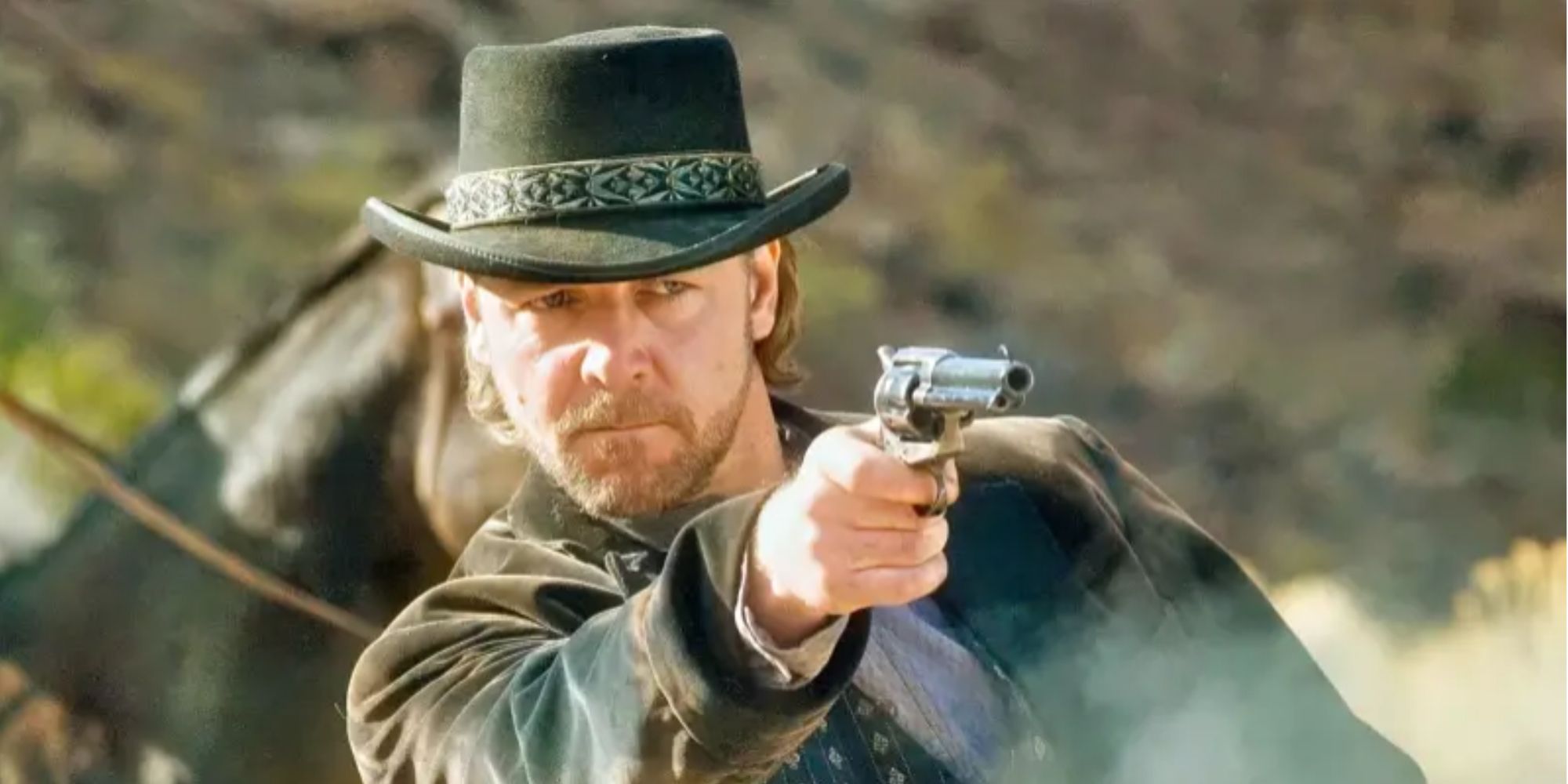
Arguably the best Western remake ever put to screen, 3:10 to Yuma makes an already masterful Western even more so under the creative direction of James Mangold. When rancher Dan Evans (Christian Bale) is hired to take outlaw Ben Wade (Russell Crowe) to the titular train, they venture across the Old West on a journey neither likely knew the end of. The result is a high-octane, action-packed thrill that gives other genre entries a run for its money.
3:10 to Yuma is simply magnificent. It's the sort of blockbuster that will appeal to all audiences while still offering die-hard genre fans everything they came for. Bale and Crowe are a match made in cowboy heaven that breathes new life into an age-old Elmore Leonard story. If the original was a forgotten Western masterpiece that has aged perfectly, then the remake is all that and so much more.
KioskNews shows a cleaned-up reading view extracted from the publisher’s page — the original always lives on their site, not ours.