LABOUR MARKET: How smarter, fairer hiring is the key to tackling SA’s youth unemployment crisis
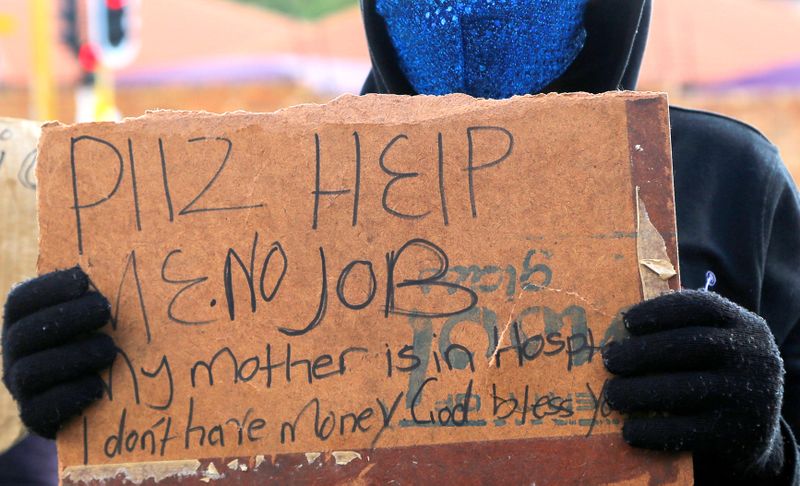
Sixty percent is an acceptable, if not outstanding, maths mark. If your child comes home with that result next month, you get to relax – they’ve passed.
However, 60% is not such a good look for unemployment. Unfortunately, SA’s youth unemployment rate was 59.93% last year, according to the International Labour Organization (ILO).
For reference, ILO data start with countries whose rate is below 7.04%; the top bracket is anything above 30.26%.
The latest data from Stats SA show that 63.6% of those aged 15 to 24 in South Africa are without work, but are actively looking and available to start. The non-profit Harambee Youth Employment Accelerator, put the expanded unemployment rate for ages 18 to 35 in the third quarter of this year at 55.37%.
The official rate of young people who are not in employment, education or training is less bleak, if not ideal, at 33.9%.
But we are here for solutions, not doom and gloom. To that end, we invite you to the glamorous world of job screening. Pragmatic hiring practices alone will not solve an unemployment crisis, but they certainly can help.
Background check
This is not just about how good someone will be at a job – first, there is verification via biometrics, police clearance, credit bureau reports, driving permits and qualifications.
Screening services firm iFacts says this should not be “an automatic ‘pass or fail’ exercise”, because admin errors risk unfairly barring candidates.
“There is an important difference between a confirmed adverse finding, an outstanding result and information that could not be verified,” said iFacts CEO Sonya Skipp.
Given the need to get more people into jobs, Skipp said we should look at a particular job’s risks and requirements, rather than “applying the same extensive screening package to every position”.

Ashleigh Nel, an industrial psychologist who leads R&D at JobJack, which designs hiring assessments for store-level positions, picked up the same thread: one-size-fits-all is not fair.
Companies that offer hiring platforms are under pressure to offer standardised solutions for the sake of business efficiency, but it’s not a way to get more people into work.
Language matters
Here, language enters the conversation. English may be the preferred business tongue, and thus required in most workplaces, but only about 9% of South Africans speak it as their primary home language.
Grappling with this reality is “a deep rabbit hole” for hiring platforms, Nel explained, and there are different approaches. Some platforms use simplified English, but translating hiring assessments into multiple languages can be challenging.
Jonathan Raphael of the Sozo Foundation, which runs skills training programmes for young people in Vrygrond, Cape Town, offers its curriculum in English to give people “the best exposure to the market-expected language level”.
But, as Raphael noted, “language is a skill that needs practice time, and it needs to be treated that way”.
Not every job will require the same level of proficiency, and more specific language requirements, tailored to a job, keep the door open.
The key is not demanding unnecessarily high language proficiency for the context of the job, Nel said, because store-level work and head office work look very different.
Give the kid a chance
Employers also need to look beyond formal qualifications. JobJack tries to home in on this through assessments that measure a person’s ability to perform under the type of stress specific to a given job and the personality traits that could come in handy.
Candidates complete multiple-choice questions, games and other tests designed to show employers how they hold up under pressure in various work scenarios.
“A better way of hiring is to get more of it happening through digital platforms. But if we’re going to do that, we need platforms that are actually designed for entry-level jobs, store-level jobs, and a variety of different contexts,” said Nel.
Experience is where the odds are often stacked against young people.
It’s the old, vicious cycle of an employer turning down a candidate because they are inexperienced, which prevents the candidate from gaining experience in the first place.
Harambee consultant Alex Beyers said that for many businesses, it comes down to economics: “For the same price, they can get a 35-year-old with 10 years’ work experience or a 25-year-old without work experience.”
Increasing the young labour force “doesn’t happen naturally”, he explained. Even without a legal requirement to hire more young people, he added: “What business can ask government to do is to revamp and modernise the youth employment incentive structure.”
This could involve making employment tax incentives more accessible to smaller companies, not just their larger, listed peers.
Upfront costs
Another important factor for young people is internet access, and Nel underlined the need for “data-light” assessments.
The government’s National Youth Development Agency (NYDA) has teamed with Harambee to set up an online network called SA Youth, which is a “100% data-free” job resource and application platform.
Transport to interviews, and to work itself, can be especially challenging for younger workers. Simply “getting through the first month” with limited transport money is a bigger problem than many businesses realise, said Beyers – something transport subsidies could solve.
In a report titled The Cost of Trying, JobJack found that 36.4% of candidates who missed a job interview had no money for transport, while one in five people said travel distance would make them turn down an offer. This issue is not just on the sidelines – it is central.
Big picture
Raphael pointed out that the matric pass rate we see each year hides the significant proportion of learners who drop out before Grade 12, and the “missing data” show up in the youth unemployment stats.
“We are also seeing that the matric qualification is no longer enough to guarantee work or further studies,” he added.
“The jobs are often not missing. Vrygrond sits beside Capricorn Business Park, with over 600 companies and 8,000 jobs, separated by little more than a 12-foot wall. The gap is access.”
Beyers said the importance of positive GDP growth for employment outcomes cannot be overemphasised.

There also needs to be support for growth sectors, like global business services, tourism, agriculture and last-mile delivery, without discounting informal work and public employment schemes.
While the latter remain controversial, and might not be first prize in labour markets that are closer to full employment, they can “really shift the dial for many people” in SA, said Beyers.
Technology is reshaping recruitment globally, but Nel cautioned against rushing to adopt it in South Africa, warning that models are “not inherently fair”. Even without malicious intent, bias can creep in through training data that do not reflect local realities. AI has its uses, he noted, but must be deployed carefully to avoid undoing hard-won progress against hiring bias.
Sunny side of the street
The NYDA welcomed the business community’s recent recognition of youth unemployment, and Beyers sees the issue “on the national agenda in a way that it hasn’t been before”.
Much like our political discussions of late, the C-word (coalition) is key: “I’ve been in this game now for over 10 years, and I’ve never seen such a broad coalition of organisations and individuals that want to solve this,” Beyers noted.
In the latest African Youth Survey, optimism among young South Africans trailed the rest of the continent, yet the organisations Daily Maverick spoke to say the country’s youth remain upbeat despite the odds.
Raphael said about 94% of the alumni from Sozo’s 2025 skills programme were in meaningful placements, while a JobJack survey found the word people used most frequently when asked how they felt about job-seeking was “hopeful”, despite some despondence.
Beyers sees resilience “in the fibre of our people. If that is an asset, we’ve got to treasure that asset and not take that for granted, because that can also change.”
Hope is not the same thing as being satisfied with a bad situation, he added. Right now, hope seems to be the life jacket keeping young people afloat – now let’s bring in some lifeboats. DM
KioskNews shows a cleaned-up reading view extracted from the publisher’s page — the original always lives on their site, not ours.