US trading partners’ patience wears thin as Trump slaps on new tariffs
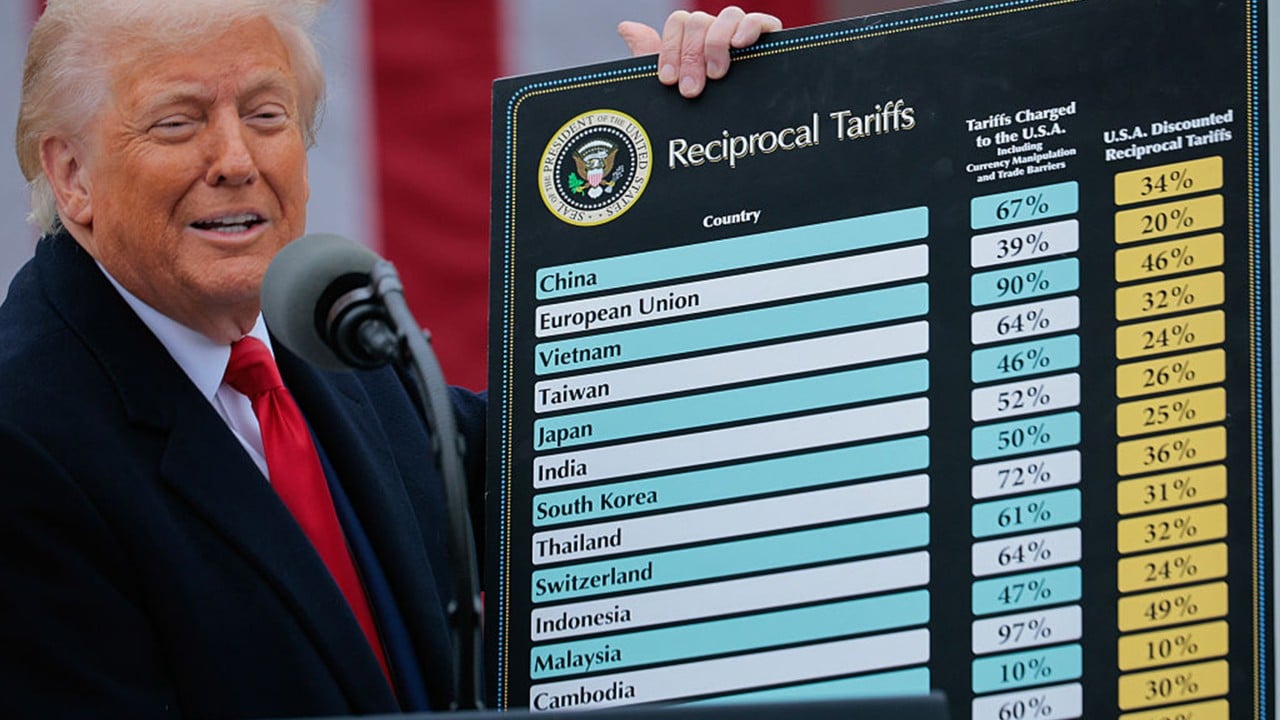
Major US trading partners and companies on the economic front lines decried US President Donald Trump’s latest tariff salvo on Wednesday, even as they expressed resignation, as his playbook has become more predictable and better telegraphed with repeated use.
The new levies, subject to a public comment period, would lift total duties on targeted economies from 15 to 20 per cent. This comes as the transactional US president looks for alternatives after the US Supreme Court struck down his broad-based “emergency” tariffs in February.
“Partners have been waiting for this shoe to drop for some time,” said Wendy Cutler, senior vice-president with the Asia Society Policy Institute. “Many have publicly and privately pushed back in recent months, stressing that they are being wrongly accused of producing too much in selected sectors.”
The latest tariff announcement tied to excess industrial capacity follows other levies outlined in July tied to forced labour.
01:16
US slaps new tariffs ranging from 10-12.5% on 60 economies
This steady drumbeat of trade barriers will only increase incentives among economies worldwide to shift their supply chains away from US shores. “Make no mistake. These tariffs will continue to accelerate diversification efforts,” added Cutler, a former senior US trade negotiator.
Trading partners from Beijing to Brussels expressed their displeasure on Wednesday even as they pushed back on the overproduction rationale.
“Tariff wars and trade wars serve no one’s interests,” said Chinese foreign ministry spokesman Guo Jiakun. “The so-called issue of overcapacity is a false proposition, and China opposes using it as a pretext for political manipulation.”
“India does not have structural excess capacity in any sector,” the country’s Ministry of Commerce and Industry said, while Bernd Lange, head of the European Union Parliament’s trade committee, called such charges “absurd”.
“If Washington breaches its commitments, the EU must act swiftly,” Lange added. “It has the legal means to do so.”
South Korea, like many countries, said it was studying Wednesday’s US Trade Representative announcement, adding in a statement that an ultimate rate of 15 per cent would be a “good outcome”, while noting that Washington has left open the possibility of raising it to 25 per cent “depending on the outcome of future consultations”.
The tone from many countries after the announcement was relatively muted, however, analysts said. The Supreme Court slapdown of his use of the International Emergency Economic Powers Act has blunted his ability to apply punitive trade measures at will, they said.
SCMP Plus is a new premium news platform that gives you an
all-inclusive edge to stay ahead on China news.
To access our exclusive content you’ll need to subscribe.
Already a subscriber?
LOG IN
And under the various workarounds the self-declared “tariff man” has reached for since then, including Section 301, 232, 122 and 338 trade provisions, most involve lead time, laid-out processes and hearings that reduce the impact and make planning easier.
US small business owners unhappy with latest tariff proposal
That does not mean, however, that small business owners welcome his latest move, as they cited its impact on input costs and prices for consumers already grappling with a US affordability crisis.
“Customers can’t afford more price increases, but small businesses can’t afford to absorb tariffs on top [of] tariffs either,” said Dan Anthony, executive director of “We Pay the Tariffs”, a coalition of small businesses.
“As if their unpopularity wasn’t bad enough, the tariffs also have failed to achieve any of the administration’s stated objectives,” he added.
Experts widely viewed elevated tariffs, combined with higher energy prices triggered by the conflict in Iran, as key drivers of Republican setbacks in the recent US midterm elections – a political cost that has done little to deter the White House from pressing ahead with fresh import duties.
01:15
Canada, Brazil hardest hit as Trump unleashes new global tariff blitz
“Any additional tariffs will further exacerbate the situation and put many restaurants in the USA on the precipice of failure,” said Fred Mortati, the owner of Orlando Food Sales, a New Jersey-based food importer and distributor.
“We are begging Congress to listen to its constituents and not allow further price increases by way of additional tariffs.”
Figures released on Wednesday showed the Personal Consumption Expenditures price index increased 0.3 per cent in October from a month earlier, lifting the annual inflation rate to 3.8 per cent.
Democrats’ growing clout after Trump’s party was drubbed in the midterms has also led to more pushback.
Chuck Schumer, the Senate Democratic leader, said Wednesday that the president’s actions continue to alienate allies while “passing the costs onto American families”.
“Donald Trump never learns,” he wrote on social media, adding that the “bad actor is China” even as the administration has failed to address the role of the Asian giant.
“Change is coming in January,” Schumer promised.
The Congressional Asian Pacific American Caucus (CAPAC) also said Trump’s “reckless trade wars” have made life costlier for Asian-American, Native Hawaiians and Pacific Islanders, as many of them rely on imports that cannot be produced domestically.
The caucus vowed to use the incoming Democratic majority to roll back the duties.
“Next year, CAPAC members will reclaim Congress’s constitutional authority under Article I to regulate trade and work to end these costly tariffs once and for all,” said Representative Grace Meng, the New York Democrat who chairs the caucus.
Trump further extends tariff truce with China for 90 days
Congress has the power under the Constitution to levy taxes and tariffs and to regulate foreign commerce, authority that lawmakers have largely delegated to the executive branch over the decades.
But analysts said China has concluded that it is competitive enough to weather 20 per cent tariffs, especially if other countries face similar US restrictions, and will continue to back the trade truce despite Trump’s weakened political stature.
“Beijing will prioritise stability over exploiting Trump’s weakened position, responding proportionately to US restrictions, while mutual vulnerabilities will deter severe escalation,” said Dominic Chiu, senior analyst with the Eurasia Group, in a report.
A September study by the Federal Reserve Bank of New York found that for every percentage point increase in average tariffs, consumer goods prices rose by about a quarter of a per cent after one year.
Analysis shows 90 per cent of 2025 tariffs paid by US producers, consumers
The analysis also showed that nearly 90 per cent of the 2025 tariffs were paid by US producers and consumers, not the export country, as Trump has claimed.
Under the deal signed in South Korea last year, Washington reduced tariffs on certain Chinese imports and suspended additional trade restrictions in return for a pause on China’s rare earth export controls and a pledge to resume US agricultural purchases.
And it lets Trump keep much of what he relishes: leverage to make deals, to counter others’ leverage and to impose his will on smaller players.
“Of note, the US indicated that it retains the flexibility to raise these tariffs if ongoing bilateral talks fail or China does not live up to its commitments,” said Cutler.
“Clearly, the US is using these tariffs as leverage to secure expected shipments of critical minerals and rare earths, and further purchases of US agricultural goods.”
China on Tuesday extended its suspension of export restrictions on US-bound shipments of gallium, germanium and antimony until January 27, aligning the two-month reprieve with ongoing talks over extending the Busan agreement.
Both sides are also taking steps to implement the US-China Board of Trade, which oversees tariff-reduced trade in non-sensitive goods worth up to US$30 billion on each side.
KioskNews shows a cleaned-up reading view extracted from the publisher’s page — the original always lives on their site, not ours.