Making international films, growing beyond e-commerce, scaling operations: How AI is helping SMEs
The next time you watch an internationally produced film, check the credits. You might spot Oceanus Media Global (OMG), a Singapore company using AI to create films with overseas partners – all from its studios here.
The media company specialises in virtual production and hybrid film-making in which actors perform in front of LED walls displaying digital environments created or enhanced with AI. Filming many “locations” in one studio reduces the need for travel, permits and set-building.
OMG has now roughly tripled the number of multi-location projects it can take on each year, to as many as 12 in the next two years. It has also opened the door to co-production with overseas partners – projects that were once out of reach, says its chief executive officer Nick Tan.
“We’re currently doing a psychological thriller with a South Korean company, and a movie with an Australian firm, among others,” he reveals. “We’ll own the digital assets and co-own the film’s intellectual property.”
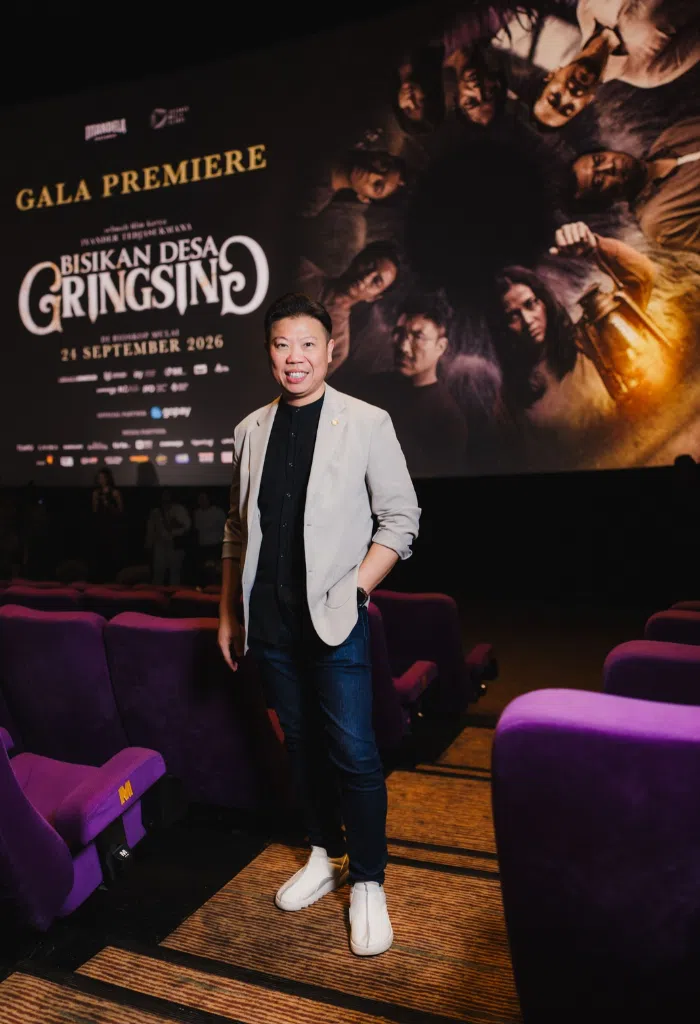
OMG’s chief executive officer Nick Tan says AI is helping the company move from producing shows for clients to co-owning films with international partners.
PHOTO: OCEANUS MEDIA GLOBAL
Limited resources, it turns out, need not limit a company’s ambitions as OMG and other small and medium-sized enterprises (SMEs) honoured at the inaugural SME AI Impact Awards 2026 have shown.
OMG won the SME Innovation Excellence Award for its AI-integrated production pipeline. The category recognises firms that created their own AI solution, and sits alongside the SME Adoption Excellence Award, which rewards firms deploying customised off-the-shelf products.
Organised by the Infocomm Media Development Authority and Singapore Business Federation (SBF), the awards named 30 winners from 290 nominations across 21 industries.
Says SBF chief executive officer Kok Ping Soon, one of the judges: “The real impact of AI is not just greater productivity. SMEs are gaining capabilities that previously required much larger teams and resources.”
Pursuing international film projects from home
Launched in 2020 as a media technology company, OMG built its name producing live shows for clients using motion capture and augmented reality.
From 2024, it began shifting towards original content it could have a stake in and hybrid film-making. Hollywood productions such as The Mandalorian and Oblivion, which used studio backdrops to create on-screen settings, offered inspiration.
“Today, our tech stack is quite similar. The only difference is that they have a bigger budget with bigger things to do; we have a smaller budget, and we make do,” says Tan.
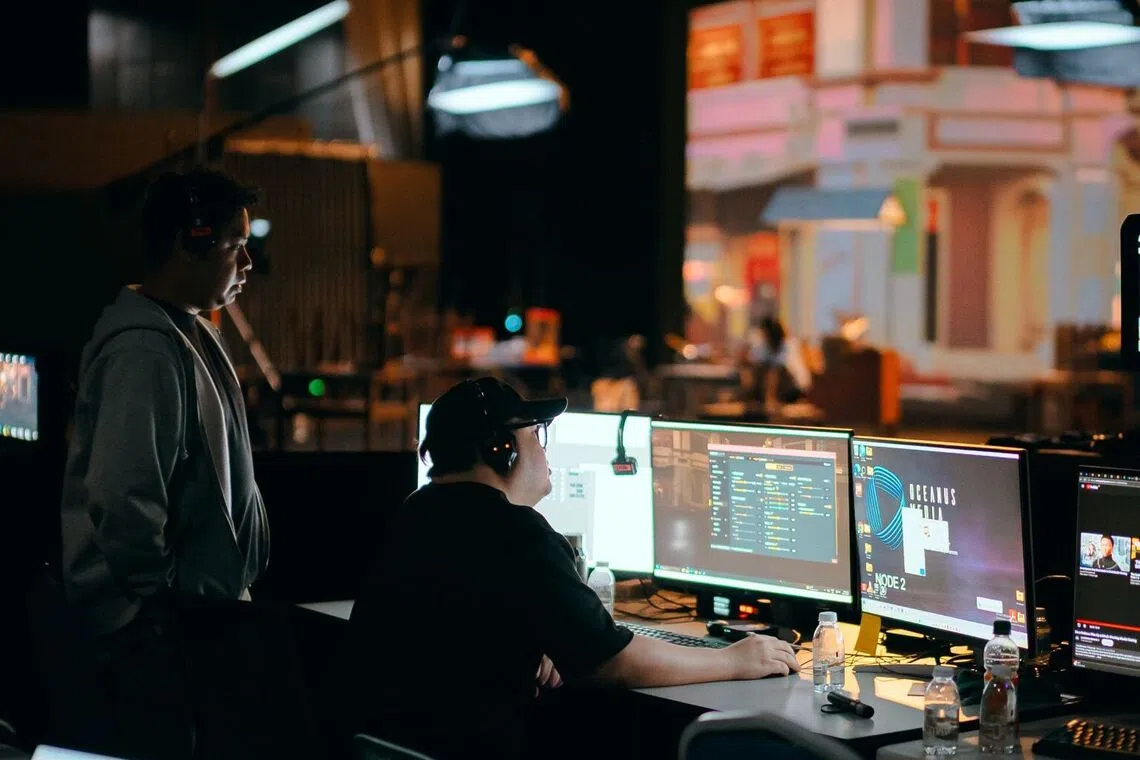
OMG’s production and technical teams work together behind the scenes to keep the action and digital backdrop in sync.
PHOTO: OCEANUS MEDIA GLOBAL
AI helps OMG stretch that budget by streamlining its workflow – from script breakdowns, scheduling and storyboarding to creating digital environments and automating routine post-production work. Staff review the output at each stage, and a single production can be dubbed in four languages.
The cost of a large-scale project has since fallen by up to 70% – from about $5 million to under $1.5 million – with most travel, permit and location expenses eliminated. Production timelines have also shrunk from over three months to three weeks or less for a 10-location shoot.
“This has enabled us to improve margins and take on more projects, so we can explore ideas and opportunities that were previously impossible,” explains Tan.
Supporting lean teams towards growth
AI has been equally transformative for IYLA Collective, which received the SME Adoption Excellence Award. The home-grown beauty business distributes four brands of products for families in Singapore, with a focus on mothers and babies.
Founder Lim Yi Ying and one other full-timer run the business with three part-timers. Developing content, email campaigns and sales reports used to take them about 60 hours a month.
“We kept pushing back things that could grow our firm, like launching a new brand, planning a proper campaign or opening new stockists, as we had our hands full with the day-to-day work,” she recalls.

AI has enabled IYLA Collective founder Lim Yi Ying and her small team to pursue goals previously out of reach, such as expanding into physical stores.
PHOTO: IYLA COLLECTIVE
To make room for those plans, Lim began testing AI tools in early 2025, first to fact-check content and analyse sales data. She settled on Claude because it connected with IYLA’s existing systems and could work directly with its business data.
AI tools cost IYLA about $3,000 a year, but Lim says they pay off. The 60 hours freed each month from repetitive tasks add up to more than $14,000 a year in labour savings, while automated emails to shoppers who abandoned their carts or have not visited lately bring in an estimated $1,000 to $3,000 more each month.
With more time, the firm has been able to focus on growth. After more than three years selling through its own online store, IYLA entered physical retail this year, stocking products at TANGS, Mothercare, Motherswork and Bonbon Blowout Bar+ hair salons.
For National Day, Lim and her team also built a technical campaign page where customers could customise a discounted product bundle – a task that would once have needed a developer.
Completed in two days, it became IYLA’s highest-revenue email campaign of the quarter, despite offering a shallower discount than the year before.

IYLA is now testing a customer app built with Claude Code that will launch by the year’s end.
PHOTO: IYLA COLLECTIVE
Since May 2026, the team has also been developing a customer app with Claude Code, which would have cost Lim at least $20,000 through an agency. Having no technical background, Lim says she simply described what she wanted to the tool in plain English and asked for changes as the app took shape.
“We’re already in the testing stage of our customer app and plan to launch it by year’s end,” Lim says.
Now that the team is no longer held back by its size, Lim can set her sights higher: expanding into the region and launching an own-brand product line.
“AI has changed what our small team can take on,” says Lim. “For a business like ours, it has changed what is possible.”
Scaling up without losing track
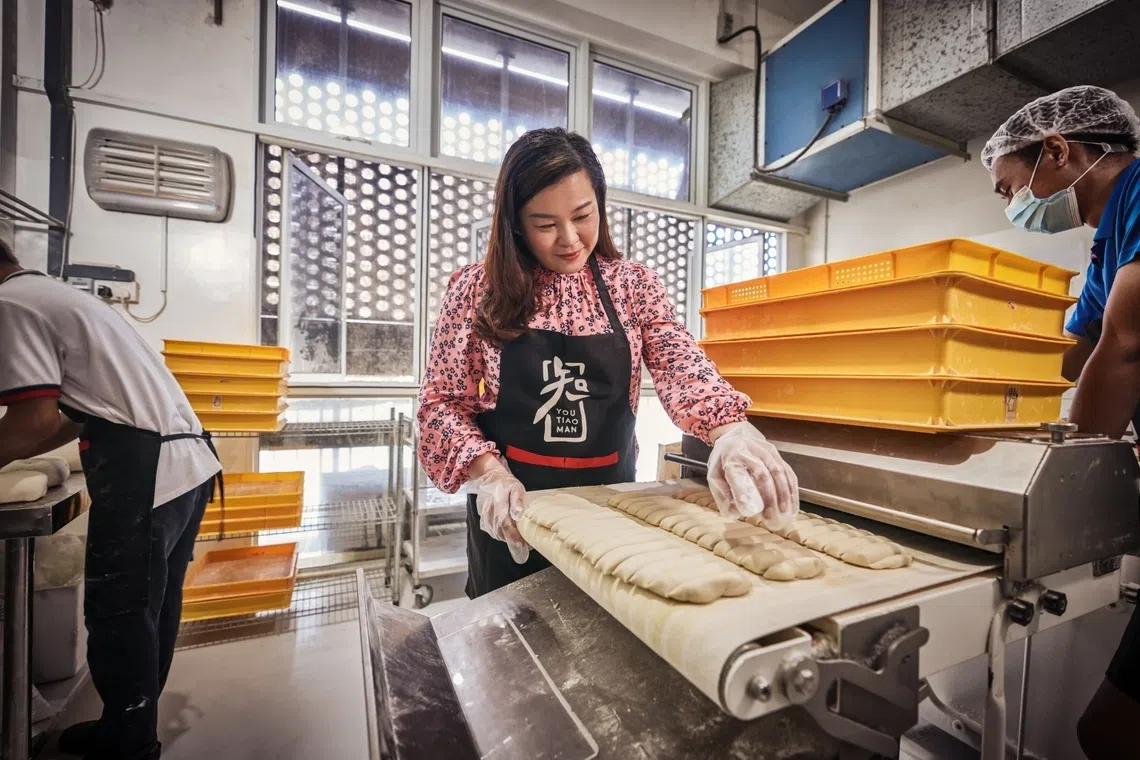
You Tiao Man founder Audrey Chew says connecting data across sales channels through its AI Operations Co-Pilot helped her team keep track of orders that previously risked being missed.
Pursuing bigger plans also depends on getting daily operations right. For SMEs exploring AI, identifying problems and bottlenecks is a useful starting point, says Oliver Jay, international managing director of OpenAI, maker of ChatGPT, and an awards judge.
“There’s an opportunity for employees to build tools around the work they know best. After all, they understand where the frustrations are,” says Jay, who was also on the judging panel.
At You Tiao Man, one of the few wholesalers of you tiao (dough fritters) and traditional Asian snacks, those frustrations centred on customer orders arriving through channels ranging from Shopify and TikTok Shop to WhatsApp and the supplier portals of large retailers.
“The real problem was never the volume. It was six different formats, with different SKU (Stock Keeping Unit) names, different prices and different pack sizes for the same product,” says founder Audrey Chew.
The systems that sent the order data “could not speak to each other”, Chew says, so employees struggled to consolidate the orders into a single view. Orders were missed because of the sheer amount of data.
“When an order slipped through, the delivery was not made, and we had to go into customer-recovery mode with that client,” she adds.
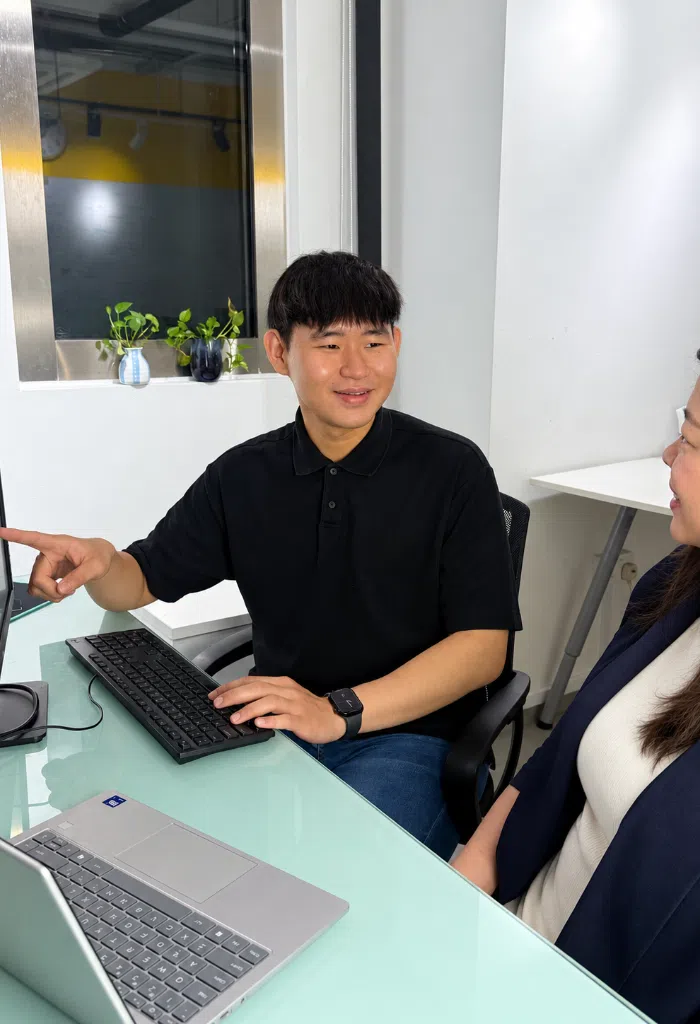
Employees at You Tiao Man have learnt to maintain AI workflows and fix problems themselves, reducing their reliance on external vendors.
PHOTO: YOU TIAO MAN
Things changed with its AI Operations Co-Pilot the team built using Claude and n8n. It earned the company the SME Adoption Excellence Award.
The tool brings orders together, checks invoices and flags discrepancies for approval. Within the first year, the AI Co-Pilot delivered an 85% return on investment, paying for itself in two months. Weekly invoice processing time fell from six hours to one, while reconciliation time dropped by two-thirds.
All this was achieved without any coding experience in the team. Staff tested the system and reported errors, from misread invoice dates to duplicate entries. Finding and fixing those problems helped them understand how it worked.
“Our staff can now read an automation flow, write a good prompt and fix a broken step themselves instead of waiting for a vendor,” she says.
Learn more about the 30 winners of the inaugural SME AI Impact Awards here.
KioskNews shows a cleaned-up reading view extracted from the publisher’s page — the original always lives on their site, not ours.