Income Tax Audit Deadline Today: Check These Forms Before It's Too Late
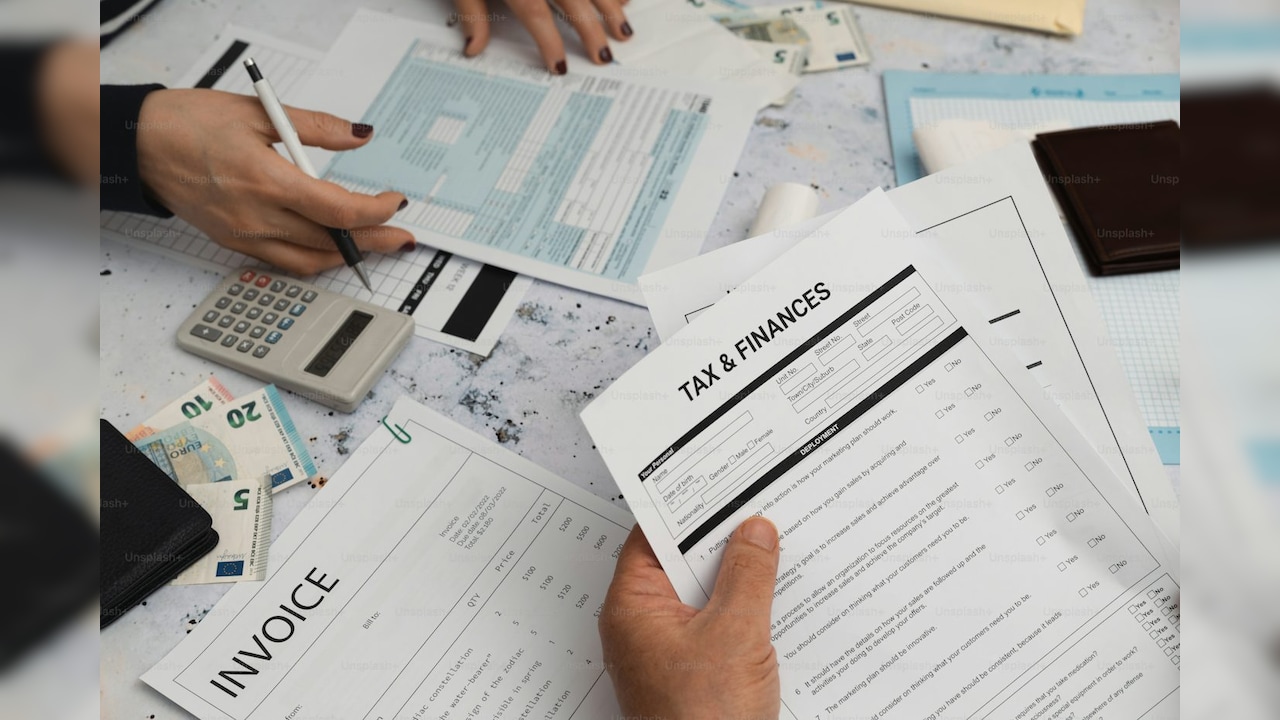
The extended deadline for filing income-tax audit reports and several other tax-related forms ends on October 21.
Earlier, the Central Board of Direct Taxes (CBDT) had extended the deadline from September 30 to October 21, giving taxpayers and chartered accountants additional time to complete audits and reconcile financial records.
However, the deadline does not apply to every taxpayer. It covers people and entities required to submit the specified reports and forms under the applicable provisions of the Income Tax Act.
Also Read | Layoffs Are Rising In Tech, But These Skills Are Helping People Unlock Better Pay
Which Income Tax Forms Are Due Today?
The key filings include:
- Tax audit reports: Eligible businesses and professionals required to undergo an audit under Section 44AB must submit their reports. These generally involve Forms 3CA or 3CB, along with Form 3CD.
- Forms 10B and 10BB: Eligible charitable trusts, institutions and other specified entities must file the applicable audit reports.
- Form 10CCB: This applies to eligible businesses claiming deductions under specified provisions, including Sections 80-I, 80-IA, 80-IB and 80-IC.
- Form 10DA: Eligible employers claiming deductions for additional employee costs under Section 80JJAA must furnish the required report.
- Other specified forms: These include Forms 29C, 3AC, 3AD, 3AE, 3AF, 10-IJ and 10-IL, wherever applicable.
Taxpayers should check which forms apply to their particular circumstances rather than assume that every form is required.
Who Needs To File A Tax Audit Report?
A tax audit is not mandatory for every individual who earns an income or files an income-tax return. Under the provisions applicable to assessment year 2026-27, businesses generally require a tax audit if their turnover or gross receipts exceed Rs 1 crore. The threshold can rise to Rs 10 crore if cash receipts and cash payments each remain within the prescribed 5 per cent limit.
For professionals, the general threshold is gross receipts exceeding Rs 50 lakh. Tax audits may also apply in certain cases involving presumptive taxation, depending on the income declared and other statutory conditions.
Taxpayers who are unsure about their eligibility should consult their chartered accountant before completing the filing.
What Should Taxpayers Check Before Filing?
Before submitting an audit report, taxpayers should reconcile their books of accounts with bank statements, invoices, GST returns and tax deduction details.
They should also review their Annual Information Statement (AIS), Taxpayer Information Summary (TIS) and Form 26AS to identify discrepancies in reported income, tax credits and financial transactions.
Any mismatch should be examined before the audit report is finalised. Taxpayers must also check the e-filing portal to ensure that the report has been submitted and complete any acceptance or approval step required from their end.
Missing the deadline may expose eligible taxpayers to penalties and other compliance-related consequences. Under the applicable provisions for assessment year 2026-27, a failure to get accounts audited as required can attract a penalty of 0.5 per cent of total sales, turnover or gross receipts, subject to a maximum of Rs 1.5 lakh, unless the taxpayer establishes a reasonable cause.
'India No Longer Has A Tax Season; It Has A Tax Climate'
The recurring burden of tax compliance has also raised questions about how much of the process can be simplified through better use of technology.
Vibhore Goyal, Founder and CEO of OneBanc, told NDTV that India's tax system increasingly requires individuals and businesses to keep track of multiple declarations, records and filing requirements. "India no longer has a tax season; it has a tax climate -- an exam with no last paper, where the examiner already holds the answer key," Goyal said.
He pointed to the information already available with the tax department through the AIS, including details of salary, interest income and financial transactions. Yet taxpayers still have to reconcile this information with their own records.
Goyal also highlighted the compliance burden on businesses, particularly micro, small and medium enterprises (MSMEs), which must manage multiple regulatory requirements alongside their daily operations.
The burden can extend to salaried employees as well, who need to manage investment declarations, proofs, Form 16, income-tax returns and e-verification.
To illustrate the problem, Goyal described the case of a young nurse who changed jobs, relied on two Form 16 documents and subsequently received a tax demand with interest when her father needed surgery.
"Her only mistake was assuming the system talked to itself," he said.
Goyal argued that better integration between employers' payroll systems and tax-related information could reduce the need for employees to repeatedly submit the same details. "Plugged into an AI-led, connected ecosystem, compliance becomes a by-product of payroll -- not every employee's second job," he said.
{Important: The deadline for filing income-tax returns for taxpayers whose accounts are subject to audit has been extended separately to November 21, 2026. The October 21 deadline is for the relevant audit reports and other specified forms, not the final ITR deadline for all taxpayers.}
KioskNews shows a cleaned-up reading view extracted from the publisher’s page — the original always lives on their site, not ours.