Voices from the Arab Press: Red lines in Syria, Azerbaijani oil, and Anwar Sadat
As the Quran tells us, only your Lord himself, full of majesty and honor, will remain. Nothing remains except the face of the one possessed of majesty and honor. That is the rule governing the universe.
Which brings us to the question of the end of social media: when will these applications that control people’s lives disappear? A question like this immediately raises another: what will replace them?
Social media have become almost like food and air. Remove them from your phone, and the device returns to the Nokia era – camera, telephone, and text messages. Those who lived through that period remember it.
I doubt anyone imagined social media or predicted them, even though their incubator, the Internet, already existed. Even Nokia, the giant that dominated the mobile-phone market for decades, collapsed because it failed to see what was standing on its doorstep.

In the 1980s, Asharq al-Awsat began printing by satellite. It was a tremendous technological event: the newspaper could be printed simultaneously in Jeddah and London.
That breakthrough generated many predictions. One of the most popular was that every household would eventually have a machine resembling an ATM, connected to satellites and periodically filled with paper, which each morning would print whichever newspapers you subscribed to. We were told Japan had already begun developing such a device.
Yet technological development took a completely different turn and ultimately eliminated the very essence of the prediction: paper itself. I am not talking here about the emergence of yet another technology giant, but about the disappearance of the great communications giants that once transformed the world.
In earlier eras, human beings did not anticipate what would become perhaps the greatest invention of all: the Internet, which swallowed radio, television, cinema, newspapers, commerce, education, medicine, and human relationships. Social media is only one manifestation of that larger invention.
Today we are witnessing the rise of another technological giant: artificial intelligence. Its growing presence, intertwined with social media, will make it easier for everyone to participate in creating a different world. Yet this very expansion, I believe, will eventually bring about social media’s demise.
When you use X today, you are in practice subject to two sets of laws: Saudi and American. What is permitted in the US is not necessarily permitted in Saudi Arabia, and vice versa.
As artificial intelligence develops rapidly and becomes easier to use, we will not merely gain more advanced knowledge; fabrication will also multiply. Soon we will inhabit a world whose very reality is suspect. Governments everywhere cannot remain spectators.
Official oversight of social media will expand. The door cannot remain open to absolutely everyone – and for once, I use that expression literally rather than figuratively. Some users are respectable, some are among the worst people imaginable, and others pursue very specific agendas.
All seek to influence others, whether for cultural reasons, money, political influence, or ideology. It is hardly an exaggeration to say that every intelligence service in the world has a presence on social media.
Whenever a battle rages on X and affects us, we cannot know with certainty who is behind it or whether it is for us or against us. When you see two people insulting each other online, assume a third party is benefiting from it and helping to inflame it.
Social media will soon become a world of chaos that erodes values and destabilizes settled knowledge. You will not know whether what you are reading is real or fabricated, whether the television channel you are watching is genuine or an imitation, whether the newspaper in front of you is real or fake.
The easier and more precise artificial intelligence becomes, the greater the chaos and the more actors will exploit it for divergent purposes. Governments have already begun intervening, but for now that intervention is mainly regulatory and legal and can exert real force only over accounts within their own jurisdictions.
The next step, in my view, will reach foreign accounts as well. States will decide which remain accessible and which are blocked. Social media will therefore cease to be genuinely global.
X has taken a preliminary step by providing information about the location or origin of certain accounts, but that is not enough to protect states from disorder and penetration. Every country will increasingly separate itself from the global mix.
A day will come when each state can identify what originates domestically and distinguish it from what comes from abroad, blocking the latter with the very artificial intelligence that created the chaos in the first place.
Everything you read and watch will then effectively become a local product, whether published under a real name or a pseudonym. Social media will become an internal forum, much like newspapers and other older media once were.
At that point, they will lose their defining feature: the global public square. And that will be their end.
You may now ask, what will replace social media? I can only answer, as Steve Jobs once did in another context: If you know the future, bring it here now – what are you waiting for? – Abdullah Bin Bakheet
Turkey, Israel, and red lines in Syria
Al-Masry Al-Youm, Egypt, September 6
Israel justified its August 18 strike on the Abu Al-Duhur Air Base, roughly 70 kilometers from the Turkish border, by claiming that Damascus was preparing to allow Turkish forces to deploy there, and that Israeli warnings had not been taken seriously.
Syria and Turkey denied any plan to establish a permanent base, saying Turkish officers had visited the site as part of training and military cooperation.
Israeli Defense Minister Israel Katz nevertheless chose to issue a direct warning to Turkish President Recep Tayyip Erdogan against dragging his country into “dangerous adventures in Syria” and testing Israel’s determination to defend itself.
With that strike, Turkish-Israeli relations moved another step away from political disagreement and toward military competition.
The two countries are not at war, and neither appears to have made a decision to go to war, but both are now drawing redlines inside the same geographic space. That is where the real danger begins.
For years, relations between Ankara and Tel Aviv demonstrated an ability to separate politics from interests. Disputes escalated, accusations were exchanged, and ambassadors were recalled more than once, yet trade continued, and practical cooperation never disappeared entirely.
On the eve of the Gaza war, bilateral trade stood at roughly $7 billion annually. The war shattered that equation. Turkey halted direct trade, closed its ports to Israeli vessels, and Erdogan’s language toward the Israeli government reached unprecedented levels of hostility.
Even so, Gaza does not appear to be the arena in which military confrontation between the two states is most likely to begin. It is the source of the political and moral rupture and the fuel for popular and rhetorical hostility, but it does not place Turkish and Israeli forces in the same theater.
Turkey can exert diplomatic and economic pressure and support the Palestinian position, while Israel can reject any Turkish security role in Gaza’s future, but the likelihood of direct fire between the two there remains limited.
Syria is far more dangerous because the dispute is not merely over positions but over two conflicting strategic projects. Turkey wants a unified Syrian state strong enough to control its borders, prevent the emergence of an armed Kurdish entity, and remain politically, economically, and militarily linked to Ankara.
It is therefore helping train the Syrian army and rebuild its institutions, seeking to transform the influence accumulated during years of war into a long-term partnership – perhaps extending into administrative arrangements – with Ahmed al-Sharaa’s government.
Israel, by contrast, wants a Syria that poses no military threat, a demilitarized south, and continuing freedom for its aircraft to strike whatever it considers dangerous to its security.
From Israel’s perspective, replacing Iranian influence with Turkish military influence is not necessarily an improvement. Iran was a familiar and exposed adversary. Turkey is a large NATO member with a substantial army, a defense industry, a network of alliances, and the capacity to help rebuild Syrian power.
This is the core contradiction: what Turkey regards as the natural reconstruction of the Syrian state may be seen by Israel as the creation of a new threat, while what Israel calls freedom of defensive action is viewed by Turkey as a violation of Syrian sovereignty and an attempt to keep the country weak and fragmented.
– Abdel Latif El-Menawy
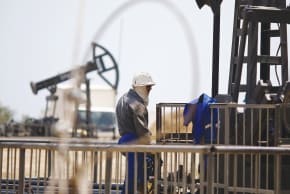
Azerbaijan’s oil flows to Israel
Asharq al-Awsat, London, September 5
For more than 30 years, Israel and Azerbaijan have built a quiet partnership based on reciprocal interests, without a mutual defense treaty or any formal obligation requiring one to protect the other.
The war with Iran has given that relationship new importance by revealing its practical value in a period of confrontation, particularly in energy and security.
Israel needs Azerbaijani oil and values proximity to the Iranian border, while Baku benefits from Israeli military technology and intelligence cooperation that strengthens its ability to protect its interests.
Even so, both sides prefer to keep the relationship flexible rather than formalize it into an alliance carrying broader commitments.
Diplomatic relations date to 1992, when Israel recognized Azerbaijan and opened an embassy in Baku. Azerbaijan moved more slowly, establishing a trade office in Tel Aviv in 2021 and opening an embassy in 2023, becoming the first Shi’ite-majority country to maintain a permanent diplomatic mission in Israel.
In February 2026, the two countries signed an artificial intelligence memorandum covering supercomputing infrastructure and joint research. Yet there is still no defense treaty between them, only a collection of separate arrangements in trade, energy, arms, and intelligence that can expand or contract according to circumstances.
Oil is the central pillar of the relationship. In 2025, Israel’s imports of Azerbaijani crude rose by 31% to around 94,000 barrels a day, giving Azerbaijan 46.4% of Israel’s total oil imports, compared with roughly 28% from Russia, the second-largest supplier.
The crude travels through the Baku-Tbilisi-Ceyhan pipeline from Azerbaijan to Turkey’s Mediterranean coast and is then shipped to Ashkelon. The route’s strategic value lies in bypassing the Strait of Hormuz, leaving Iran unable to disrupt it directly through its leverage there.
Maintaining the flow is essential both to Israel’s economy and to its military capacity. Yet the same advantage also creates vulnerability because nearly half of Israel’s oil imports depend on a single supplier.
The crude also transits Turkish territory at a time when Ankara has maintained a trade embargo on Israel since 2024. Turkey does not officially determine the final destination of crude loaded at Ceyhan, but the route nonetheless remains exposed to political fluctuations.
Azerbaijan, for its part, benefits from having a major buyer for its oil and from preserving a corridor connecting the Caspian Sea to the Mediterranean, reinforcing its role as an important energy source outside Russian and Iranian routes.
The security dimension is more sensitive and opaque. Reports have alleged the presence of Israeli special forces and intelligence personnel in southern Azerbaijan near the Iranian border, using the area for intelligence collection, drone operations, and possible rescue teams for pilots.
Other reports have attributed a strike on an Iranian official to activity launched from Azerbaijani territory. Baku has denied these claims as baseless, while Israel has declined to comment. They therefore remain unverified accounts rather than established facts, particularly amid a broad information and intelligence war.
The Caspian Sea dimension became more important after Israel struck Iran’s Bandar Anzali naval base on March 18. According to reports, the attack destroyed a ship, four missile boats, and military infrastructure.
The force destroyed there did not represent a major direct threat to Israel, but in theory it could have threatened Azerbaijani oil installations and Caspian shipping lanes. Its weakening therefore benefited Azerbaijan indirectly and helped protect the region producing the crude destined for Israel.
It also affected a maritime route used by Russia and Iran for trade and, according to Western reports, the movement of military equipment.
Yet closeness to Israel also carries potential costs for Baku. On March 5, drones arriving from the direction of Iran struck Nakhchivan International Airport, wounding four civilians, although Tehran denied responsibility.
The incident was interpreted as a limited warning over Azerbaijani-Israeli cooperation. President Ilham Aliyev responded forcefully by summoning the Iranian ambassador, recalling Azerbaijan’s ambassador, and raising military readiness along the border.
Tensions nevertheless subsided quickly: border crossings reopened, the Azerbaijani and Iranian presidents spoke by telephone, and Azerbaijan sent humanitarian assistance to Iran. This illustrates Baku’s preference for deterrence without severing communication.
Arms have also been central to the partnership. Israel supplied 69% of Azerbaijan’s major weapons imports between 2016 and 2020, including reconnaissance drones, loitering munitions, LORA missiles, and Barak air defense systems.
Purchases later declined after Baku achieved its military objective of regaining Nagorno-Karabakh from Armenia and no longer needed imports at the same pace. Even so, Azerbaijan continues to benefit from existing Israeli systems and the maintenance, upgrades, and training associated with them.
In the balance of gains, Israel derives the greater strategic benefit during wartime because it secures a major oil source beyond Hormuz while maintaining a relationship with a country bordering Iran.
Azerbaijan gains economically and militarily but carries greater geographic and political risk because of its proximity to Iran and its close ties with Turkey. The most realistic course is therefore the current one: deep cooperation without a declared alliance, openness toward Israel combined with continued dialogue with Iran.
It is a partnership from which both benefit, but Israel reaps the broader energy and security advantage, while Baku proceeds cautiously to ensure its gains do not become liabilities. – Huda al-Husseini
Why did Sadat become the 20th century’s greatest president?
El Watan, Egypt, September 5
Anwar Sadat was not a great leader merely because he fought the October War, nor because he later chose peace with Israel, but because he possessed a rare ability to read international transformations and make decisions at the moment they best served Egypt’s interests.
To understand Sadat’s experience, it is not enough to look at the results of the October War, his visit to Jerusalem, or the recovery of Sinai. One must first consider an element of politics that is often decisive: timing.
In 1972, the Soviet Union was still a superpower engaged in an open struggle with the US for global leadership. Yet Sadat took the bold decision to reduce the Soviet presence in Egypt and expel a large number of Soviet advisers.
He did not wait decades for the Soviet Union to collapse before realizing that the international system was changing; he began reorienting Egyptian policy while Moscow was still near the height of its power.
That decision formed part of a broader vision: Egypt could not remain captive to a single international camp, and restoring national decision-making required an independent margin of maneuver.
Then came the October War of 1973. Sadat’s objective was not an open-ended war or a propaganda victory. He wanted to break the stalemate, alter the balance of power, and open the path toward a political settlement that would restore Egyptian rights.
He fought when war served the national objective, then moved toward negotiations when diplomacy became more useful to Egypt. This was a defining feature of his leadership: he used war to change the equation, then used peace to consolidate the results.
He went to Jerusalem, entered difficult negotiations that culminated in the Egyptian-Israeli peace treaty, and eventually restored the whole of Sinai to Egyptian sovereignty.
In parallel, Sadat repositioned Egypt internationally, gradually shifting it from the Soviet sphere toward a strategic relationship with the US.
People may disagree over his economic or domestic policies, and those remain legitimate subjects for criticism, but it is difficult to deny that he possessed a clear foreign-policy vision and a strong ability to read international power balances.
The politician who makes a difference is not merely the one who knows how to fight, but the one who knows when to fight, when to negotiate, when to change direction, and when to understand that the world around him has changed.
Sadat grasped early that international relations are built not on permanent friendships or eternal enmities but on shifting interests, and that the state’s interests must remain the primary compass.
More than half a century later, Egypt faces another international transformation. Its details differ from Sadat’s era, but the underlying question is similar: how can the state maneuver among major powers without becoming a card in anyone else’s hand?
The US remains the world’s strongest power, but China is rising economically and politically, while competition between the two intensifies over the shape of the international system in the coming decades.
Egypt does not need to replace its relationship with Washington with total alignment with Beijing, or to join one camp against the other, but to build a balanced policy that maximizes Egyptian gains.
Cairo needs to preserve its strategic relationship with the US while expanding economic and investment partnerships with China, giving itself greater room to maneuver, strengthening its bargaining position, and protecting national decision-making from dependence on any external power.
The equation is not easy, but it is necessary. Relations with Washington can strengthen Egypt’s hand in dealing with Beijing, just as relations with Beijing can provide additional leverage in dealing with Washington, provided Egyptian interests remain the primary determinant, and Cairo does not become a party to a conflict that does not serve its objectives.
Sadat read a major international transformation in his time and made decisions that redirected Egypt for decades. Today, Egypt’s leadership confronts another changing world, gradually moving from a system dominated by one power toward one that is more competitive and multipolar.
The real issue, then, is not whether Egypt chooses America or China, but whether it can benefit from both relationships and use its geography, political weight, and regional role to advance its national interests.
Sadat taught us that politics is not made of fixed slogans, that national independence does not mean isolation, and that openness does not mean dependence.
The question facing Egypt today is whether it can read the shift between the US and China as Sadat once read the shift between the US and the Soviet Union. I believe the answer is that we are about to witness political maneuvering at the highest level.
– John Al-Masri ■
Translated by Asaf Zilberfarb. All assertions, opinions, facts, and information presented in these articles are the sole responsibility of their respective authors and are not necessarily those of The Media Line, which assumes no responsibility for their content.
KioskNews shows a cleaned-up reading view extracted from the publisher’s page — the original always lives on their site, not ours.