Star Wars Meets Star Trek In The New Sci-Fi Masterpiece From The Creator Of 2020's Biggest Superhero Series

Kolt Day is a tenured freelancer who has brought invigorating and provocative takes to Screen Rant and ComicBook, alongside loads of writing experience in other realms. Outside of media journalism, Kolt loves music production and philosophy (particularly Nietzsche, Derrida, and Foucault).
From its very first chapter, Robert Kirkman and Lorenzo de Felici's Void Rivals explosively collides Star Trek and Star Wars' guiding impulses with a gag that feels remarkably layered on reflection. A rival Agorrian (named Darak) and Zertonian (named Solila) find themselves crash-landed upon a strange planet and desperate to escape from both the planet and one another. They find their first solution by way of a conspicuous third term: a cyberbot (whose very existence Darak's "Handroid" cannot parse, being neither Agorrian nor Zertonian) dispassionately recognizing them both, asking where he is, and promptly flying away.
Circumstances be damned: these two apparently essential rivals cannot escape the circumstances binding them. It might seem flippant, but this is the meat of the meeting: in the face of Star Wars' stark binary oppositions as well as Star Trek's contextual observations about other forms of life, two divergent but equally important flanks emerge in how mass media sci-fi can tell galactic stories—indeed, almost like the Agorrians and Zertonians themselves, forged of the same mold, yet strangely incomprehensible to one another.
Enter Void Rivals: Kirkman's unique voice has already been proven through the wild success of the superhero series Invincible and cultural sensation The Walking Dead. His distinctive storytelling is hard at work and extremely effective in his tension-shattering foray into sci-fi.
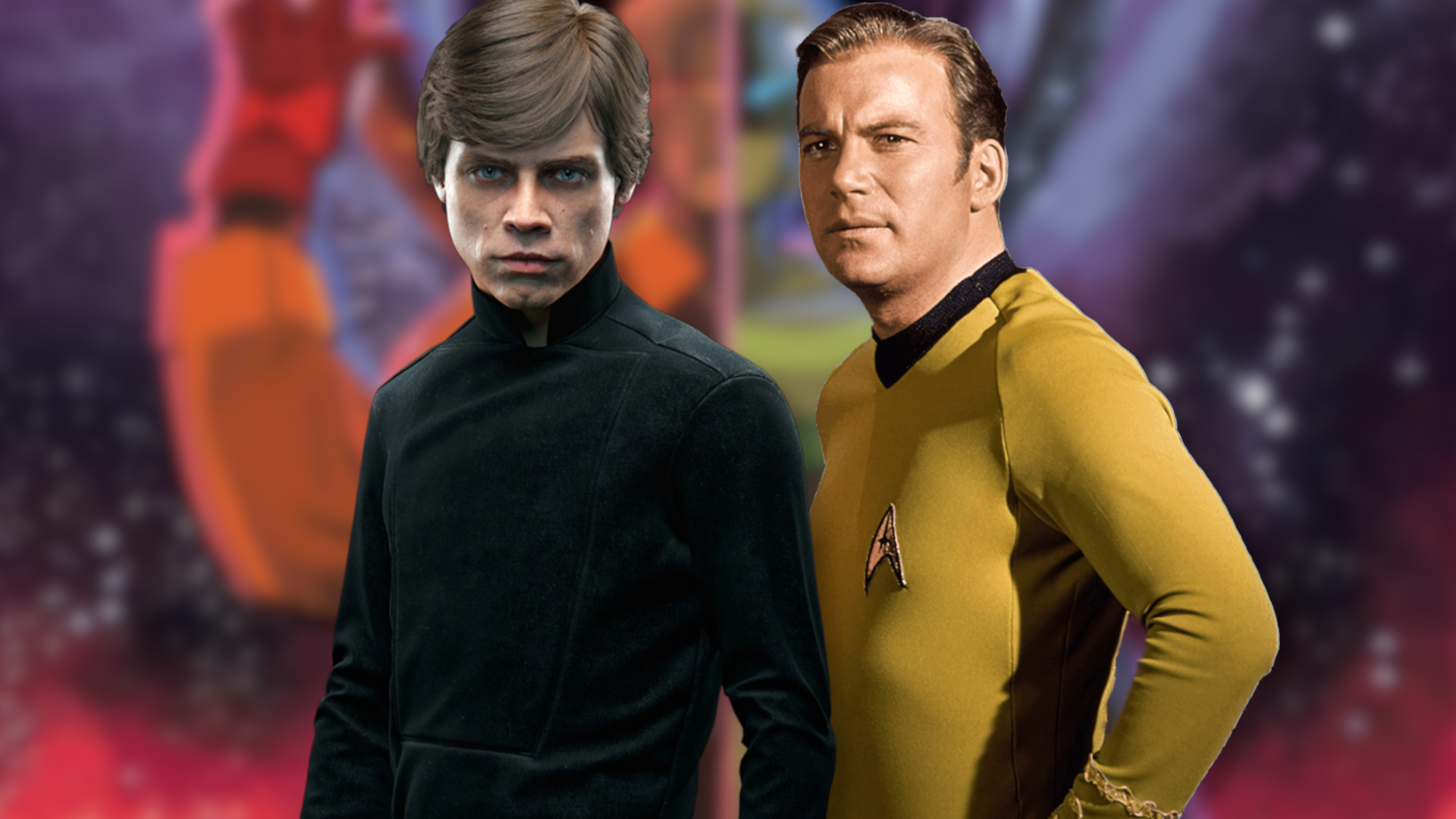
Void Rivals Is Star Trek Meets Star Wars At Heart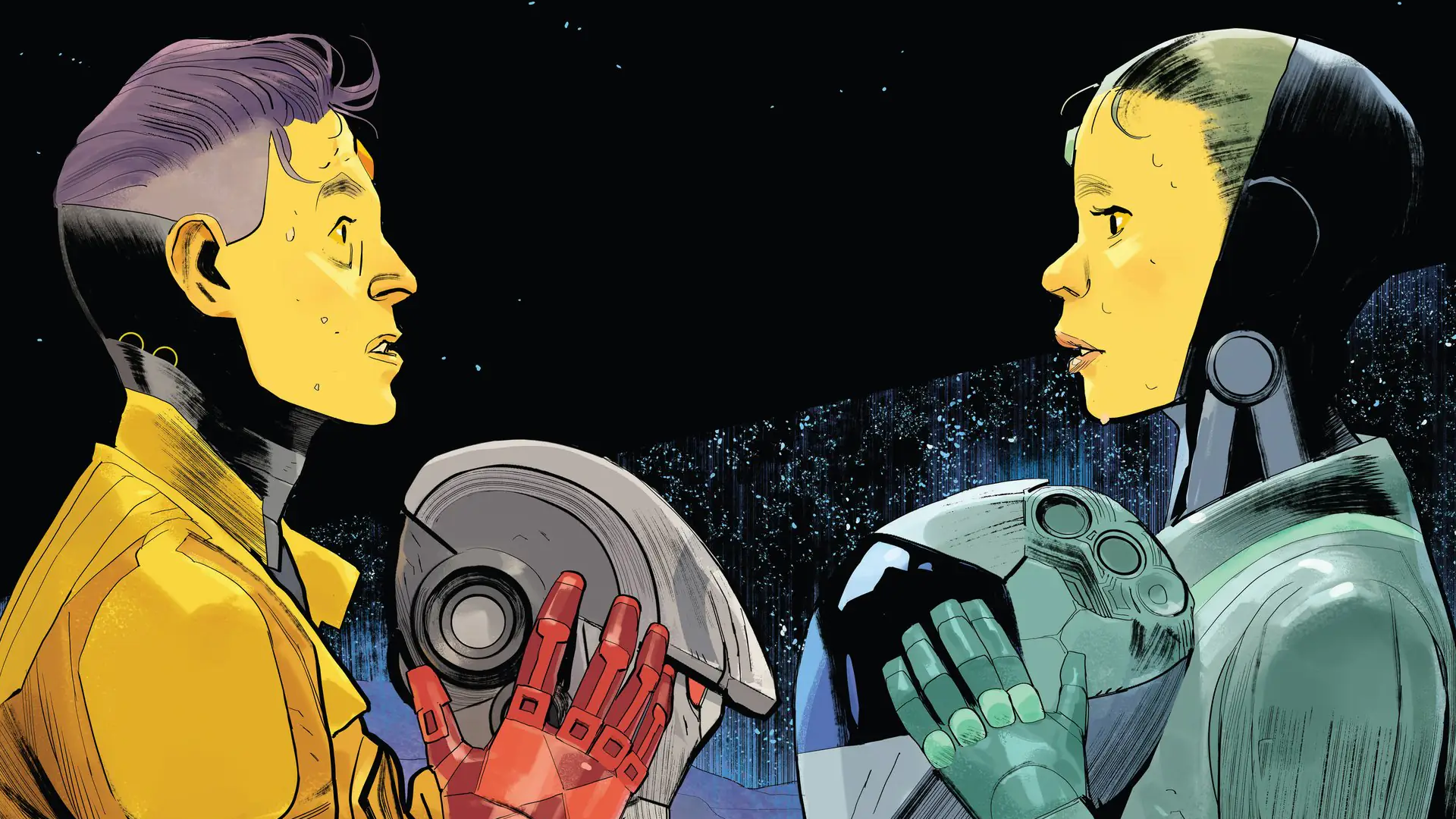
Despite Star Trek and Star Wars' many similarities, the conflict between their modes of storytelling is a familiar one to modern sci-fi. Star Trek is an episodic sci-fi giant reaching back to the 1960s, while Star Wars effectively repopularized and reinvigorated the space opera genre in the 1970s. Although they do very different things, there's something underneath the comparison: how, in general, cosmic-scale conflicts (and the Other, generally) are handled.
Star Trek, as an episodic series, rarely allowed itself the room to brood over a central intergalactic conflict (though not always, as in the case of the Federation/Klingon conflict and Deep Space Nine's Dominion War); in fact, this scope would have been too small for the series. From the start, Star Trek considered those aboard the USS Enterprise to be only a focal point through which the galaxies themselves were experienced.
By contrast, Star Wars leans hard into binary storytelling, premised obviously on the Light Side and Dark Side of the Force—and, consequently, the ancient conflict between the Jedi and the Sith (and the sprawling galactic politics that extend from it). The series' primary focus is on a sort of yin-yang notion of balance: the Light Side serves to meter and contain the chaotic excesses of the Dark Side.
For Void Rivals, that balance can't exist: there is no inherent darkness that essentially demands containment from its opposite. The fact that the titular rivals feel that way is exposed through the realization that their own cultures and beliefs are bound up in long histories, compounding bias and error, and strange accounting. In part through its own exploration of that binary conflict, and through Void Rivals' constant exposure of the rivals to peoples and situations outside the Agorrian–Zertonian conflict, it investigates those histories and biases in a way that's remarkably reminiscent of Star Trek's sensitivity to the Other.
This apparent distinction between Star Trek and Star Wars appears as though a binary somehow persists between these two lenses: Star Trek's lens, of course, affords more room for congeniality with opposing views, while Star Wars bases its ideas of balance and mutual necessity between the Light and Dark Sides on the very notion that they're distinct and incommensurable—of the same essence, yet essentially different.
Why Void Rivals Is A Masterpiece

By operating from the outside, the incidental character of Jetfire, the cyberbot, is able to provide the very foundation of the Agorrian and Zertonian binary. Through his exclusion from it, he's able to elaborate on what it means to be on the inside. He does not exist within that milieu; he owes nothing except his own action when faced with it. (Coincidentally, he also provides an interesting link between Void Rivals and Transformers.)
Void Rivals arguably does similar. Faced with two gigantic sci-fi traditions, it looks at both, applies them to one another, and asks what happens. And what happens is precisely what yields Void Rivals as a masterpiece. By the end of the first chapter, the rivals' masks are removed for them to realize that they're, in the comic's words, "the same." The second chapter is dedicated to their common history, now forgotten and mobilized by an exemptive mythology that leaves the other out: inhabitants of the Sacred Ring, once one race, now kept apart through social and political machinations.
This gets at the heart of what makes Void Rivals a masterpiece: it's not that the series circles the drain asking the same question between two ostensibly opposed forces; rather, it's that it invents new ways, over and over, of asking what its founding binaries mean, destabilizes them, and makes that instability essential to overcoming problems at every scale. It's not a story where good must triumph over (or contain) evil, because there is no good or evil at work here: only histories, societies, and psychologies in need of interrogation.
That's, in turn, what makes Kirkman the perfect man for the job: his catalog has been built around using dire situations and abnormal settings to investigate what characters feel, why, how, and how people might come together despite the gulfs between them.
There might be (and certainly are) other works that angle toward a similar collision of Star Trek's granularity and Star Wars' dualism, but Kirkman has the audience and voice to make Void Rivals a formidable genre deconstruction worth reading for every sci-fi fan.
KioskNews shows a cleaned-up reading view extracted from the publisher’s page — the original always lives on their site, not ours.