India forms specialist police commando units to patrol disputed border with China
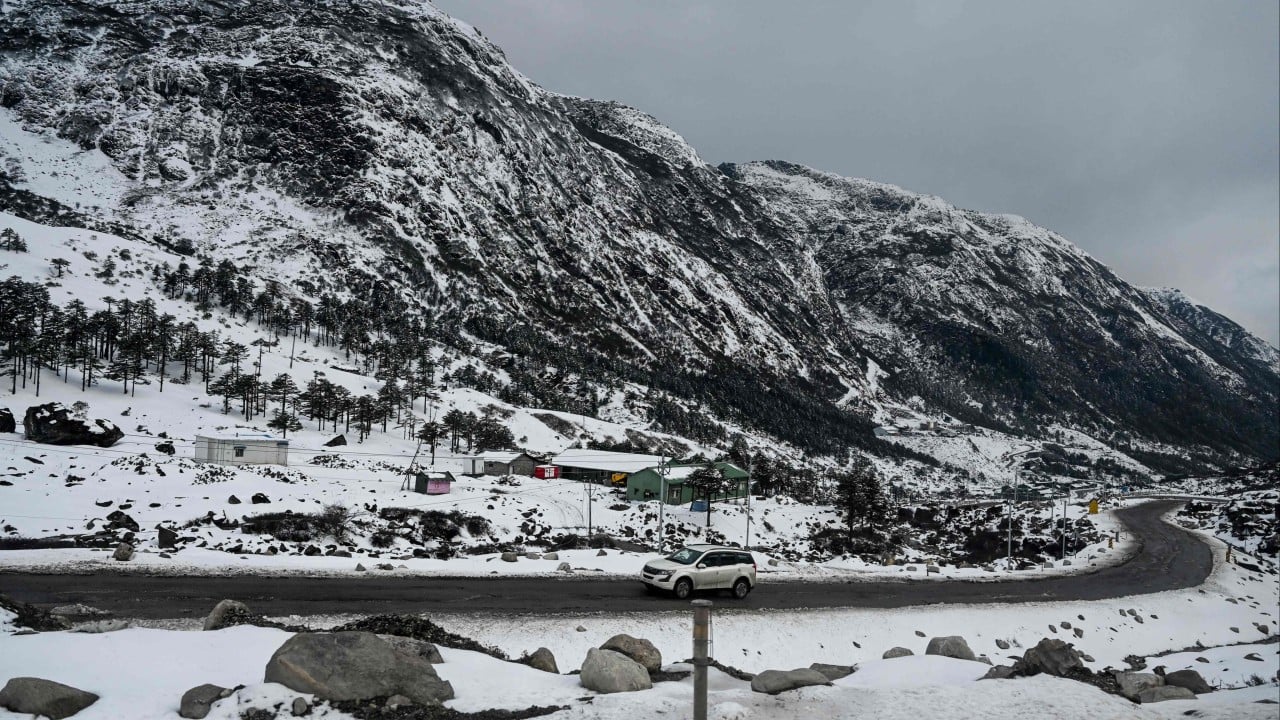
India has reportedly formed specialised commando units to patrol its disputed border with China in a bid to claw back its lost tactical edge.
The move is expected to spur Beijing to step up its efforts to improve its infrastructure and force projection in the region.
The units, known as Shaurya platoons, will form part of the Indo-Tibetan Border Police force that patrols the 3,000km (1,865-mile) frontier with Tibet, according to Indian media reports.
The platoons have been given specialised training in close combat, high-altitude operations, drone surveillance and rapid responses.
Few details of the new force’s deployments or the precise nature of its operations have been disclosed.
But Shatrujeet Singh Kapur, the former director general of the border police, said last month just before he stepped down: “In the past few days, a situation arose where face-offs happened at several locations in Arunachal [Pradesh] and it still continues. Our Shaurya commandos played an exemplary role in this.”
Beijing claims Indian-controlled Arunachal Pradesh, which it calls Zangnan (southern Tibet) and says it part of the Tibetan autonomous region.
Lin Minwang, professor and vice dean at the Institute of International Studies at Fudan University, said the new units reflected the lingering trust deficit between the two sides along the Line of Actual Control, the de facto border.
04:20
Will India and China’s new border deal lead to long-term peace in the disputed Himalayas?
“It means that the volatile situation along the border is likely to continue for a long time,” Lin said.
Relations between the two countries hit their lowest point in decades following a 2020 clash in the Galwan Valley where at least 20 Indian and four Chinese troops died.
But Beijing and New Delhi have been slowly working to repair ties, efforts that gained fresh momentum since Donald Trump’s return to the White House in 2024 saw a fresh round of tariff wars that targeted partners and rivals alike.
In September, Chinese President Xi Jinping travelled to India for the first time in seven years, meeting Prime Minister Narendra Modi on the sidelines of the Brics summit in New Delhi.
During the talks, the two leaders reaffirmed that “both countries should take a strategic and long-term perspective” and that “differences should not become disputes”.
Analysts believe the new commando units were created after the Galwan Valley clash forced India to reassess its combat readiness along the frontier, according to a report by Nikkei Asia published on Monday.
Anushka Saxena, a researcher at the Takshashila Institution, told Nikkei Asia that the need for dedicated units arose partly because commando-trained border police were also used for other tasks, including VIP security, embassy protection and counter-insurgency operations.
“The Shaurya commandos are primarily intended to operate defensively, whereas Ghatak platoons [specialised army assault units] are trained and oriented towards offensive operations,” Saxena said.
The exact size of the new units is not known, but Saxena said that if each of the border police units deployed along the border hosted a Shaurya team, the specialised force could eventually reach a strength of between 800 and 1,200 personnel.
Lin said India had previously held a significant troop advantage over China, but this edge had eroded after Beijing strengthened its frontline presence and logistics following the Galwan Valley clash and the new units were a clear attempt by New Delhi to regain its tactical edge along the border.
He said China would undoubtedly respond to the deployment of the new units, but added it was more likely to do so “through civilian measures – especially infrastructure – to improve mobility and enhance force projection, rather than matching India by increasing troop numbers or deploying specialised units”.
02:04
New video shows clash between Indian and Chinese troops on border
In recent years, China has carried out a series of massive infrastructure projects on the Tibetan side of the Line of Actual Control, including road, rail and air links.
Beijing has also been working to develop border villages in the Tibet autonomous region as part of its broader rural revitalisation strategy. The programme, which got under way in 2019, aims to alleviate poverty and safeguard frontier territories, as well as plug gaps in infrastructure and public services.
According to the Nikkei Asia report, some facilities within these border villages have been assessed as having potential military or paramilitary uses.
In response, India has also been upgrading its own border infrastructure, including expanding and upgrading its road networks.
KioskNews shows a cleaned-up reading view extracted from the publisher’s page — the original always lives on their site, not ours.