The 10 Greatest Rock Albums of the '60s, Ranked

Audrey Connelly is a writer living and working in Boston, MA. Music is and has always been one of the most important parts of her life. While rock & roll is her true love, Audrey's taste runs the gamut. Deep cuts, overplayed Billboard Hot 100 hits, trip hop, reggae, musical theater. It's all fair game. However, if she's being totally honest, she is not a huge fan of (most) country music, but she is (mostly) willing to give anything a listen or two.
She has previously contributed to Atwood Magazine and has brought her passion for writing and music – specifically classic and alternative rock – to Collider.
The '60s was a hugely important era for rock music – perhaps the most important decade for the progression of the genre. Folk and protest influences were abundant, and the British Invasion was globalizing the genre. The counterculture was in full swing, bringing a psychedelic edge to rock and roll. The world was in a state of constant transformation, and the music of the decade mirrored this relentless change. Musicians began to experiment like they never had before, pushing the boundaries of what was possible – and what was socially acceptable. There was so much variety and innovation during this time that picking the top ten rock albums of the 1960s may seem like an impossible task. And, yet, here they are.
10 'Disraeli Gears' by Cream (1967)
The second album from chaotic British rock band Cream definitely made an impact. An incredible amount of creativity and experimentation was packed into these eleven songs (clocking in at a mere 33 minutes.) Both of the singles released ahead of this album — “Strange Brew” and “Sunshine of Your Love” — charted in the UK, and the latter made it to number five in the US. Disraeli Gears bridged the gap between their earlier blues rock sound with the psychedelic tint they later took on. Perhaps “earlier” and “later” are the wrong words – the band dissolved after only three years together due to irreconcilable differences between bassist Jack Bruce and live-wire drummer Ginger Baker.
9 'Willy And The Poor Boys' by Creedence Clearwater Revival (1969)
Willy and The Poor Boys by Creedence Clearwater Revival is about as far as you can get from the psychedelic rock wave taking over the UK and the US. This album is straight up Americana swamp-rock. The narrative storytelling and the focus on the American middle class make this album a stand-out and a fan favorite. The record was initially supposed to be a concept album, written and recorded from the perspective of fictional jug band Willy and The Poor Boys. While they didn’t end up following through with this idea, some of the texture remained – the story of the jug band that never was is expressed through the popular track “Down on the Corner.”
8 'Led Zeppelin II' by Led Zeppelin (1969)
Led Zeppelin II is widely considered to be the band's heaviest album. Their music style was evolving as the '60s slipped into the '70s – they were reshaping traditional American blues music into something with much more firepower. This album included three covers of Chicago-based blues songs and six original tracks. It was written while Led Zeppelin was on tour, recorded in myriad studios and cities (and even on Jimmy Page’s houseboat!) This constant relocation added to the chaotic feel of the album. But despite the constant motion, Zeppelin II comes together as a cohesive record, featuring dynamic shifts in volume and tone, driving guitar, and musical (rather than lyrical) hooks.
7 'Electric Ladyland' by the Jimi Hendrix Experience (1968)
Electric Ladyland is the third and final album from the Jimi Hendrix Experience. The record initially confounded critics – they weren’t sure whether to love or hate the trippy, immersive, funky acid rock album Hendrix had created. It was an unprecedented piece of work, so some confusion is understandable. Nowadays, the record is regarded as one of the greatest albums in rock and roll. Hendrix referred to these songs as "sound paintings,” which is abundantly evident in the album. Each track is layered and ambient, drawing the listener deep into a bottomless well of sound. And lest we forget – this album also includes Hendrix’s legendary reinterpretation of Bob Dylan’s “All Along the Watchtower.”
6 'The Doors' by The Doors (1967)
Jim Morrison and The Doors were a darker voice in the 1960s counterculture. On their self-titled debut album, the group mixes poetry, blues, psychedelia, and experimentation to create an incredibly important record. This record was developed through live performances, mostly at LA’s iconic venue Whiskey a Go Go. They released their single “Light My Fire” ahead of the album, which quickly got the public interested in their music. The Doors had an inconceivable impact on the bands that came after them, across a wide array of genres. Alternative rock and punk would not be what they are today without the music of The Doors.
5 'Let It Bleed' by The Rolling Stones (1969)
What's a rock and roll list without The Rolling Stones? Their eighth studio album Let It Bleed is a return to their earlier blues, gospel, and hard rock sound. The record was also heavily inspired by American roots music and the overwhelming feeling of disillusionment much of the Western world experienced throughout the 1960s. Let It Bleed includes some of their biggest hits to date, such as “Gimme Shelter” and “You Can’t Always Get What You Want.” Throughout the writing and recording of this album, the band was in a time of intense turmoil. Founding member and guitarist Brian Jones was slipping deeper into addiction and failing to show up for rehearsals, resulting in his termination from the group. He tragically passed away a few weeks later. He was replaced by Mick Taylor, and both musicians appear on the album. Keith Richards had to pick up a lot of the slack in the string section, which permanently altered the band’s sound. The release of Let It Bleed ushered in the band’s most successful period.
4 'Tommy' by The Who (1969)
Tommy by The Who took six months to write and record — an unusually long period for bands at this time. This extended interval was well worth it, producing an iconic and unprecedented concept album. It would be impossible to rush the complex storytelling, theatricality, and groundbreaking scale of the record. Tommy, written by guitarist Pete Townshend, was the first album to be labeled a "rock opera". Townshend was inspired by Indian spiritual practices. The album follows the fictional Tommy Walker through his life, which is plagued by murder, abuse, and drugs. Tommy overcomes these myriad hardships to eventually become a messiah figure and spiritual leader. Tommy is widely considered to be The Who’s breakout album.
3 'Highway 61 Revisited' by Bob Dylan (1965)
Highway 61 Revisited is Bob Dylan’s sixth studio album. In this body of work, we see Dylan depart further from folk music, incorporating an increasing number of rock musicians in the studio. This album is in many ways a continuation of his 1965 record Bringing It All Back Home. Dylan’s poetic lyrics capture the political and cultural unrest of America in the midst of the Vietnam War. His lyrics are steeped in clever allegory and impressionism, buoyed by a relentless blues-rock drive. With each album release, Dylan’s energy and rebellion grows.
2 'The Velvet Underground & Nico' by The Velvet Underground (1967)
The Velvet Underground & Nico was greatly underappreciated during the time of its release. It is the band’s debut album, a collaboration with German model and singer Nico, a partnership that was carefully engineered by artist Andy Warhol. The record tackled unconventional and controversial subject matter like drugs and sadomasochism, which shocked the public — it was banned from many radio stations and record stores. The Velvet Underground’s avant-garde, abrasive sound did well in New York City’s underground scene, but pretty much nowhere else. They were well before their time, setting the stage for punk, alternative, and psychedelic rock. Many consider it to be the original art rock record. Today, it is finally appreciated for the masterpiece that it truly is.
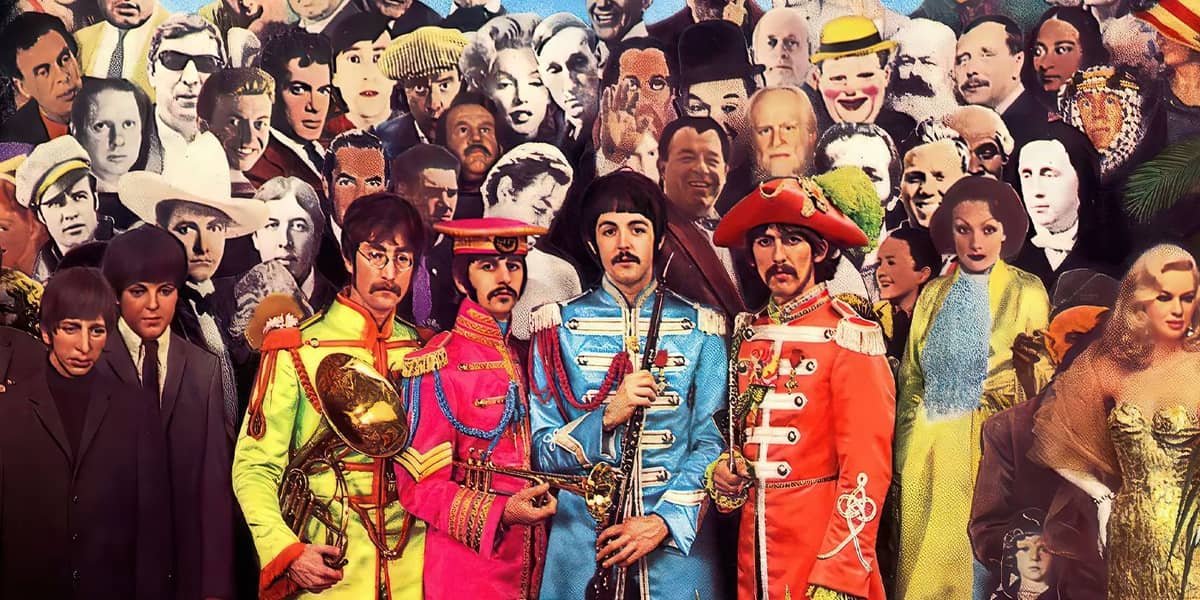
1 'Sgt. Peppers Lonely Hearts Club Band' by The Beatles (1967)
The Beatles’ Sgt. Pepper's Lonely Hearts Club Band is a landmark psychedelic rock album – perhaps the most important body of work to come from the 1960s. This record was a huge moment in popular culture and helped to define the Summer of Love. It is an early example of a concept album, wildly innovative in every aspect of creation and production. The album is based upon a fictional band conceptualized by Paul McCartney and includes a vast array of whimsical and unusual influences, including vaudeville and circus music. This incredible album set the stage for prog rock and countless other genres, changing the face of rock and popular music forever.
KioskNews shows a cleaned-up reading view extracted from the publisher’s page — the original always lives on their site, not ours.