Forget The Lord of the Rings, These 4 Books Do Epic Fantasy Much Better

Diego Pineda has been a devout storyteller his whole life. He has self-published a fantasy novel and a book of short stories, and is actively working on publishing his second novel.
A lifelong fan of watching movies and talking about them endlessly, he writes reviews and analyses on his Instagram page dedicated to cinema, and occasionally on his blog. His favorite filmmakers are Andrei Tarkovsky and Charlie Chaplin. He loves modern Mexican cinema and thinks it's tragically underappreciated.
Other interests of Diego's include reading, gaming, roller coasters, writing reviews on his Letterboxd account (username: DPP_reviews), and going down rabbit holes of whatever topic he's interested in at any given point.
Back in 1937, J. R. R. Tolkien published The Hobbit. This children's high fantasy novel about a home-loving hobbit going on a grand adventure quickly became a critical and commercial success, and is still one of the bestselling books in history. That same year, Tolkien's publisher urged him to begin writing a sequel, and after several false starts, the story of the One Ring finally came to the author's mind. Over several years, what had begun as a concept for a relatively simple and straightforward sequel began transforming into something far bigger and more complex, bringing together worldbuilding and lore ideas from the rejected early drafts of The Silmarillion. Enter The Lord of the Rings, which was published in three volumes between 1954 and 1955. To this day, it's still generally remembered as the greatest and most foundational work of fantasy literature of the 20th century.
It's far and away one of the best epic fantasy books of all time, and for many years, it completely redefined and dominated the genre. Going forward and well into the '90s, almost all high fantasy books published were in some way either inspired by or directly trying to imitate Tolkien. However, though it's undoubtedly one of the greatest works of speculative fiction in history, there are four particular books which arguably do epic fantasy even better. Sprawling worlds on a grand scale, large ensemble casts, deep lore that readers can't get enough of, and sky-high stakes are all characteristics of these undeniable masterpieces, which certainly give Lord of the Rings a run for its money. In the end, literary appreciation is entirely subjective, but there's a very strong argument to be made that these gems all understood epic fantasy even better than Tolkien.
'The Crippled God' (2011)
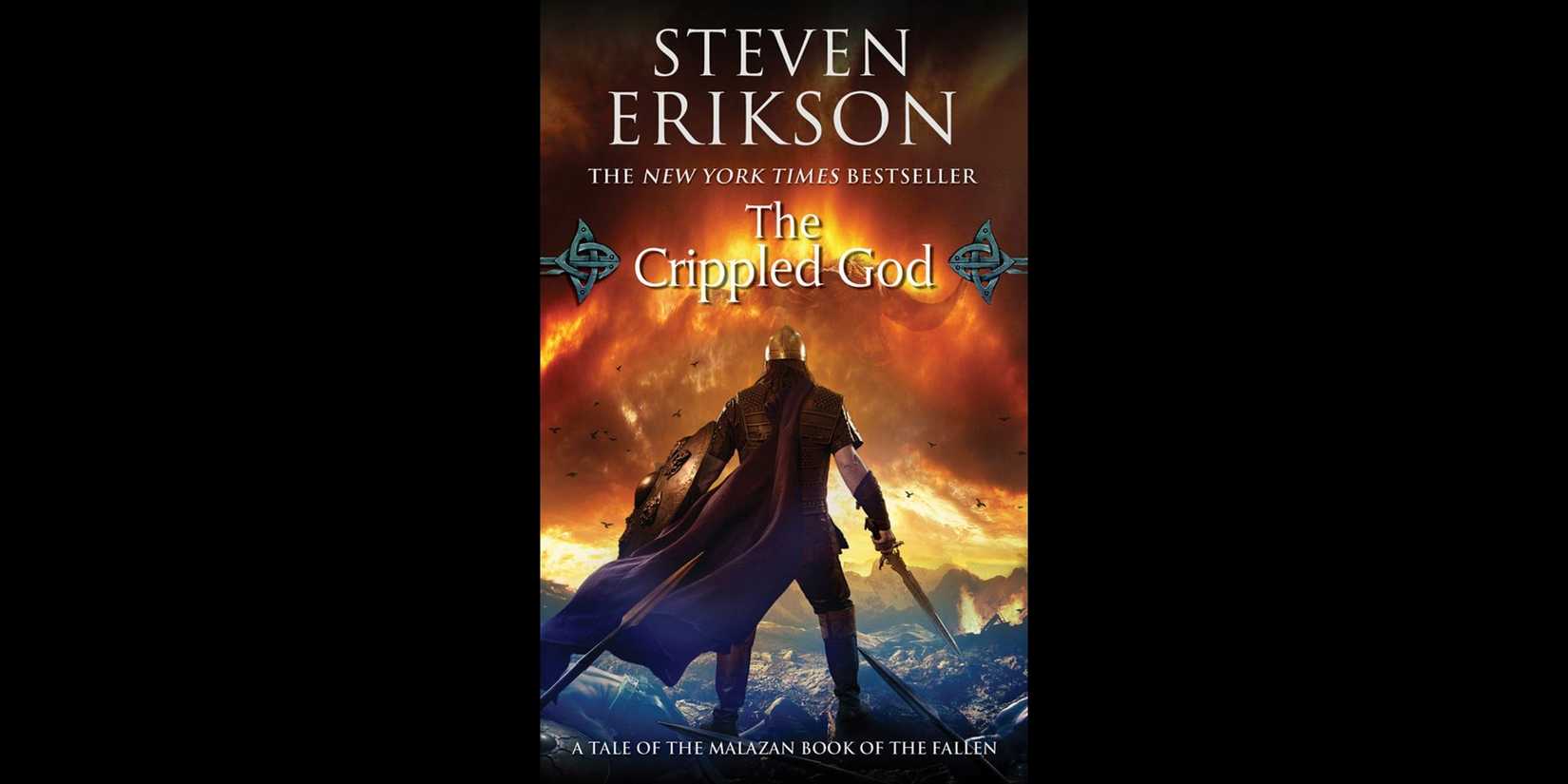
Canadian authors Steven Erikson and Ian Cameron Esslemont originally came up with the world of Malazan as a backdrop for role-playing games they made using a modified version of Advanced Dungeons & Dragons back in 1982. The world and its lore eventually grew so large that the duo wrote a movie script titled Gardens of the Moon, but after that failed to find interest, Erikson and Esslemont agreed to each write a series set in Malazan. Erikson wrote the Gardens of the Moon novel, which was published in 1999 and thus kicked off the now-legendary Malazan Book of the Fallen, one of the greatest high fantasy book series of all time. Erikson agreed to a contract for nine sequels as soon as he sold Gardens of the Moon, and the result is a gargantuan fantasy epic composed of over 3.3 million words.
Indeed, the Malazan series was so large and so pop-culturally significant that once its final volume came out, it felt like one of those fantasy books that marked the end of an era. We are, of course, talking about The Crippled God, one of the greatest fantasy epics of the 2010s. Erikson, writing as an educated and trained archaeologist and anthropologist, took the genre blueprint built by Tolkien decades prior and crafted a conclusive chapter that's as exhilarating as they come. Larger in scope, more structurally complex, and more thematically mature than The Lord of the Rings, The Crippled God masterfully brings together dozens of storylines and hundreds of characters into a single chaotic collision. The resulting novel is as morally complex as it is philosophically profound, and that's why it's a must-read for any fan of the epic fantasy genre.
'Words of Radiance' (2014)
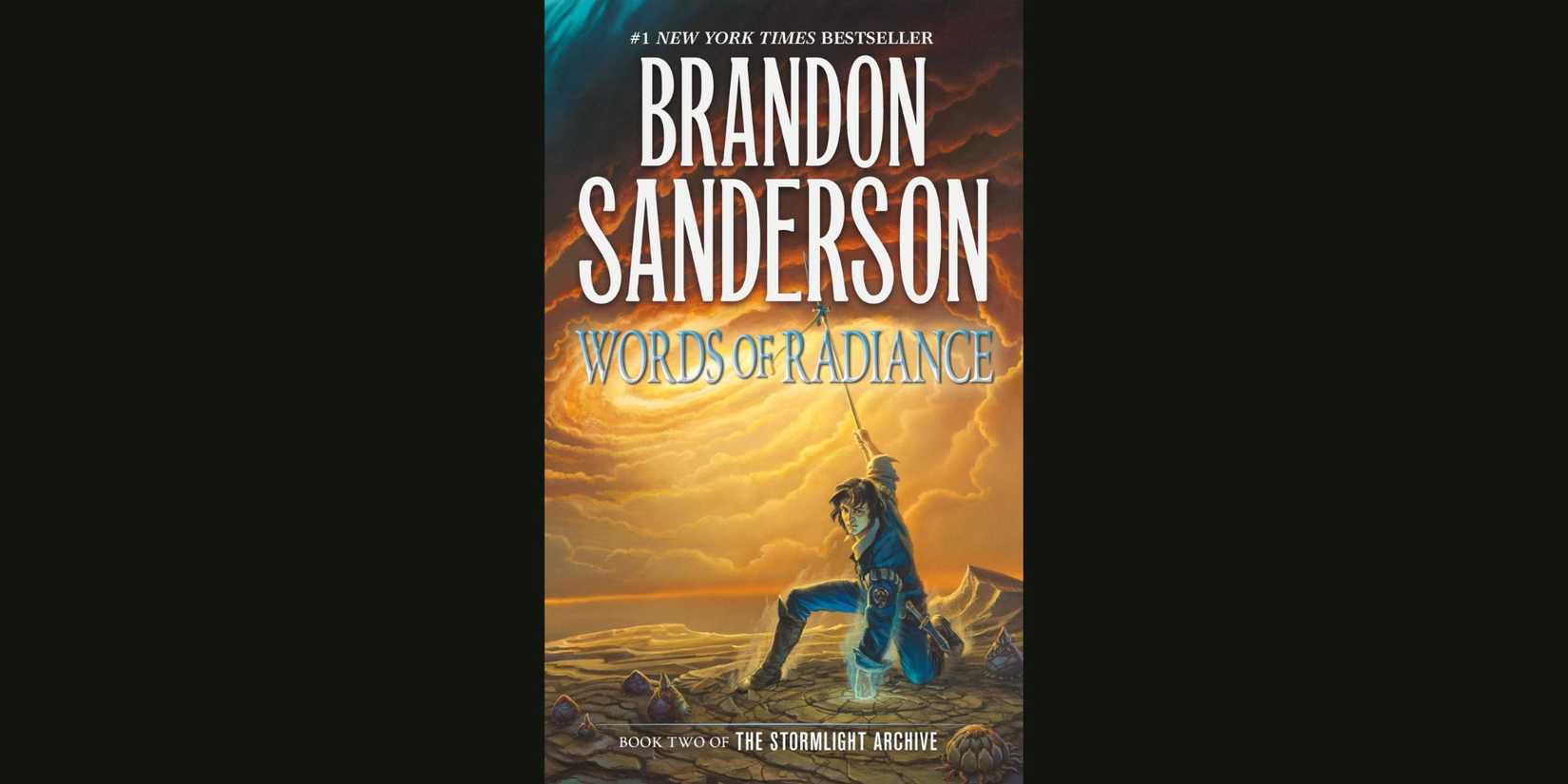
The legendary Brandon Sanderson wrote throughout his undergraduate and graduate studies, with 12 novels already written by 2003 despite having no publisher or any offers of publication. It was in 2005 that Elantris, his debut novel, was finally published. Since then, Sanderson has become one of the most prolific speculative fiction writers of contemporary times, delivering several of the highest-rated books on Goodreads since 2000. Many of these books belong to his iconic Cosmere universe, composed of subseries as masterful as The Stormlight Archive. As exceptional as the series' first installment, The Way of Kings, was, it's the sequel that remains Sanderson's highest-rated book on Goodreads. It's Words of Radiance, the peak of 21st-century heroic high fantasy.
It doesn't feel quite as mythological as The Lord of the Rings, instead delivering a far more cinematic and character-driven experience that should appeal to anyone who tends to enjoy modern fantasy literature. For one, it's structurally perfect, a 1,000-page doorstop of a novel that nevertheless doesn't ever feel like it meanders. There's no fluff on the way to the Sanderlanche, a term fans have coined to describe the way Sanderson novels like Words of Radiance tend to culminate in fast-paced third acts where everything comes together in spectacular fashion to deliver a myriad of cathartic payoffs. Add to that a fascinating magic system, some of the most thematically layered and psychologically profound character writing that the genre has ever seen, and worldbuilding that even the most demanding epic fantasy readers should find satisfying, and you get a modern classic unlike any other. If there's any one fantasy novel that deserves to be called the best of the 21st century, it's this one.
'A Storm of Swords' (2000)
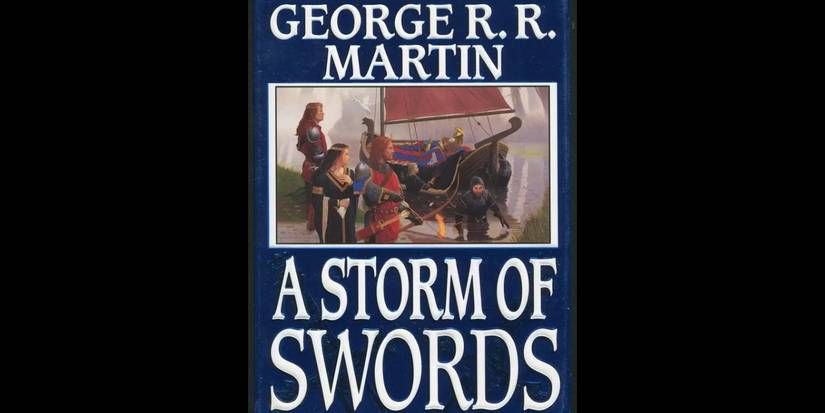
Will George R. R. Martin ever finally finish writing A Song of Ice and Fire? Only time will tell. But even if the long-awaited The Winds of Winter never came, one thing would still remain undeniably true: A Storm of Swords is the last fantasy epic masterpiece of the 20th century. Back in the '90s, Martin had been wanting to take a stab at epic fantasy writing since reading the works of Tolkien, eventually coming up with the idea for A Song of Ice and Fire, now widely regarded as one of the greatest and most influential fantasy book series of modern times. It helped prove that the genre was more than ready to tell stories far darker, more mature, and more morally complex than what Tolkienesque high fantasy had been delivering for decades. The third book in the series is A Storm of Swords, still remembered by many as not only the best chapter in A Song of Ice and Fire so far, but also as one of the best fantasy novels ever written.
It is, at the very least, one of the best fantasy books since 2000; a bleak, exciting, brilliantly paced masterpiece that went on to win the 2001 Locus Award, be nominated for the Nebula Award for Best Novel, and become the first novel in the series to be nominated for the Hugo Award. There's no denying that there could never have been any Song of Ice and Fire—nor, by proxy, Storm of Swords—without Tolkien's influence in Martin's writing, but that's exactly what makes this novel so exceptional. Crafted in many ways as a direct subversion of many a Tolkienesque epic fantasy trope, A Storm of Swords is as politically complex as it is emotionally devastating. Balancing death, tragedy, action, and psychological realism to utter perfection, Martin delivered one of the most brilliant works of dark fantasy in history, culminating in an entire second half that's as breathtaking and propulsive as The Lord of the Rings' best battles.
COLLIDERInteractive
War Council
Westeros/Quizzes/Your House
Collider QuizWhich Game of Thrones
House Are You?8 Questions · 5 Great HousesFive great houses. Five completely different answers to the same question: how do you hold power in a world that will take it from you the moment you stop paying attention? Eight questions will determine where your loyalties, and your nature, truly lie.The Five Houses
Stark
Lannister
Targaryen
Baratheon
Tyrell
Council 01 / 080% Sworn
Question 01HONOR
01Someone powerful is acting dishonorably and everyone knows it. What do you do?In Westeros, the answer to this question has ended more than one great house.
Pick one, then Next
Council 02 / 0812% Sworn
Question 02STRENGTH
02What is the source of your power?Every house endures because of something. What is it for yours?
Pick one, then Next
Council 03 / 0825% Sworn
Question 03LOYALTY
03Who do you truly fight for?Strip away the banners and the words. The honest answer tells you everything.
Pick one, then Next
Council 04 / 0838% Sworn
Question 04RIVALS
04How do you deal with your rivals?A house's method reveals its character as clearly as its words ever could.
Pick one, then Next
Council 05 / 0850% Sworn
Question 05RULE
05What kind of ruler do you believe in?Westeros is full of answers to this question. Most of them end badly.
Pick one, then Next
Council 06 / 0862% Sworn
Question 06LOSS
06You suffer a devastating loss. How does your house respond?How a house handles defeat tells you more about it than how it handles victory.
Pick one, then Next
Council 07 / 0875% Sworn
Question 07WORDS
07Which of these truths about Westeros do you most believe?Every house has a philosophy. This is yours.
Pick one, then Next
Council 08 / 0888% Sworn
Question 08THE THRONE
08The Iron Throne is within reach. What do you do?The answer reveals not just your ambition but your character.
Pick one, then Next
The Maester Has SpokenYour House Is
Your answers point to the great house whose words, values, and way of surviving in Westeros match your own. Bend the knee, or don't. That's very much up to you.
The NorthHouse Stark“Winter Is Coming”Seat of WinterfellYou took the long view before anyone asked you to.
Winter Is Coming, and you have always known it. You prepare not out of fear but out of duty, because the people who depend on you deserve someone who takes the long view.Why You Belong Here
- You lead with honor even when it costs you, because you understand that a reputation built on integrity is the only one worth having.
- Your loyalty to family and people runs deep, not as sentiment but as a code that doesn't bend when things get difficult.
- The North endures because Starks endure, not by being the cleverest players in the game, but by being the kind of people others are willing to follow into the cold.
- You are that kind of person. The pack survives. The lone wolf does not. You already know which one you are.
The Long ViewThe PackWinterfell
The WesterlandsHouse Lannister“Hear Me Roar”Seat of Casterly RockYou read the room before you walk into it.
You understand the game: its rules, its exceptions, and exactly when the rules become the exception. You play it without illusions and without apology.Why You Belong Here
- You are sharper than most people realize, and you have learned to use that gap to your advantage.
- A Lannister always pays their debts, and you always keep your word, because your word is an instrument of power, and instruments must be kept in working order.
- You love your family with a ferocity that sometimes blinds you, and you know it, and you do it anyway.
- The lion doesn't concern itself with the opinion of sheep. Neither, in the end, do you.
Plays The GamePays DebtsCasterly Rock
The Iron ThroneHouse Targaryen“Fire and Blood”Seat of DragonstoneYou were never going to settle for the world as handed to you.
You carry a sense of destiny that is difficult to explain and impossible to ignore, the feeling that you are not simply participating in the world but meant to reshape it.Why You Belong Here
- You are capable of extraordinary things, and you know it, and that knowledge is both your greatest strength and your most dangerous quality.
- The Targaryen words are not just words to you. They are a philosophy about what change requires and what it costs.
- The Targaryens at their best were transformative rulers who broke chains and defied the limits of what anyone thought possible.
- At your best, so are you. The dragon has three heads. You are one of them.
DestinyTransformativeDragonstone
The StormlandsHouse Baratheon“Ours Is the Fury”Seat of Storm's EndYou arrive in a room and the room knows it.
You are a force: direct, powerful, and difficult to ignore when you enter a room or a disagreement. You do not negotiate with challenges. You meet them.Why You Belong Here
- Ours is the fury, and yours is a kind of intensity that commands attention, respect, and occasionally caution from those who underestimate what's behind it.
- You value strength and straight dealing. You'd rather know where you stand than navigate a web of courtly whispers.
- The Baratheons built their house on the back of one of the greatest military victories in Westerosi history, and then struggled with what came after.
- The lesson of your house is that winning is not the end of the story. Governing is. You are learning that too.
DirectStraight DealingStorm's End
The ReachHouse Tyrell“Growing Strong”Seat of HighgardenPower arrives with flowers and good wine.
You understand that power does not always announce itself, that sometimes it arrives with flowers, good wine, and a smile that doesn't quite reach the eyes.Why You Belong Here
- Growing Strong is your house's motto, and you live it: patiently, strategically, always investing in the relationships and resources that will matter most when it counts.
- You are charming by choice and calculating by nature, a combination that makes you one of the most effective players in any room you enter.
- The Tyrells fed King's Landing and shaped its politics without ever sitting on the Iron Throne, and they were arguably more powerful for it.
- You know that the person who controls the food controls the kingdom. And you always know where the food is.
PatientCharmingHighgarden
Where Your Loyalty Lies
Copied
A Collider InteractiveCOLLIDERMore quizzes at collider.com
'The Odyssey' (c. 8th Century BCE)

It's complicated to compare ancient tales and myths to modern fantasy, since both genres are so dramatically different yet so essentially intertwined. Nonetheless, no one would call anybody crazy for saying that Homer's Odyssey does epic fantasy better than not only The Lord of the Rings, but practically any other epic fantasy book ever written. It is, after all, the fantasy epic par excellence, the poem that laid down the foundational blueprint for how Western writing would approach the fantasy and adventure genres forevermore. It established the core tropes of the genre long before "fantasy" actually existed as a properly distinct literary category, and is still a must-read for pretty much anybody and everybody with the ability to read a book.
Born as an oral tradition and not put into writing until around the mid-6th century BC, The Odyssey is the literal bedrock on which the entire Western epic literary tradition is built, which almost makes it unfair to compare any other subsequent masterpiece to it. Indeed, there aren't very many fantasy epics better than The Lord of the Rings, but if there's one whose superiority is pretty much undisputed, it's Homer's masterpiece. That's because, far from only being historically important, The Odyssey is so timeless that it's arguably still just as entertaining as any other epic fantasy masterwork. Intelligent, full of high-stakes set pieces, and infinitely analyzable from start to finish, it's the most perfect work of epic fantasy the world has ever seen.
KioskNews shows a cleaned-up reading view extracted from the publisher’s page — the original always lives on their site, not ours.