Government must cut spending, but not where it affects me
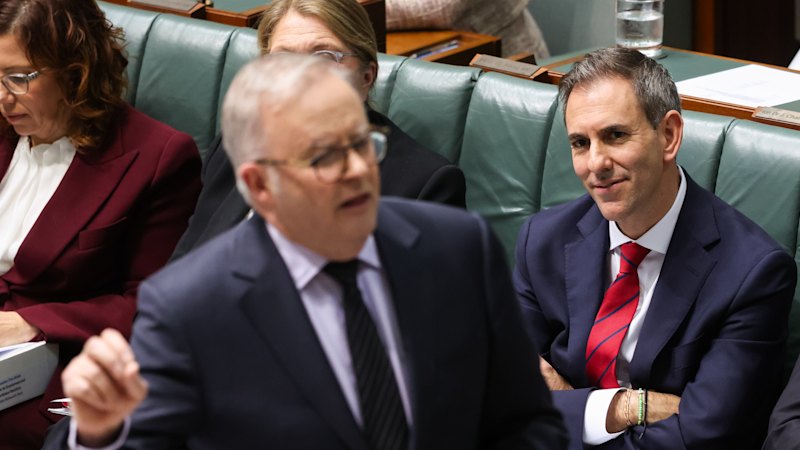
While government spending might be a contributing factor to inflation, it surely doesn’t outweigh other factors such as overseas wars, fuel shortages, food prices and tariffs (“Chalmers can’t put the blame on those who deserve it”, October 12). Unfortunately, the majority of people seem to have bought what the Coalition is selling. (It’s unfortunate that people believe those who think that the best thing to do is give tax cuts to the well-off, and who still believe in trickle-down economics.) So, let’s accept that they think government spending is too high. What then would they cut? Defence? (No, we need to protect ourselves.) Healthcare? (No, I could get sick, you know.) Aged care? (No, my parents need looking after, and I’m getting older too.) Childcare? (No, that’s my children you’re talking about.) Education? (No, we need better skills so we can earn more.) Foreign aid? (No, we don’t want more pictures of starving children.) Social services? (No, we don’t want more pictures of suffering Australians.) Indigenous affairs? (No, we don’t want more pictures of suffering First Australians.) When put to people in this way, they’d struggle to say exactly how government spending should be cut. The usual thing would be, however, that whatever you cut it mustn’t affect me. David Rush, Lawson
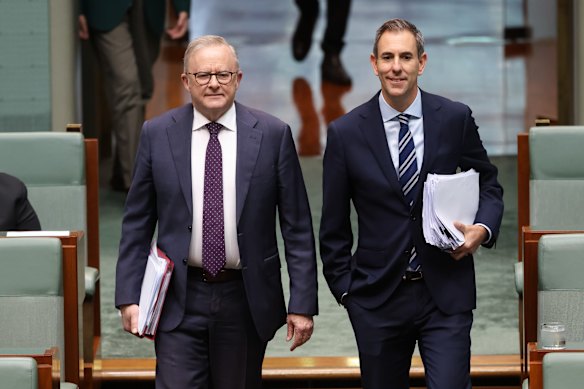
Amazing. Albo being blamed for the cost-of-living crunch, that is. Seems as though he is omnipotent, with powers over the economy that reach well back into the pandemic era when all this started to “crunch” us and he wasn’t even in power. And he probably caused the Ukraine war, the bombing of Iran, the Houthis’ fury and Trump’s tariffs. Talk about a wunderkind. James Mahoney, McKellar (ACT)
So, 46 per cent of people blame the Labor government for the rising cost of living crisis (“Hanson cools, Albanese blamed for cost of living pain”, October 12). I have but one question. Who would like the government to scrap the AUKUS submarines and channel the money into rectifying this crisis (and fix up some other major issues at the same time)? Ian Maynard, Freshwater
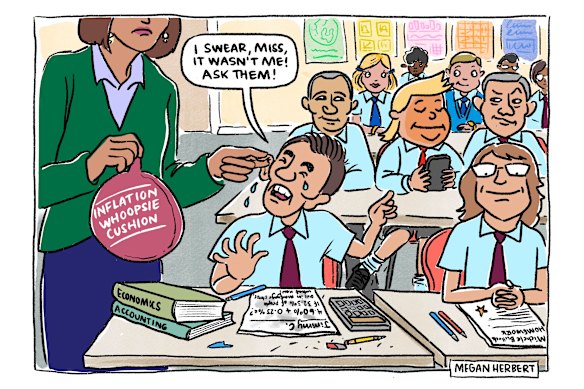
Prosperity depends very much on growth in real GDP per capita. As everyone should know by now, this has hit a brick wall and will swell only with actual rather than hoped-for increases in productivity. One factor that can improve or weaken the above-mentioned metric is the terms of trade. However, higher prices for imports and supply blockages have exacerbated our problems. There is no silver bullet that is available to either the fiscal or monetary authority, and co-operation/understanding is required, not a blame game.
Mike Bush, Port Macquarie
Badenoch example
George Brandis (“Tory firebrand Badenoch shows how to handle populist chicanery”, October 12) suggests Angus Taylor should copy his counterpart in Britain, Kemi Badenoch, and make a frontal assault on One Nation. I carry no flags for Angus, who seems a bit of a dill, but he has a more difficult challenge than Badenoch. The UK’s first-past-the-post system means that political parties pitch for voters to make a simple binary choice – Conservative or Reform, in this case. Preferential voting here means that while Taylor will be pitching for voters to put the Liberal candidate first, he will also be hoping One Nation voters will direct their preferences his way. Punching them in the nose might not be helpful. Madeleine McPherson, Wollstonecraft
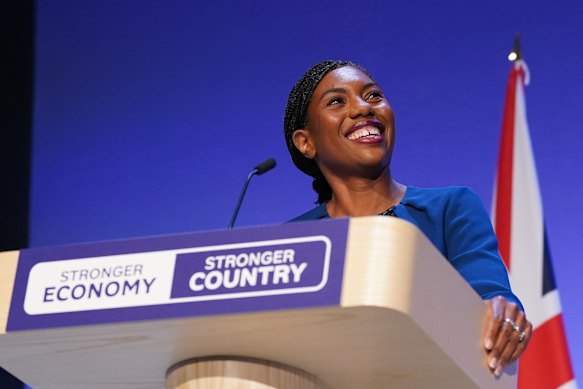
George Brandis has opened the door, and a man has walked through. He laments that UK Labour has never had a woman leader; well, he is hiding behind the very brief reign of Sussan Ley for his Liberal lot. Taylor is not up to the job, so where is the argument that a woman leader may be as powerful here for the conservatives? Michael Blissenden, Castle Hill
The news that the former treasurer Josh Frydenberg has criticised the current running of the Liberal party is a further nail into Angus Taylor’s demise as leader (“‘Things have to change’: Frydenberg launches attack on Taylor’s time as Liberal leader”, October 12). Will he last to Christmas? Con Vaitsas, Ashbury
A prize fit for the rejected
Reading your article on Trump missing out on the Peace Prize once again (“‘I settled 8 Wars’: Trump fumes over Nobel Peace snub”, October 12), I saw that he told a rally (of presumably more than three people) that the Nobel Peace Prize has been forever discredited, a comment that echoes what he said last year when he missed out the first time. If it’s so discredited, why does he want to “win” it? But then, self reflection is not one of his strengths, is it? Erik Hoekstra, Leura
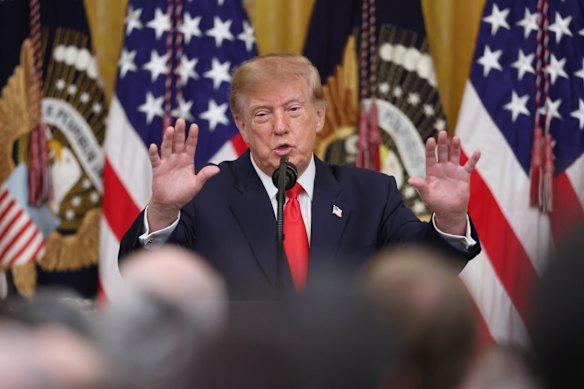
I really don’t understand all this fuss over the Nobel Peace Prize (Letters, October 12). Apart from having his very own peace prize as provided by FIFA, the American president, being, as we readily admit, the most talented, charismatic and clever bloke on our planet, need only organise an American equivalent. Why not call it the Trump Peace Prize? Who cares about an insignificant European country hosting a clearly biased award? Someone who can settle wars by bombing countries, solve climate change by increasing drilling and do a Hanson by evicting immigrants deserves to be acknowledged. Maybe he could ask his new friend Putin along to hand it over. Go, Donald. Nola Tucker, Kiama
The desperation of Donald Trump’s position in the coming midterm elections is shown by his ridiculous complaint about not being awarded the Nobel Peace Prize. For what? For creating a war that has thrown just about the entire world’s economy into chaos? Hopefully, US voters will see the light and relegate Trump to lame duck status, but then he’d just say the election was rigged, wouldn’t he? Ian Adair, Hunters Hill

The cartoon in today’s Herald (October 12) prompted me to ask: What do diesel, Trump and Putin have in common? They are all slimy! Tony DeGiovanni, Bawley Point
Badiucao’s powerful cartoon captures the folly of bathing in oil (Letters, October 12). Leaders who continue to cling to fossil fuels like coal, oil and gas are leaving future generations with an unhealthy, poor, harsh and barren world. If we want to avoid a future resembling that depicted in the film Wall-E, we must reject the politics that place fossil fuel profits ahead of people and the planet. Sarah Brennan, Hawthorn (Vic)
How comfortable will our prime minister feel sitting down at the same table with Vladimir Putin, now that Trump has invited the Russian warmonger to the G20 meeting scheduled for Miami in December (“Trump promised to end the Russia-Ukraine war in a day. Now he’s funding it”, October 12)? Has there ever been a better time for our PM to lead a boycott of the meeting by serious democracies and the EU? How wonderful it would be to see Trump hosting a meeting to which nobody decent came. Oh frabjous day! Carl Boyd, Cooks Hill
I find it hard to think of anything Donald Trump has ever done that could indicate he is not a Russian asset. Jennifer Katauskas, Turramurra
Afghanistan memories
Sickened today to see the front page of our nation’s most respected newspaper carrying a lead story with a glorified, medalled image of accused war criminal Ben Roberts-Smith at a commemoration of the sacrifice in the Afghanistan war (“Roberts-Smith remembers the war effort”, October 12). Deborah McLeod, Naremburn
AI mustn’t replace human touch
Professor Ian Hickie believes generative AI could be one of the greatest opportunities to improve mental healthcare (“I’ve worked in AI for decades and I think AI could save some young people”, October 12). As a psychologist who has spent years working with young Australians in distress, I share his frustration with a system that is failing too many of them. But I fundamentally disagree that AI is the answer. There’s certainly a place for it in mental health care. But it cannot replace the human connection, properly funded services and government policies that young Australians desperately need. And until we can guarantee its safety, we should be extremely cautious about encouraging vulnerable young people to rely on it. I am not opposed to AI in healthcare. I have seen how digital tools can help young people track mood, sleep and risk behaviours in ways that inform clinical care and support their outcomes. But the speed at which large language model development and mental health AI programs are advancing has far outstripped the pace of global, federal and state law and regulation. This is my first and most pressing concern. Carly Dober, Melbourne (Vic)

It is wonderful to see what AI can do to improve medicine, but it also highlights the challenges of this technology (“‘Every patient matters’: AI fast-track can fight cancer”, October 12). When it intersects with personalised medication, the importance of closed systems that protect the privacy of patients’ personal data is crucial. This is not a job for open-sourced models run by our American big tech bros. It highlights the need for investment in the technology by Australia for Australians. Instead of the euphoria at building data centres, short term at best, let’s work out innovative ways to financially benefit, since paying tax is never going to happen. Elizabeth Darton, Lane Cove West
Judge skills, not age
I ride with a group of cyclists, some well into their 80s (“A smaller, lonelier world with a restricted licence in your 80s”, October 12). Their reflexes and concentration are as good as those of riders much younger. Professor Henry Brodaty, Senior Australian of the Year, showed through his Maintain Your Brain trial that thinking and reaction skills can be maintained into later life. We shouldn’t assume everyone of the same age has the same ability. Dimity Pond argues that on-road assessments by occupational therapists judge driving safety better than a GP’s impression. The problem is that these assessments can be expensive and beyond the reach of many retirees. Online programs such as BrainHQ and NeuroNation can assess and train attention and processing speed. Research has also linked regular use of such training programs to a lower risk of dementia. These tools are no substitute for a proper driving assessment, but could supplement a doctor’s opinion. A fit 85-year-old should not automatically lose the right to drive, while someone who is no longer safe behind the wheel should not be allowed to continue simply because they are younger. Test the driver, not the birth certificate. John Kempler, Rose Bay
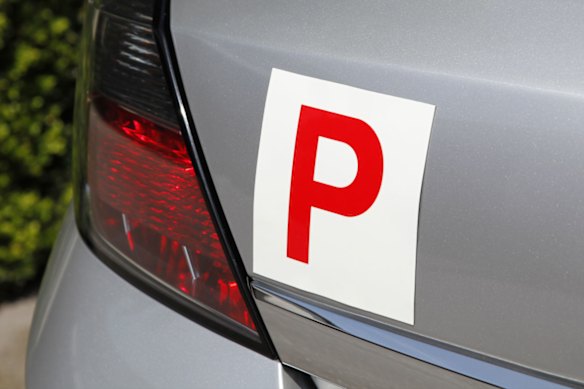
If young drivers get P plates, why not give all people over 80 or 85 an S plate to warn other drivers of their slower reactions. Seeing an S plate might make other drivers a little more tolerant and thus cause fewer crashes. Rosslyn Jeffery, Castle Hill
Of course, it’s perfectly understandable that those older may still wish to drive. After all, as Phyllis Diller once quipped, “I’m at an age when my back goes out more than I do.” Edward Loong, Milsons Point
Justice for both, now
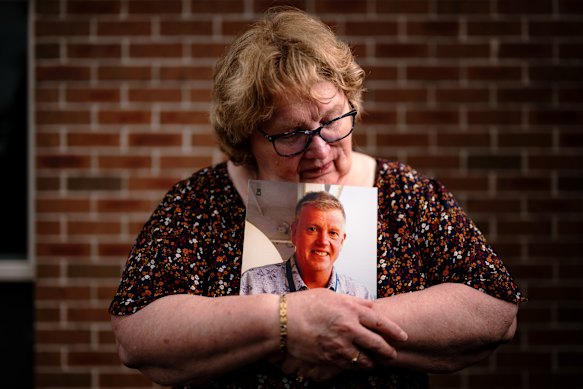
Much was indicated in the loving and powerful words of police widows Elizabeth Bransgrove and Brenda Horn, honouring their husbands and their legacies (“Mark spent decades protecting people. His work killed him”, October 12). The women are fierce advocates for justice and for their husbands, who worked for years in conditions proven dangerous to health, assessing and helping to solve arson cases. It is hard to understand how the work of one but not the other would be recognised as causing bladder cancer. The decision-makers should review crime scene investigator Stephen Horn’s case. As the police union is backing the widow’s quest for recognition and compensation for the huge financial cost of medical treatments, so too must we, the public. Give justice to such officers and their families, and do it fairly and quickly. It would be a worthy memorial for them and others similarly affected. Otherwise, the NSW government will have let down first responders such as these, and the public they serve. Jennifer Fergus, Croydon
Grab this chance for park
Many parks in older cities throughout the world are the result of the aristocracy being forced to return land to the citizens. When this has not been done – e.g. Tokyo – there is a distinct shortage of public spaces in the centre of the city. As cities grow, so does the need for more public space at an increasingly crowded centre. Sydney’s Town Hall Square (Letters, October 12) is a visionary plan. Adopt it now that we have the opportunity. Tomorrow will be too late, and our descendants will say, with considerable justification, “Why didn’t they do it when they had the chance?” Woolworths can always find another rental, but we can’t always find another park. Let us take the opportunity offered us now. Ron Blair, Surry Hills
Bird demands blue tops
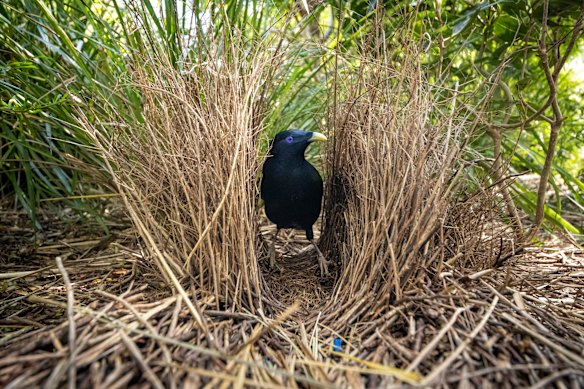
Our local satin bowerbird has asked me to write on his behalf to record, in the strongest terms, his objection to the recent change of milk bottle tops from blue to white, and to seek its reversal. Well aware of their particular attraction for the ladies, he has over some years now scoured the district to put together a collection of a dozen or so bottle tops as the main decoration of his bower. When he recently relocated to rebuild about 100 metres away, he carefully took them all with him. If he is expected to meet his responsibilities for the future of his species in our district he must retain the opportunity to expand his collection. Peter Henchman, Bilpin
Credit card maths
To restore parity to cash-paying customers (Letters, October 12), businesses need only offer a 9 per cent discount from the new price (or more correctly, 9.09). David Ramsay, Bexley
- To submit a letter to the Sydney Morning Herald, email letters@smh.com.au. Click here for tips on how to submit letters.
- The Opinion newsletter is a weekly wrap of views that will challenge, champion and inform. Sign up here.
KioskNews shows a cleaned-up reading view extracted from the publisher’s page — the original always lives on their site, not ours.