Christopher Nolan Confirms The Odyssey & Oppenheimer's Connection After Fan Theories

Abigail is an editor for ScreenRant, currently writing and editing movie news. You may also have seen her thoughts on animated television, musical theater, and fantasy literature in Paste Magazine, Fantasy Hive, or The Oxford Blue. She has also written SR lists and op-eds covering movies, TV, and books as well. She is an English major through and through, having graduated with a B.A. from UC Santa Barbara and an MPhil from Oxford University.
Sign in to your ScreenRant account
Christopher Nolan addresses the thematic connection many have commented on between his two most recent movies.
Nolan returned this summer with The Odyssey, his massive adaptation of Homer's mythological epic. Starring Matt Damon as Odysseus, leading a stacked cast, The Odyssey has grossed approximately $1.8 billion worldwide to date and retained a Rotten Tomatoes critics' score of 94%. As the awards season gets going, Nolan shares his thoughts about The Odyssey's similarities to Oppenheimer.
"As I wrote the end [of The Odyssey], I suddenly found a bit of Oppenheimer in there – that sort of connection," Nolan said in a recent conversation moderated (via The Nerd Wire) by Oppenheimer star Robert Downey Jr. (who won the Oscar for Best Supporting Actor for his performance as Lewis Strauss). "I was looking at my notebooks the other day, somewhere I scribbled as I wrote the ending: this is the ending of all my films rolled into one."
The Odyssey's ending sees Odysseus, after spending decades trying to get home, leaving Ithaca yet again to sail west with his wife Penelope (Anne Hathaway) as their son Telemachus (Tom Holland) assumes the throne. Odysseus says that though the current civilization may fall because of his actions, humanity will eventually rebuild. Part of Odysseus' reasoning is that he can no longer be king because of the damage he has wrought.

The Odyssey's final shot is of the Trojan Horse, surrounded by flames, back when the city of Troy was sacked. Thematically, The Odyssey is about Odysseus's reckoning with the consequences of his plan to defeat Troy. By tricking the Trojans, having them accept the Horse as a gift to be brought into their city, Odysseus feels he set a fatal precedent for the rules of hospitality to be ignored.
Because the war was ended by such an act, others who feel inclined to violate "Zeus' Law" do so, and civilized society breaks down. Back in Ithaca, the suitors take advantage of Penelope being honor-bound to welcome them into her home. In comparison, Oppenheimer is also about its main character realizing how his actions (creating the atomic bomb) may destroy the whole world.
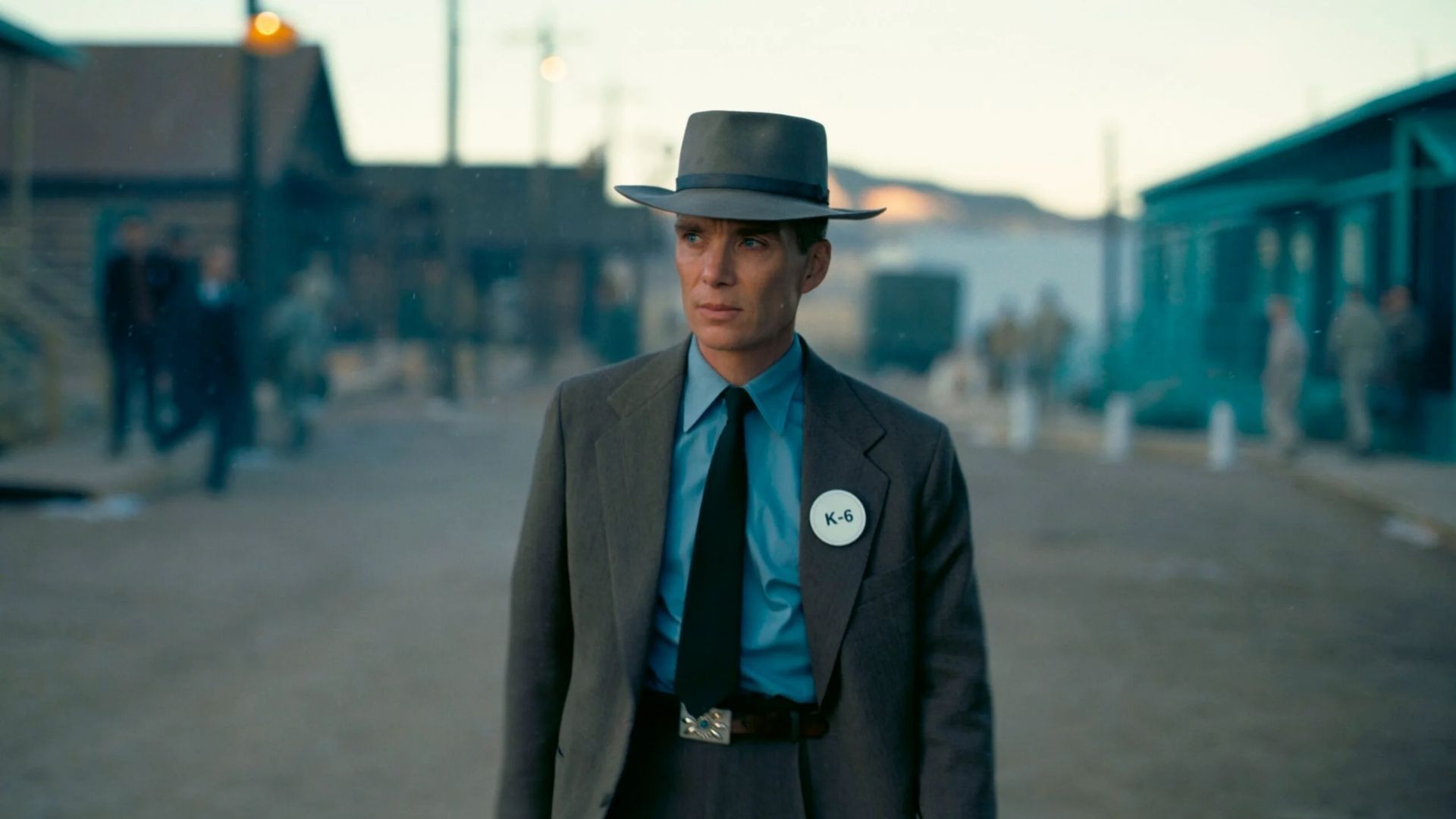
Oppenheimer's ending illustrates the long-term consequences of the Manhattan Project, kicking off a nuclear arms race, and how J. Robert Oppenheimer (Cillian Murphy) holds himself personally responsible. The final moments of both movies also leverage the visuals that symbolize the central mistake: In Oppenheimer, we see a montage including images of nuclear devastation, while in The Odyssey, we again see the Trojan Horse.
It remains to be seen if retreading this ground will pay off in the same way for Nolan. Oppenheimer finally won Nolan his directing Oscar in addition to Best Picture, earning a total of seven statuettes out of 13 nominations. The Odyssey is likely to receive many 2027 Oscar nominations, but it isn't necessarily the frontrunner for Best Picture.
Some have argued that The Odyssey being so similar to Oppenheimer is a mark against it, despite the 2026 feature's resounding box office success. Regardless, Nolan has now openly discussed the connection and reflected on how his previous projects build to whatever he does next. Fans will have to wait and see how The Odyssey may have a bearing on his next project.
KioskNews shows a cleaned-up reading view extracted from the publisher’s page — the original always lives on their site, not ours.