10 Most Influential Miniseries That Changed TV Forever, Ranked

Ryan Heffernan is a Senior Writer at Collider. Storytelling has been one of his interests since an early age, with his appreciation for film and television becoming a particular interest of his during his teenage years.
This passion saw Ryan graduate from the University of Canberra in 2020 with an Honours Degree in Film Production. In the years since, he has found freelance work as a videographer and editor in the Canberra region while also becoming entrenched in the city's film-making community.
In addition to cinema and writing, Ryan's other major interest is sport, with him having a particular love for Australian Rules football, Formula 1, and cricket. He also has casual interests in reading, gaming, and history.
Sign in to your Collider account
The miniseries format has become one of the most popular forms of entertainment in the modern day. Its balance between the extended runtime of television and the succinct immediacy and well-rounded conclusiveness of shorter forms like film has clearly appealed to the masses, with recent sensations like Adolescence, The Queen’s Gambit, and Mare of Easttown just some titles that serve as proof of this trend.
However, the form has a long and rich history spanning decades, a history including many series that have revolutionized small-screen storytelling, sparked lasting societal trends in entertainment, and even had an impact on real-world politics. Ranging from trailblazing triumphs from decades ago to modern masterpieces of historical drama, these 10 limited series releases are the most influential miniseries of all time.
10 'Brideshead Revisited' (1981)

A landmark adaptation that saw a somewhat forgotten piece of classic English literature stampede back into social relevance, Brideshead Revisited stands as a benchmark for literary adaptations in the miniseries format. Based on Evelyn Waugh’s high society novel from 1945, it follows disillusioned WWII soldier Charles Ryder (Jeremy Irons) as he reflects on the time he spent at Brideshead, the family home of his wealthy friend Lord Sebastian Flyte (Anthony Andrews), where he embarks on several relationships and cultivates a passion for painting through the 1920s and into the '30s.
The series’ success—defined by its sharp writing, impressionable performances, and stunning production design—ignited a renewed interest in Waugh’s original novel and even inspired a wave of interest in the era’s fashion styles, lifestyles, and evolving social dynamics. With its exploration of class, family, relationships, and social change in early 20th century England, Brideshead Revisited’s influence has been evident in the decades following its release, be it in the form of critically acclaimed ‘90s films like Sense and Sensibility and The Remains of the Day, or even in more recent times with series like Downton Abbey.
9 'Lonesome Dove' (1989)
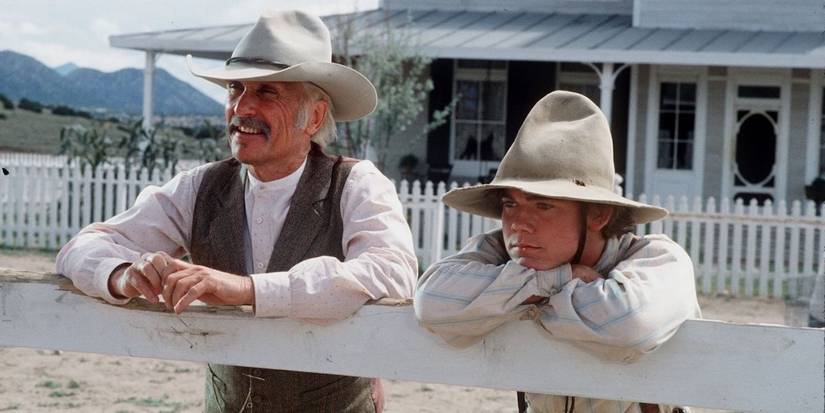
When one thinks of Western stories on the screen, it is easy for the mind to immediately be cast back to the ‘50s and ‘60s, be it in the form of John Wayne’s immortal Hollywood classics or the iconic grit and grime of the spaghetti Western films. While the genre lay dormant for a time, he sprang back to life in the early ‘90s through pictures like Dances with Wolves, Unforgiven, and Tombstone. However, there is a release that predates all of those movies that is just as instrumental in conjuring the genre’s revival.
Following two retired Texas Rangers hoping to reignite their yearning for adventure, the success of Lonesome Dove played a significant part in launching a new golden age for the genre. Additionally, it also proved that the small screen was capable of producing high-quality, character-driven dramas featuring A-list talent, blazing a trail for the medium’s golden era of prestige entertainment that includes notable Western series like Deadwood and Westworld.
8 'I, Claudius' (1976)

Earning high praise for its mighty storytelling endeavor, litany of exceptional performances, and its spellbinding production design that brings the wonder, glory, and scope of Ancient Rome to life in mesmerizing fashion, I, Claudius is a series of substantial influence. Based on Robert Graves’ historical novel from 1934, the twelve-part miniseries explores the political maneuvering and duplicity of the early Roman Empire as narrated by an elderly Claudius (Derek Jacobi), who is himself acutely aware of a conspiracy that will lead to his demise and pave the way for his mad stepson Nero’s (Ian Ogilvy) ascent.
The series enraptured millions of viewers upon release, enthralling them in the treachery and tragedy of the Roman Empire. As such, the series played no small part in renewing public interest in Roman history and culture and, by extension, inspired general intrigue concerning how many ancient cultures thrived. Also having a monumental, standard-setting impact on the handling of historical drama on television, I, Claudius continues to endure as one of Britain’s greatest ever series.
7 'Chernobyl' (2019)
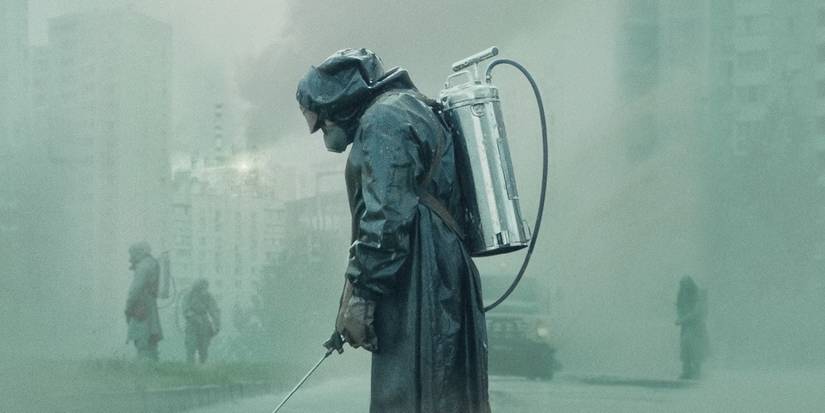
Such is the saturation of miniseries in the modern day, it can be difficult to discern if a recent hit has had an impact in itself, or if it is merely another catchy title of the times. There is no doubt as to the effect Chernobyl has had, however, given the changes it has inspired have been quite tangible. Not least of which is the way in which it encouraged global politics to discuss nuclear safety and the consequences of government secrecy in a more open light.
Furthermore, the series simply stands as one of the greatest triumphs in the history of television, with the historical drama defined by its scope and visceral drama as it examines the aftermath of the Chernobyl nuclear disaster, covering both the immediate clean-up effort and the national, political, and personal effects of the catastrophe. A period drama that uses its intensity to probe at common anxieties surrounding nuclear energy, Chernobyl is a thought-provoking, terrifying, and vitally important masterpiece of modern television.
6 'Shōgun' (1980)

A record-breaking, award-winning smash hit of 1980s television that still stands as one of the most iconic titles the medium saw in the 20th century—especially following the success of its remake in 2024—Shōgun’s success had a massive impact on audience trends and societal interests when it premiered. The five-part limited series follows a shipwrecked English navigator stranded in 17th-century Japan where he becomes embroiled in a conflict between feuding warlords.
Captivating American audiences from September 15 to September 19, 1980, the series’ universal adoration is credited with a sharp decrease in the business of movie houses and even restaurants as people stayed home to view the series, a cultural phenomenon that was unprecedented at the time. Shōgun also led to a wave of interest in Japanese history, culture, and aesthetics, and was a major title in what was a brief though significant golden era for miniseries from the late ‘70s to the early ‘80s.
Collider Exclusive · Villain Personality Quiz Which Criminal Mastermind Would Be Your Nemesis? Lecter · Joker · Moriarty · Chigurh
Four of the finest criminal minds ever put on screen. One of them would look at you and see something worth their time. Eight questions decide which one comes for you, why they picked you, and what they would want when they arrived.
🍷Lecter
🃏Joker
♟️Moriarty
🪙Chigurh
01
What would a criminal mastermind notice about you first? Great villains choose their opponents carefully. Something about you got their attention.
02
How do they make first contact? The introduction tells you everything about what is coming next.
03
What do you actually believe about right and wrong? Every nemesis is really an argument about the thing you believe most.
04
What finally gets under your skin? Everybody has a pressure point. Finding yours is the whole plan.
05
They have made their move. How do you fight back? This is the part of the film where the audience finds out who you are.
06
What would they use against you? A good villain never brings a weapon you have not already handed them.
07
What do they actually want from you? The money is never the point. Something else always is.
08
How does it end between the two of you? Eight questions in, this is the one that decides who comes for you.
The Case File Is Complete Your Nemesis Is…
Four criminal masterminds. One of them was always going to be yours. Here is who comes for you, why they picked you out of everyone available, and what they want from the encounter.
Hannibal Lecter
Your nemesis does not want to beat you. He wants to know you completely, and he is patient enough to wait for it. The frightening part is how good the conversation is.
- Lecter is the most dangerous kind of opponent: the one who finds you interesting. He never raises his voice, because he has never needed to.
- You keep a great deal to yourself and you are careful about what you show. That reserve is exactly the door he would knock on.
- The films understood something other thrillers missed. The horror is not the violence. It is being perfectly understood by the wrong person.
- He would be unfailingly polite about all of it. That is the worst part.
The Joker
Your nemesis is not after money, territory or revenge. He is after a demonstration, and you are the person he has chosen to prove his point on.
- The Joker only picks opponents who believe in something. Your decency is not a defence against him. It is the entire reason he showed up.
- He has no plan you can predict and nothing you can take away, which removes every tool you would normally reach for.
- His whole argument is that you are one bad day away from being him, and you would spend the rest of your life proving him wrong.
- He would call it a magic trick. You would call it the worst night of your life.
Moriarty
Your nemesis respects you, which sounds flattering until you work out what it means. He chose you because nobody else was worth his time.
- Moriarty is the original criminal mastermind, the template every later one borrows from: a mind the equal of the hero's, pointed the wrong way.
- You enjoy being the cleverest person in the room. He is counting on exactly that, and he has already built the room.
- This is the rare nemesis who would be genuinely disappointed if you lost badly. He needs the game to be worth playing.
- It ends the way these things always end. Two people, one problem, and only one way down.
Anton Chigurh
Your nemesis has no personal interest in you whatsoever, and that is precisely what makes him unsurvivable. You are not a rival. You are a stop on the way.
- Chigurh does not negotiate, gloat or explain. He arrives, he asks one question, and the answer was decided long before you opened your mouth.
- You trust yourself to handle things. He is the one problem in the world that has no interest in how capable you are.
- No Country for Old Men rewrote the screen villain by removing the thing audiences quietly rely on: the sense that talking might work.
- Call it. He will wait.
5 'Dekalog' (1990)

When it comes to international series, many of the defining classics have come in recent years, a fact that may not be a huge surprise given how streaming services have increased general audiences’ exposure to such titles exponentially. However, standing as arguably the definitive foreign TV show, Dekalog soars as a masterpiece of thematic exploration and ideological drama that hasn’t aged a day since its premiere in 1990.
The series takes place in a housing complex in late-communist Poland, with each episode drawing from one of the ten commandments as it focuses on the interconnected lives of the tenants as they face deeply personal yet universally relatable obstacles. Its cinematic approach, courtesy of auteur Krzysztof Kieślowski’s creative vision, has been accredited with breaking down visual barriers between film and television, while its powerful subject matter flawlessly illustrates the gravitas a miniseries can achieve with, in the case of Dekalog, 10 hours of runtime. Also influencing narrative structure, thematic ideas, and creative processes in the medium, Dekalog’s impact on television is immense, to say the least.
4 'Scenes from a Marriage' (1973)

Another international miniseries that had a direct impact through its auteur’s creativity, Scenes from a Marriage stands as a famous pivot to small-screen drama from Swedish filmmaker Ingmar Bergman. While it was edited down to a three-hour feature the following year, the 1973 release consists of six episodes examining a couple’s capitulating marriage, their efforts to form new relationships amid divorce, and the undeniable strength of their bond throughout the entire process.
The limited series was groundbreaking upon release thanks to Bergman’s candid and, at times, cold approach to the complicated subject matter. Such rawness and authenticity in the context of such stories had never really been seen in entertainment before, and it is perhaps no surprise that Scenes from a Marriage has been labeled as a major inspiration behind such films as Kramer vs. Kramer, Before Midnight, and Marriage Story. Additionally, the series has been tied to a correlating increase in divorce rates in Sweden following its premiere.
3 'Roots' (1977)

It was previously mentioned that the late ‘70s and early ‘80s saw something of a boom in miniseries productions. That is all because of the rampant success that was 1977’s Roots. Essentially an uncompromising epic about America’s history with slavery, the generations-spanning historical drama focuses on an African warrior captured and sold into slavery, the lives of his lineage in shackles on a plantation, and through to his descendants’ eventual liberation at the resolution of the Civil War.
A cultural phenomenon, Roots confronted many Americans with an ugly truth about their country, but did so in a manner that was artful, engaging, and appropriately harrowing. It raised public awareness and general discussion about slavery, and has also been accredited with advancing race relations in the U.S. with its approach to black history. Thriving as an educational property, a gripping drama, and an intriguing exploration of genealogy, Roots is one of the most important titles in the context of American entertainment as well as a spearheading triumph of limited series success.
2 'The World At War' (1973-1974)

With a staggering 26 episodes, The World at War may not feel like a limited series per se, nor does it documentary style fit in with traditional notions of miniseries drama, but the British production still stands as one of the most imperative and influential releases in the history of television. Its enormous runtime is used to give an in-depth historical account of the Second World War, covering the origins of the conflict in the aftermath of WWI in the 1920s through all the key phases of the conflict, and the aftermath of the war.
It has come to be heralded as the definitive docuseries about the war, featuring first-hand accounts and comprehensive coverage of every nation’s involvement to illustrate the terrible magnitude of the conflict in its entirety, as well as delving into details of certain battles and campaigns with outstanding specificity. Further enhanced by Laurence Olivier’s compelling narration, The World at War set a new standard and approach for all docuseries that followed, while also thriving as an interesting and highly educational analysis of WWII.
1 'Band of Brothers' (2001)

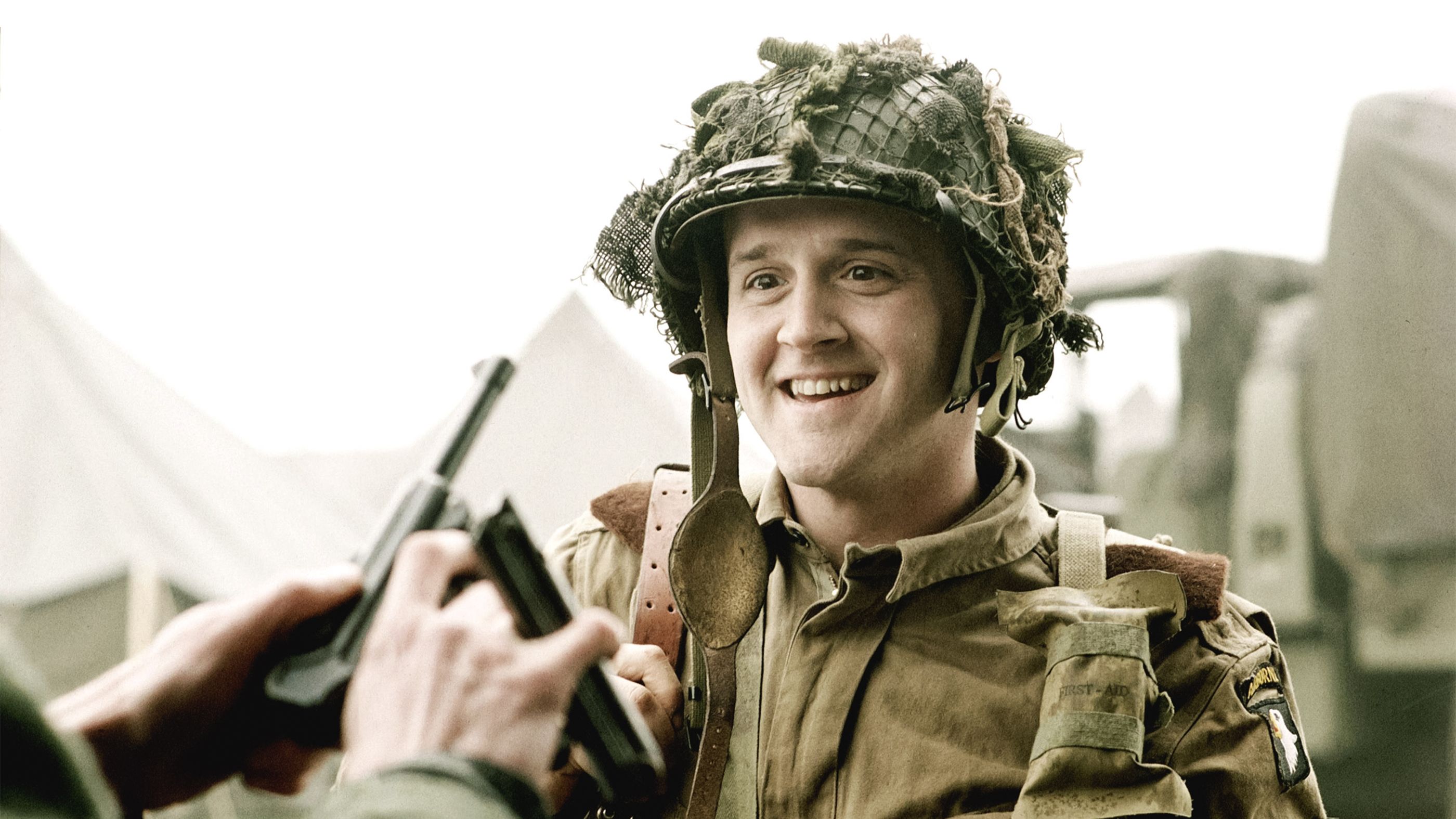
Another landmark achievement of large-scale war drama being bought to the small screen, Band of Brothers is the greatest miniseries of all time as well as the most influential. A gripping and painfully realistic look at WWII, it follows E-Company, an American unit, through their campaign in the European Theater, starting with their training and eventual drop into D-Day through to their presence in Germany at the end of the war.
Headlined by the creative brilliance of Steven Spielberg and Tom Hanks, the series is a monumental triumph of Hollywood stars transitioning to television with excellent results, one that also stands as a defining title of the medium’s golden age. It exposed a new generation of viewers to the horrors of war, revolutionized the possibilities of TV drama, and set a new benchmark for television entertainment that emphasized that the miniseries format could be every bit as prestigious as both extended television and cinema.
KioskNews shows a cleaned-up reading view extracted from the publisher’s page — the original always lives on their site, not ours.