The 10 Best Spy Novels of All Time, Ranked

Luc Haasbroek is a writer and videographer from Durban, South Africa. He has been writing professionally about pop culture for eight years. Luc's areas of interest are broad: he's just as passionate about psychology and history as he is about movies and TV. He's especially drawn to the places where these topics overlap.
Luc is also an avid producer of video essays and looks forward to expanding his writing career. When not writing, he can be found hiking, playing Dungeons & Dragons, hanging out with his cats, and doing deep dives on whatever topic happens to have captured his interest that week.
Sign in to your Collider account
Who doesn't love a good spy story? The best of them are suspenseful and intense, defined by secrecy and deception, loyalty, and betrayal. The genre evolved alongside the Cold War, changing tone dramatically over the decades, meaning there's a book out there for every kind of thriller fan.
This list ranks the finest of these espionage tales, from the swagger of Casino Royale to the murky morality of The Spy Who Came In from the Cold. Some emphasize realism and tradecraft, while others embrace action, intrigue, or philosophical complexity.
10 'Kolymsky Heights' (1994)

"Information is always worth more than gold." In this one, Dr. Christopher "Johnny" Porter, a brilliant linguist and intelligence operative, is tasked with infiltrating one of the most secretive scientific installations in the former Soviet Union, located deep within Siberia. Every step of Porter's dangerous mission requires intelligence, patience, and adaptability. Author Lionel Davidson gets granular with the details of spycraft and operation planning.
Kolymsky Heights is a spy story that trades more in atmosphere and attention to detail than action (although the climax is undeniably thrilling, like something straight out of a Bond movie). Davidson immerses us in the practical challenges of entering and escaping one of the most isolated places on Earth. A ton of research clearly went into the novel. Not for nothing, fantasy legend Philip Pullman praised Kolymsky Heights as "the best thriller I've ever read, and I've read plenty".
9 'Damascus Station' (2021)

"The first lie is always the easiest." Damascus Station was the debut novel by former CIA officer David McCloskey, and his experience in the agency lends it more authenticity than your average espionage tale. The main character is CIA operative Sam Joseph, who becomes involved in a high-risk operation targeting the Syrian regime. His mission centers on recruiting Mariam Haddad, a courageous palace insider whose access to valuable intelligence makes her one of the agency's most important potential assets.
As with Kolymsky Heights, much of the focus here is on the mechanics of real-life spy work: recruitment, surveillance, deception, and the delicate relationships that form between intelligence officers and their sources. The author's depiction of Syria in the final Assad years is also commendably layered, exploring the political complexity of the region as well as the personal risks faced by those caught within it.
8 'The Day of the Jackal' (1971)

"The professional has no emotions about his work." The source material for Fred Zinnemann's killer movie. The Day of the Jackal revolves around a fictional assassination plot targeting French President Charles de Gaulle. After repeated attempts by political extremists fail, they hire a mysterious English assassin known only as the Jackal. What follows is a tense race between the assassin preparing for his mission and the authorities attempting to identify and stop him.
This book left a huge imprint on the whole thriller genre, pioneering a lot of techniques that countless later writers would borrow from. Impressively, writer Frederick Forsyth keeps us hooked and on edge even though we know from the outset that de Gaulle will survive. It's a potent fusion of historical fiction and espionage elements, anchored by a memorable antagonist. The Jackal is calm, intelligent, and ruthlessly efficient, a master craftsman of killing.
7 'The Bourne Identity' (1980)
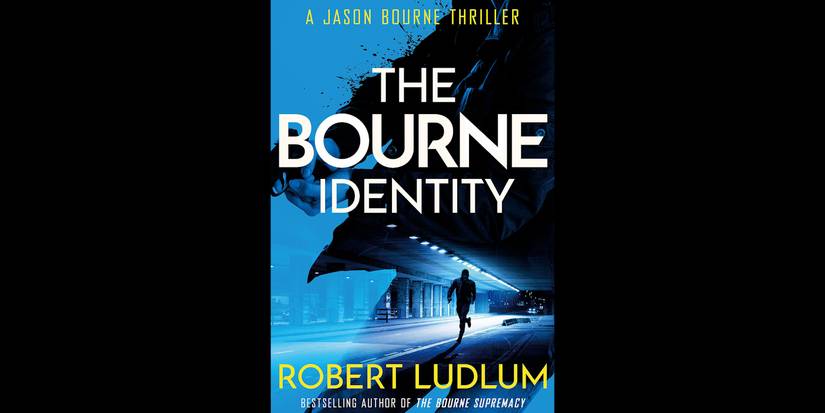
"How can you know who you are if you don't know who you were?" The Bourne Identity begins when an unidentified man is pulled from the Mediterranean Sea suffering from amnesia. Possessing extraordinary combat skills and pursued by assassins, he gradually discovers that he may be Jason Bourne, one of the world's most dangerous operatives. From here, the book blends espionage, conspiracy, psychological suspense, and identity crisis into an endlessly entertaining action thriller.
Caught between the man he may have been and the person he hopes to become, Bourne emerges as a uniquely complex hero whose internal struggle is every bit as gripping as the external conflict. Everyone knows the movie adaptations, and, while Robert Ludlum's novel differs substantially from the film, it's still a masterpiece in its own right. Like The Day of the Jackal, it was hugely influential.
6 'The Secret Agent: A Simple Tale' (1907)

"A belief in a supernatural source of evil is not necessary; men alone are quite capable of every wickedness." Decades before the spy genre became popular, Heart of Darkness author Joseph Conrad helped establish some of its foundations with this political thriller. The Secret Agent follows Adolf Verloc, a spy and provocateur operating in London on behalf of a foreign government. When Verloc becomes involved in a terrorist plot designed to destabilize British society, his actions have devastating consequences for both his family and those around him.
Rather than focusing on glamorous secret agents, Conrad presents espionage as a morally corrupt and deeply cynical enterprise. His spies are flawed, compromised individuals trapped within political systems they barely understand. He treats themes of terrorism and surveillance with a remarkably modern touch, so much so that many of his observations still feel relevant more than a century later.
Collider Exclusive · Villain Personality Quiz Which Criminal Mastermind Would Be Your Nemesis? Lecter · Joker · Moriarty · Chigurh
Four of the finest criminal minds ever put on screen. One of them would look at you and see something worth their time. Eight questions decide which one comes for you, why they picked you, and what they would want when they arrived.
🍷Lecter
🃏Joker
♟️Moriarty
🪙Chigurh
01
What would a criminal mastermind notice about you first? Great villains choose their opponents carefully. Something about you got their attention.
02
How do they make first contact? The introduction tells you everything about what is coming next.
03
What do you actually believe about right and wrong? Every nemesis is really an argument about the thing you believe most.
04
What finally gets under your skin? Everybody has a pressure point. Finding yours is the whole plan.
05
They have made their move. How do you fight back? This is the part of the film where the audience finds out who you are.
06
What would they use against you? A good villain never brings a weapon you have not already handed them.
07
What do they actually want from you? The money is never the point. Something else always is.
08
How does it end between the two of you? Eight questions in, this is the one that decides who comes for you.
The Case File Is Complete Your Nemesis Is…
Four criminal masterminds. One of them was always going to be yours. Here is who comes for you, why they picked you out of everyone available, and what they want from the encounter.
Hannibal Lecter
Your nemesis does not want to beat you. He wants to know you completely, and he is patient enough to wait for it. The frightening part is how good the conversation is.
- Lecter is the most dangerous kind of opponent: the one who finds you interesting. He never raises his voice, because he has never needed to.
- You keep a great deal to yourself and you are careful about what you show. That reserve is exactly the door he would knock on.
- The films understood something other thrillers missed. The horror is not the violence. It is being perfectly understood by the wrong person.
- He would be unfailingly polite about all of it. That is the worst part.
The Joker
Your nemesis is not after money, territory or revenge. He is after a demonstration, and you are the person he has chosen to prove his point on.
- The Joker only picks opponents who believe in something. Your decency is not a defence against him. It is the entire reason he showed up.
- He has no plan you can predict and nothing you can take away, which removes every tool you would normally reach for.
- His whole argument is that you are one bad day away from being him, and you would spend the rest of your life proving him wrong.
- He would call it a magic trick. You would call it the worst night of your life.
Moriarty
Your nemesis respects you, which sounds flattering until you work out what it means. He chose you because nobody else was worth his time.
- Moriarty is the original criminal mastermind, the template every later one borrows from: a mind the equal of the hero's, pointed the wrong way.
- You enjoy being the cleverest person in the room. He is counting on exactly that, and he has already built the room.
- This is the rare nemesis who would be genuinely disappointed if you lost badly. He needs the game to be worth playing.
- It ends the way these things always end. Two people, one problem, and only one way down.
Anton Chigurh
Your nemesis has no personal interest in you whatsoever, and that is precisely what makes him unsurvivable. You are not a rival. You are a stop on the way.
- Chigurh does not negotiate, gloat or explain. He arrives, he asks one question, and the answer was decided long before you opened your mouth.
- You trust yourself to handle things. He is the one problem in the world that has no interest in how capable you are.
- No Country for Old Men rewrote the screen villain by removing the thing audiences quietly rely on: the sense that talking might work.
- Call it. He will wait.
5 'Eye of the Needle' (1978)
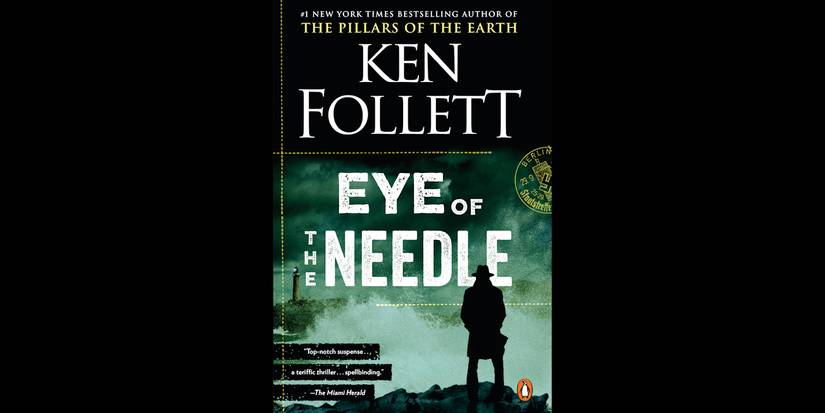
"You can only trust people as far as you can understand them." This banger was written by Ken Follett, the brains behind historical fiction classics like The Pillars of the Earth. Set during World War II, Eye of the Needle follows Henry Faber, a ruthless German spy operating in Britain. Nicknamed "the Needle" because of his preferred murder weapon, Faber uncovers information that could reveal the Allied deception plan preceding D-Day. He races to deliver this intelligence to Germany, while British authorities launch a desperate effort to stop him.
The pacing and suspense here are masterful, keeping the pages turning at a rapid rate. The book also flips the script a little by placing the antagonist front and center. Faber is intelligent, disciplined, and extraordinarily dangerous, yet no cartoon baddie either. All the characters are well-realized, helping to elevate this above your typical spy romp.
4 'Sweet Tooth' (2012)

"People love stories because they make sense of life." This poignant, intelligent book was written by Atonement's Ian McEwan. Sweet Tooth centers on Serena Frome, a young woman recruited into MI5 during the 1970s. Assigned to a covert cultural operation, Serena's task is to secretly fund promising writers whose work aligns with British interests during the Cold War. Complications arise when she becomes romantically involved with one of the authors she is meant to manipulate.
While the plot is entertaining, the book is much more reflective and philosophical than you typically find in this genre. McEwan uses the intelligence operation at the center of the story as a way of exploring questions about truth, fiction, and identity. In terms of the writing itself, the prose is characteristically elegant, making this book a pleasure to read on a sentence-by-sentence level.
3 'Casino Royale' (1953)

"The scent and smoke and sweat of a casino are nauseating at three in the morning." One of the most important spy novels ever, laying a blueprint that would be imitated for decades to come. Casino Royale introduces James Bond, the British secret agent who would quickly become one of the most famous fictional characters of all time. In his first adventure, Bond is sent to a French casino to bankrupt Le Chiffre, a dangerous operative whose financial troubles threaten a Soviet-backed espionage network.
While later adaptations often emphasized gadgets and spectacle, Ian Fleming's original novel is surprisingly grounded and intense. Bond is skilled and confident, but he's also vulnerable, making mistakes and suffering genuine physical and emotional consequences. That said, the book still serves up that classic mix of exotic locations, high-stakes missions, and dangerous adversaries. Without it, the landscape of spy fiction would look very different.
2 'The Quiet American' (1955)

"Innocence is a kind of insanity." The Quiet American is one of the defining works by novelist and journalist Graham Greene. Although often categorized as literary fiction, it also ranks among the finest espionage novels ever. Set in French-controlled Vietnam during the early stages of American involvement in the region, the story focuses on British journalist Thomas Fowler, whose life becomes increasingly complicated by both a love triangle and his relationship with Alden Pyle, an idealistic American whose political activities have far-reaching consequences.
The book's strongest feature is its moral complexity. Greene refuses to divide the world into heroes and villains. Every major character operates within shades of ambiguity, forcing readers to confront difficult questions about responsibility and idealism. Through them, the author engages with important questions around interventionism, American exceptionalism, moral blindness, and the intersection of politics and personal morality.
1 'The Spy Who Came in from the Cold' (1963)
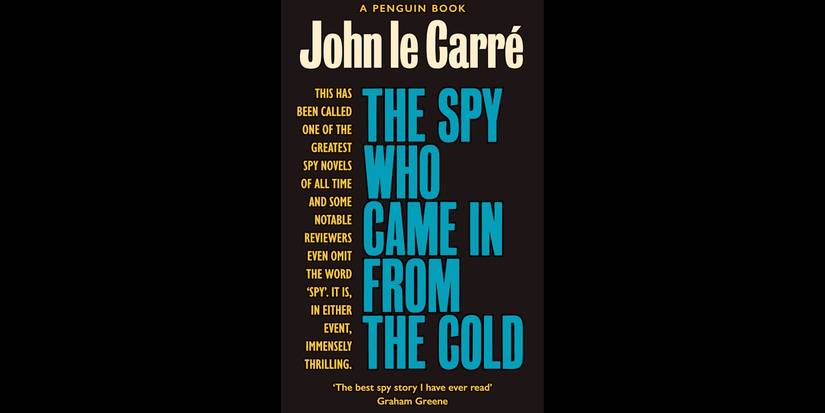
"What do you think spies are: priests, saints and martyrs?" John le Carré's masterpiece, The Spy Who Came in from the Cold, is an espionage novel that manages to be both engrossing and entertaining as well as complex and perceptive. It follows Alec Leamas, a weary British intelligence officer whose final mission involves posing as a disgraced agent in order to infiltrate East German intelligence during the Cold War. However, his efforts shatter the genre's usual glamorous, heroic assumptions.
One of John le Carré's great innovations here was portraying intelligence work as morally compromising, emotionally exhausting, and often deeply cynical. They operate in a bleak world that demands deception and sacrifice, and their ceaseless lies have a corrosive effect despite being cloaked in good intentions. The book's realism and emotional depth transformed the genre forever, setting a new standard that few writers have equaled.
KioskNews shows a cleaned-up reading view extracted from the publisher’s page — the original always lives on their site, not ours.