Google CEO 'agrees' that tech firms need to innovate responsibly
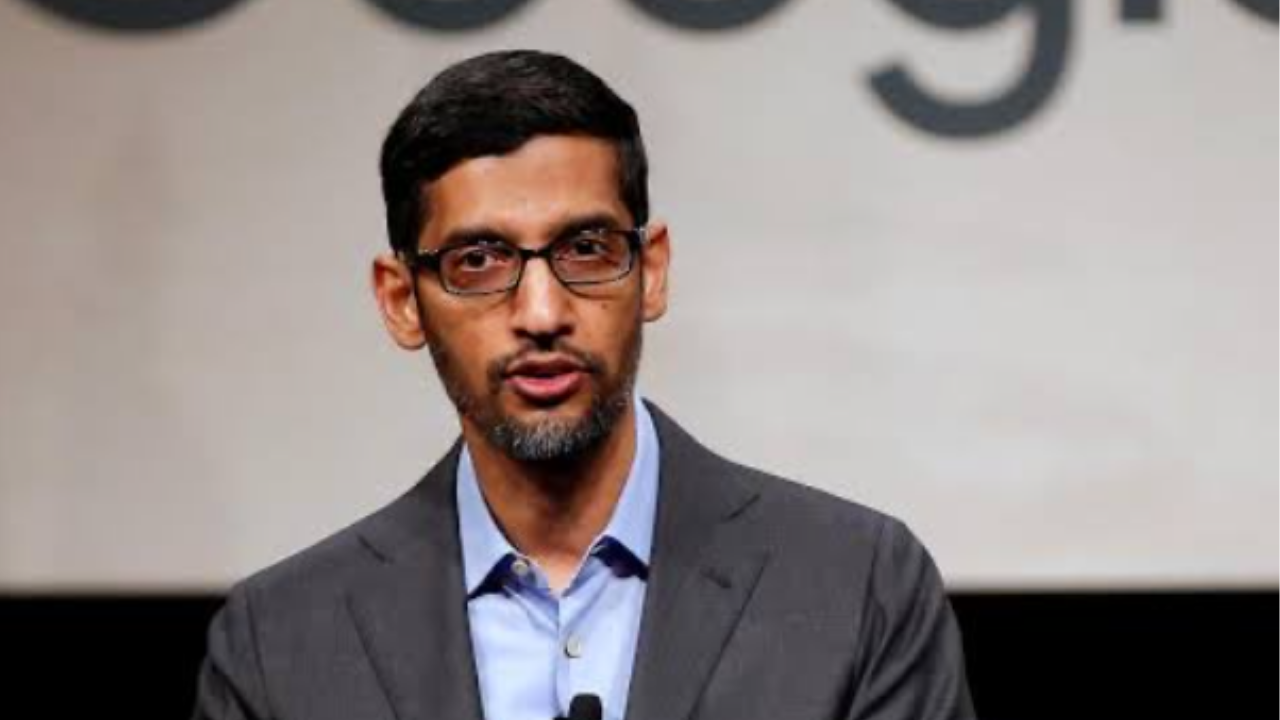
Photo: @RemporX/ X
Google CEO Sundar Pichai has joined the US President Donald Trump, Senate leaders, and other tech executives in signing the White House Accord on Super Intelligence, a landmark agreement aimed at ensuring safe and responsible development of advanced AI systems.
The accord, alongside a Joint Commitment on Frontier Responsibilities, sets out tangible steps for companies to adopt safeguards while continuing to deliver economic and scientific benefits. Pichai revealed that Google has invested hundreds of billions of dollars in the past two years across its AI stack, with more spending planned. He emphasized that the company is focused on building products that deliver real value for people and businesses, while also investing in local communities and strengthening public trust in technology.
What Google CEO Sundar Pichai said
In a post on X, Pichai described the meeting as an important conversation, confirming that Google had signed what he called the White House Accord on Super Intelligence. “Great to meet today with @POTUS, @JDVance, @SpeakerJohnsonand Administration + tech leaders. Important conversation and we signed today the White House Accord on Super Intelligence.As I shared today, Google has invested hundreds of billions in the last two years alone, with more to come, across the entire stack, to deliver benefits for America and the world.
We’re working to build products that deliver real value for people and businesses, invest in local communities, and build trust in the technology.Industry also has to innovate responsibly. Google’s focused on building the right way, with appropriate testing, evaluations, red-teaming, and other safeguards against misuse and misalignment – and releasing models or products only after they’ve been thoroughly reviewed.We are committed to working with other industry leaders to establish norms and build public confidence. The White House Accord and the Joint Commitment on Frontier Responsibilities signed today is a solid basis for moving forward - it contains real tangible steps to promote safe development, while delivering the economic and scientific benefits of this technology,” wrote Pichai in a post on X.
What the accord actually says
The full agreement is titled "The White House Accord on Superintelligence: Joint Commitment on Frontier SI Responsibilities."
Beyond Pichai, it was signed by Anthropic CEO Dario Amodei, Meta CEO Mark Zuckerberg, OpenAI President Greg Brockman, xAI founder Elon Musk, and Nvidia CEO Jensen Huang, alongside Trump himself.The one-page document lays out what's being described as a four-layer framework of controls and audits for frontier AI systems. The first layer requires companies to build robust internal processes to monitor their models during both training and deployment, ensuring systems behave as intended and that problems are identified and resolved quickly.
Subsequent layers call for internal verification, partnerships with independent external auditors to assess whether safety controls are functioning as intended, and board-level oversight of the entire process.
Voluntary, not legally binding
Despite its formal tone, House Speaker Mike Johnson was clear that the accord is entirely voluntary, and Trump himself described it as "morally" binding rather than legally enforceable, emphasizing that the industry will largely be left to police itself. At the signing event, Trump likened the document to a kind of constitution for AI governance, while Musk described the substance of the commitment as involving joint monitoring, special board committees, and companies essentially reviewing each other's safety practices.Zuckerberg struck a similarly measured tone afterward, calling the accord a reasonable starting point — one the broader industry could plausibly coalesce around going forward, rather than a finished framework.
KioskNews shows a cleaned-up reading view extracted from the publisher’s page — the original always lives on their site, not ours.