In less than 2 years, Quezon City's total solar capacity increases by 73%
Make this your preferred source to get more updates from this publisher on Google.
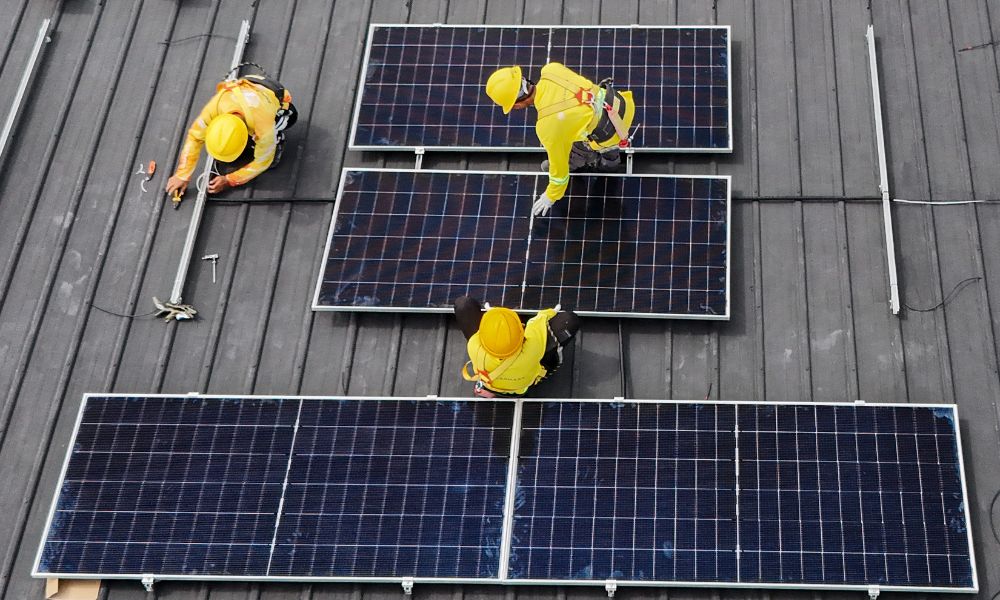
Quezon City's estimated total solar capacity has increased by 73% from a meager 33.85MW to a formidable 58.55MW.
According to the Institute for Climate and Sustainable Cities (ICSC), more than 95% of the QC's present capacity could generate more than 78GWh of annual electricity, equivalent to at least 1.35% of the city's total electricity consumption last year.
There are many things behind the City of the Stars' renewable energy gain. There is of course the city government's wide-spread solar installation on government buildings, city-owned hospitals, and public schools.
But beyond that, there is also the solar installation of malls including SM, Ayala and Robinsons, which have contributed in the city's increased solar capacity.
“Quezon City’s growing solar capacity demonstrates the game-changing role that solar rooftop plays in meeting the electricity needs of urban communities,” stressed Atty. Monalisa Dimalanta, ICSC Senior Advisor on Energy Literacy and Energy Democracy.
According to QC, all three city-owned hospitals are now fully solar-powered while the seven buildings in the city hall compound boasts of a total of 1,317 solar panels as of September 2026.
Meanwhile 20 of 25 public schools have undertaken solarization.
The initiative yields QC an estimated annual savings of P24 million in electricity costs, QC said in an April 2026 Facebook post.
The findings are particularly relevant given the monster El Niño the country is facing, the repercussions in terms of energy supply it brings, and the costs consumers will have bear to deal with it.
Despite the incredible 73% increase in solar capacity however, the hard truth is rooftop solar adoption remains below 1% in the city, pointing to the need to expand access among households, socialized housing communities, and MSMEs.
“The challenge now is to ensure that this growth is enjoyed by a wider base of consumers, particularly for households and small businesses that cannot easily shoulder the upfront cost of installation. We need to expand access to affordable financing and seamless permitting processes to expand the benefits of rooftop solar to more households and businesses,” Dimalanta added.
ICSC’s Solar Power Estimation of Capacities and Tracking Using Machine Learning (SPECTRUM) platform estimates Quezon City has a maximum rooftop solar potential of 4,916MW.
When ICSC launched SPECTRUM last year, it found the Philippines had over 1,800 MW potential solar rooftop capacity. — LA, GMA News
KioskNews shows a cleaned-up reading view extracted from the publisher’s page — the original always lives on their site, not ours.