We Officially Ranked the 10 Best Detective Movies of All Time


Michael Block is a 14 time GLAM Award nominated writer, producer, and host of the podcast Block Talk. Throughout his time in the entertainment industry, he has worked on and off Broadway as a stage manager, written several produced plays, critiqued hundreds of theatrical performances, drag and cabaret shows, and has produced events randing from drag competitoons to variety concerts!
On Block Talk, he interviews nightlife personalities, covers the wide world of entertainment through features, ranking episodes, and recaps ALL of Drag Race, as well as Dragula and Survivor. He has interviewed hundreds of RuGirls that span the globe at DragCon NYC, DragCon LA, and DragCon UK.
In his free time, he makes one-of-a-kind jewelry and gift baskets with his mom. He is a proud member of the LGBTQ+ community.
We all like to believe we have the skill set to be super sleuths, but the truth is, we’re not nearly as brilliant as the detectives we've seen on screen. The thrill of crime and mystery films comes from being able to play along with the detectives on the big screen as they solve the criminal puzzle. As a beloved genre, detective films continue to pervade the industry. With so many iconic detective films, these ten are simply the best.
From classic thrillers to modern masterpieces, these ten detective films feature smart plots, enthralling mysteries, and twists and turns you never see coming. And, once the detective finishes their task, you’re either left simply satisfied or extraordinarily shocked. Either way, these detective films have influenced and served as important roadmaps for future detective stories. How many of these detective movies did you solve alongside the cops and private eyes on screen?
10 'Knives Out' (2019)
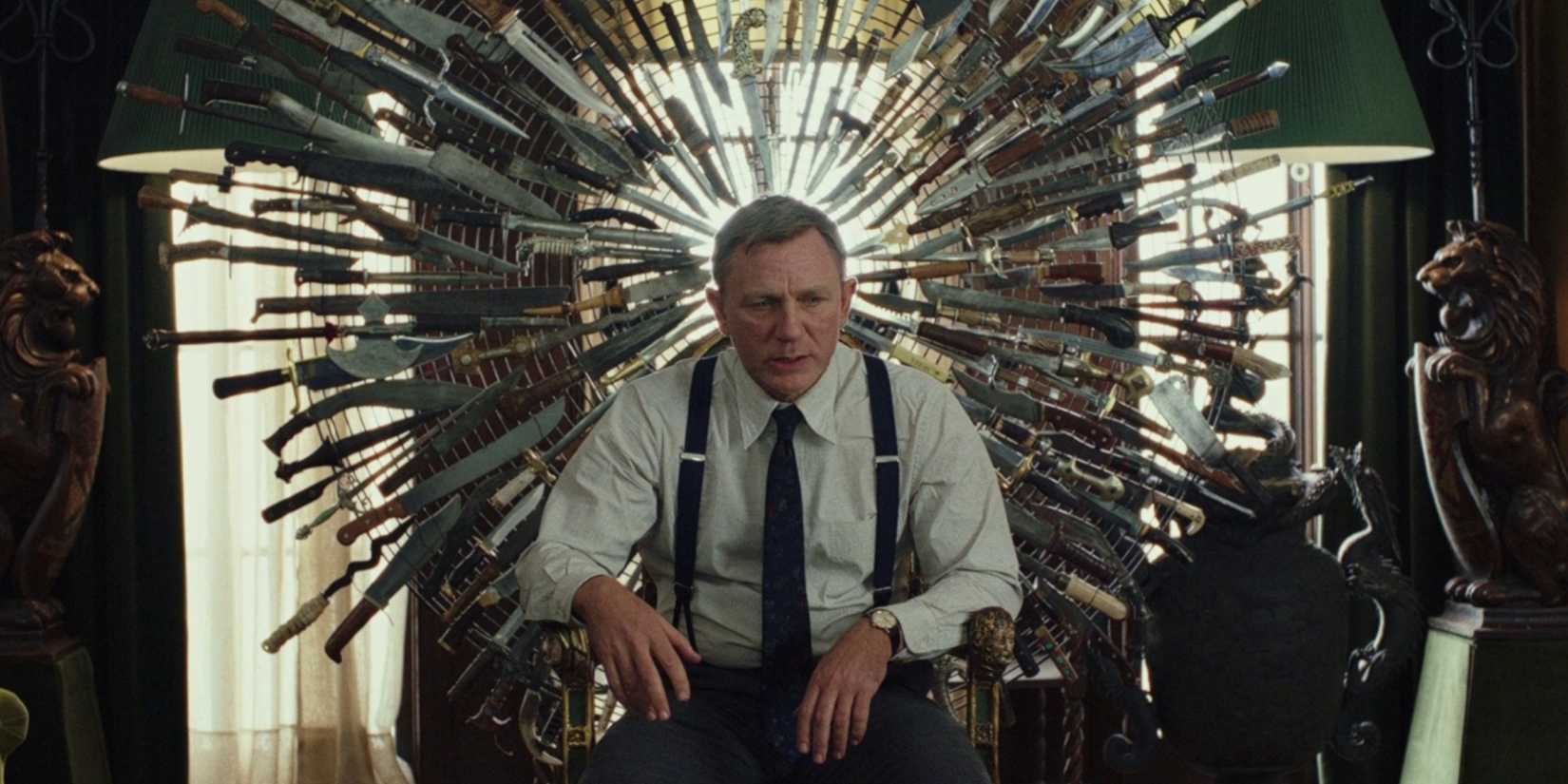
It might be hyperbole to say Knives Out single-handedly revived the classically tinged whodunnit, but it certainly reignited a passion for the genre. Written and directed by Rian Johnson, the modern murder mystery follows famed private detective Benoit Blanc (Daniel Craig) is anonymously hired to investigate the sudden death of wealthy crime novelist Harlan Thrombey (Christopher Plummer) right after his 85th birthday party. As Blanc questions Harlan's greedy, dysfunctional family and his devoted nurse, Marta Cabrera (Ana de Armas), he unravels a tangled web of lies, shifting motives, and an unexpected inheritance. One of the sharpest detective stories that launched a franchise, Knives Out flips classic whodunit expectations while keeping the clues fair and the tension high, all while uniting a star-studded ensemble more than willing to play.
Unlike many classic films of the type that hide the truth until the end, the film reveals early on that Harlan's nurse, Marta, accidentally gave him a lethal dose of morphine, and that Harlan took his own life to protect her. That shift turns the story from a standard "who did it" into a nail-biting race to see whether Marta gets caught. It still delivers big payoffs when the true manipulation behind the night comes into focus. Johnson plants clues with careful plotting. He masterfully weaves subtle hints, shifting flashbacks, and conflicting alibis throughout the house investigation so the twists and turns feel earned once they click together. Shedding his Bond tuxedo, Craig brings whimsical theatrical flair and a memorable Southern drawl that brings Blanc to life. Opposite a colorful cast of contrasting characters, the movie pairs classic country-house mystery vibes with biting satire about wealth, entitlement, and family greed. With an iconic ensemble also featuring Chris Evans, Jamie Lee Curtis, Michael Shannon, Don Johnson, LaKeith Stanfield, and Toni Collette, Knives Out makes mystery fun again.
9 'Fargo' (1996)

One of the best movies of the 90s is the pitch-perfect black comedy crime film Fargo. Directed by Joel and Ethan Coen, Fargo follows desperate Minneapolis car salesman Jerry Lundegaard (William H. Macy), who hires two small-time criminals to kidnap his wife so he can extort a hefty ransom from his wealthy father-in-law. When the bungled scheme spirals into a string of brutal murders, cheerful and heavily pregnant Brainerd police chief Marge Gunderson (Frances McDormand) launches a methodical investigation to track down the culprits. Fargo unites a grounded, methodical investigation with dark wit, sharp regionalism, and a stark moral contrast for a hearty thriller.
Fargo kicks off with a twisted scenario that would tend to lead to a dark story, but instead of a slick criminal mastermind, the scheme spirals out of control through bad lies, panicky mistakes, and escalating violence. The comedy doesn’t come from laugh-out-loud, sidesplitting jokes but how abysmal things play out. Unlike gritty, cynical noir sleuths, Brainerd police chief Marge Gunderson is warm, polite, pregnant, and quietly sharp. She solves the case through steady legwork, careful observation, and basic decency rather than tough-guy posturing. It’s McDormand’s most iconic part. The Coens blend deadpan humor with sudden, brutal violence against the wide, white isolation of winter in Minnesota and North Dakota. The juxtaposition creates perfect storytelling that builds warmth and gives the investigation a distinct mood that sticks with you. So much so, it inspired an exceptional five-season series with the exact same thematic DNA.
8 'Memories of Murder' (2005)

One of his best films, Bong Joon-ho’s Memories of Murder is simply fantastic. Based on real events in 1986 South Korea, the crime thriller follows two bumbling local detectives, Park Doo-man (Song Kang-ho) and Seo Tae-yoon (Kim Sang-kyung), and a methodical investigator from Seoul as they hunt the country's first documented serial killer. As more young women are found brutally murdered in a small rural province, the lawmen's clashing methods, lack of forensic technology, and growing desperation push them toward moral compromise in an elusive search for justice. Memories of Murder rejects neat Hollywood conclusions and shows how real investigations wear people down.
Memories of Murder masterfully trades sleek sleuth tropes for gritty realism, dark humor, and quiet dread. The two detectives at the center of the story are human. They are flawed. Local cop Park Doo-man relies on gut instinct and flying kicks, while Seoul detective Seo Tae-yoon brings textbook logic and forensic frustration. Neither has all the answers, and both crack under pressure. Bong leads the film with slapstick and gallows humor around bungled police work, then shifts to the case's reality. By letting the narrative slowly darken into bleak obsession as leads dry up, it exposes the case's difficulty while echoing the historical weight it’s based on. Instead of a tidy courtroom wrap-up, the story ends on a haunting note about unresolved grief and unanswered questions. Memories of Murder may not be as revered as other films on this list, but it deserves just as much credit.
7 'Dirty Harry' (1971)
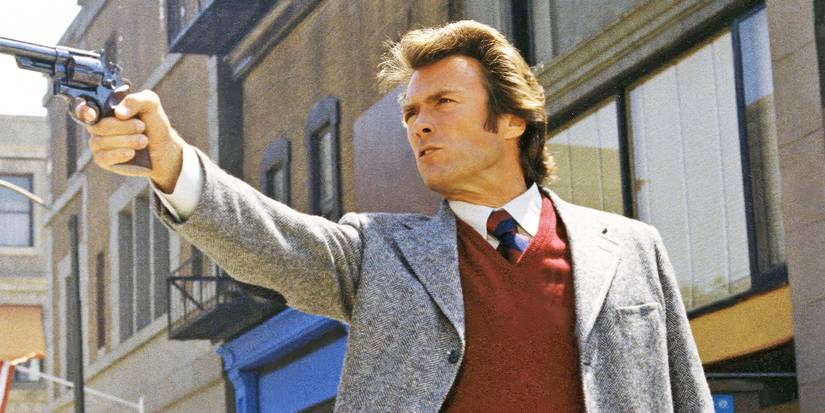
If there’s one detective film that captured the era, it’s Dirty Harry. In the Don Siegel-directed action thriller, tough San Francisco Police Inspector Harry Callahan (Clint Eastwood) hunts down a sadistic rooftop sniper known as Charles "Scorpio" Davis (Andy Robinson), who is terrorizing the city for ransom. After the killer escapes prosecution on a technicality due to Callahan's aggressive methods and hijacks a school bus, the detective takes the law into his own hands to stop him. Drawing on the real-life case of the Zodiac Killer, Dirty Harry is a highly influential detective film that turns a gritty 1970s San Francisco manhunt into a sharp, tense clash over law and justice.
Led by a cynical, rule-bending lawman facing off against an utterly chilling killer, Dirty Harry is unnerving. Eastwood plays Callahan as a blunt, no-nonsense homicide detective who refuses to play by bureaucratic rules or sugarcoat harsh realities. He helped kick off the "loose-cannon cop" mold that shaped decades of action and crime movies. Scorpio isn’t polished, but a twitchy, calculating, and cruel monster who thrives on taunting the police and exploiting legal loopholes to keep Harry off balance. Lalo Schifrin’s brass-and-funk score drives the tension, while lines like "Do I feel lucky?" and Callahan's .44 Magnum became instant cinema landmarks. Though filmed in the wide open, it’s a claustrophobic story. The film forces viewers to wrestle with civil liberties, due process, and what happens when someone decides the system isn't enough.
6 'L.A. Confidential' (1997)
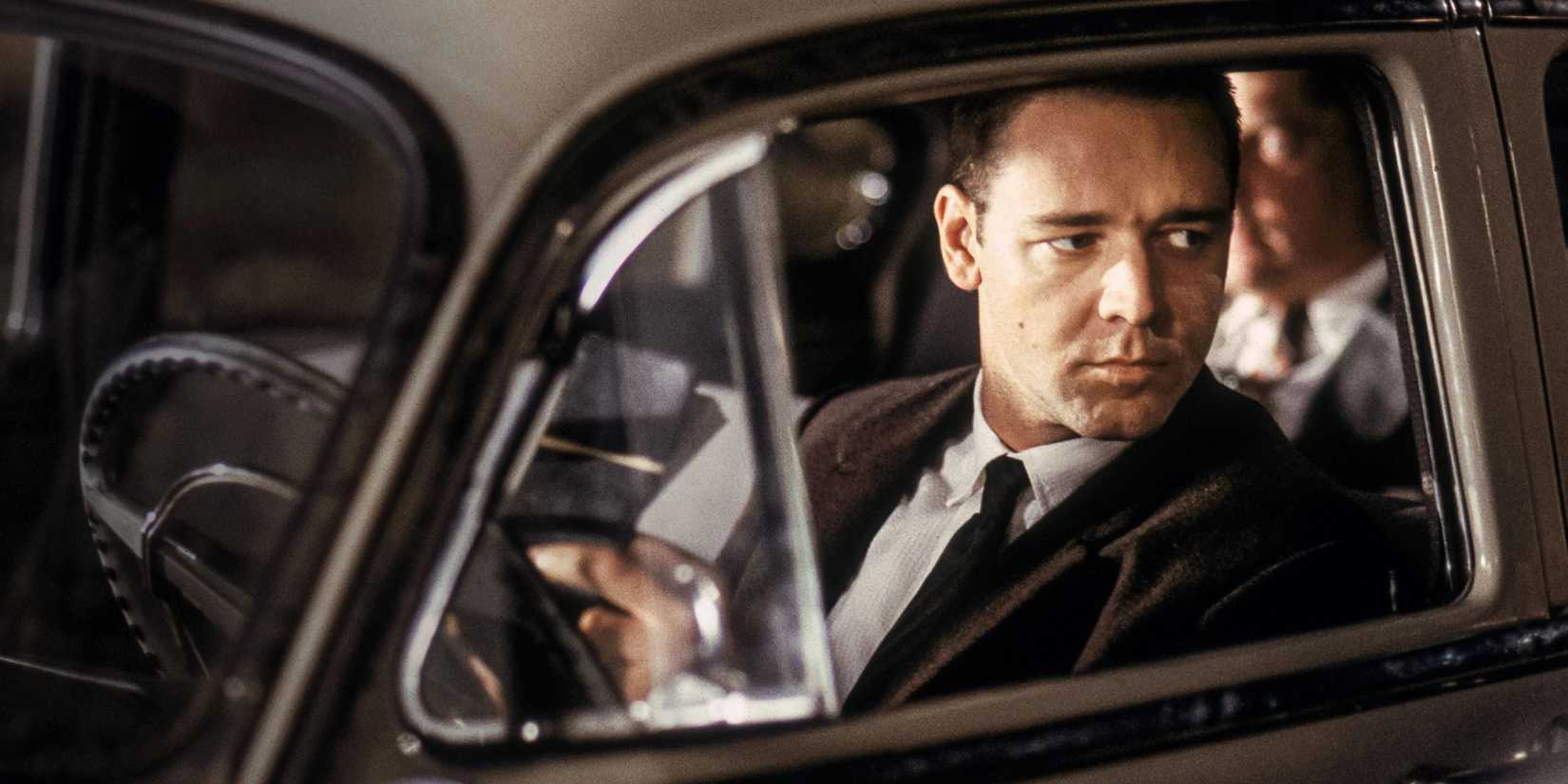
What’s better than one detective? Three detectives! Directed by Curtis Hanson, the neo-noir crime thriller L.A. Confidential follows three very different police detectives—the ambitious, by-the-book Ed Exley (Guy Pierce), the brutal enforcer Bud White (Russell Crowe), and the slick, celebrity-obsessed Jack Vincennes (Kevin Spacey)—as they investigate a mass murder at the Nite Owl coffee shop. Their separate inquiries eventually collide, uncovering a web of Hollywood sleaze, organized crime, and deep-seated corruption within their own department. L.A. Confidential remains toward the top of the heap because it pairs a tight, twisting mystery with three deeply flawed cops whose clashing methods drive the entire story.
Based on the novel by James Ellroy, with a massively dense text, Hanson and co-writer Brian Helgeland trimmed subplots and merged characters while keeping the moral grit intact. The streamlined tact keeps pacing propulsive. What begins as a brutal diner massacre gradually connects tabloid scandal sheets, high-end call girls, drug trafficking, and rot at the very top of the 1950s LAPD. Every clue shifts how you see the characters. The film is rich in period atmosphere, from period cars and costumes to Jerry Goldsmith's score and the glossy-yet-seedy Los Angeles setting. It’s a lived-in thriller with stellar acting, earning Kim Basinger an Academy Award for Best Supporting Actress.
5 'The French Connection' (1971)
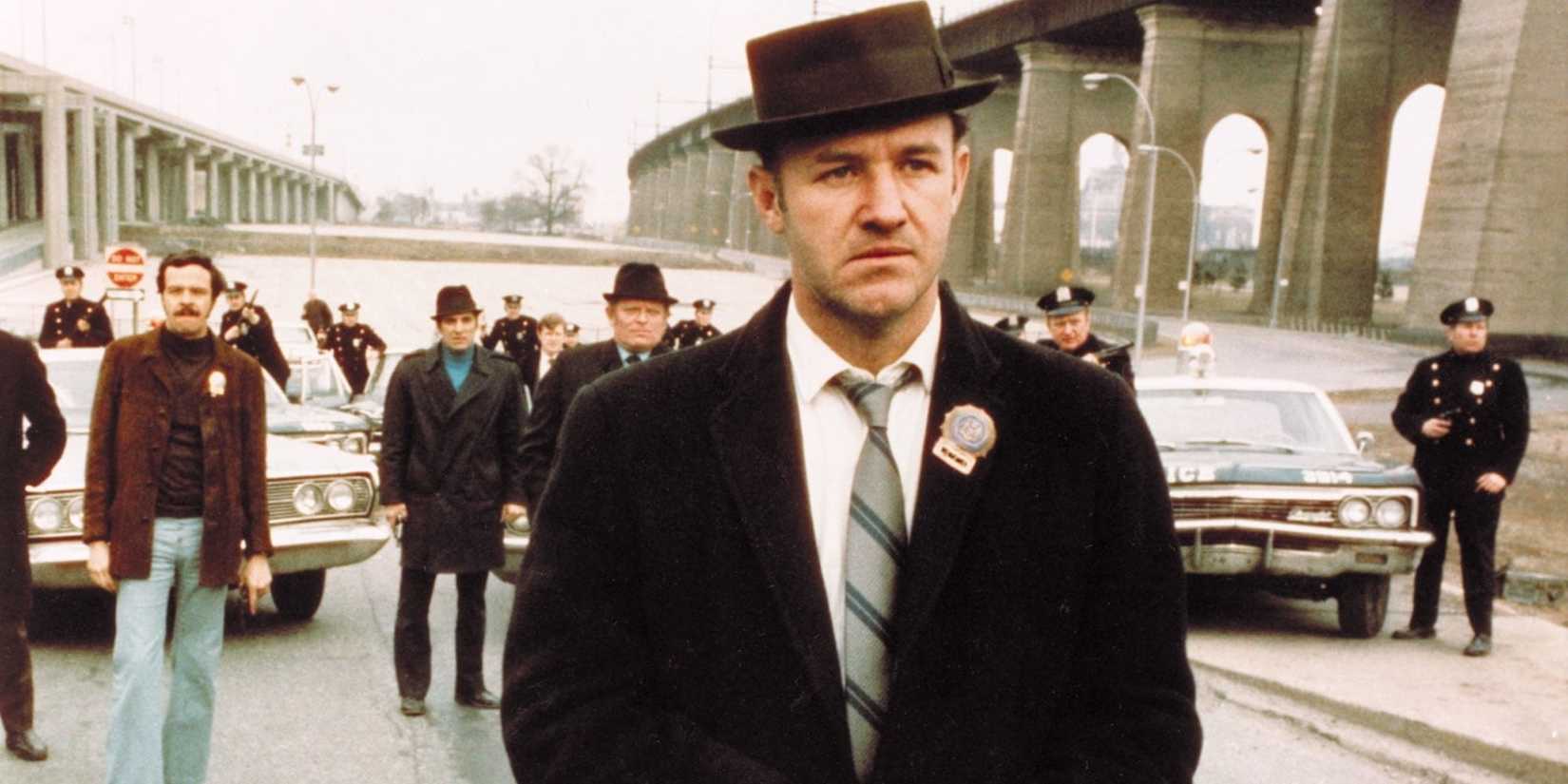
Based on Robin Moore's book of the same name, The French Connection reshaped how police procedurals look and feel forever. Directed by William Friedkin, two relentless New York City narcotics detectives, Jimmy "Popeye" Doyle (Gene Hackman) and Buddy "Cloudy" Russo (Roy Scheider), uncover a massive $32 million heroin smuggling ring orchestrated by a wealthy French kingpin named Alain Charnier (Fernando Reynolds). Inspired by a real-life 1961 investigation, the gritty thriller follows their obsessive pursuit across Brooklyn to intercept the massive drug shipment before Charnier and his hitman can complete the deal and slip away. The French Connection is a landmark detective film for its freedom in ditching pristine Hollywood glamour for raw, documentary-style realism, a flawed antihero, and relentless street-level tension.
Through groundbreaking authenticity, the case the film is based on aided in grounding the slang and investigative rhythms in reality. The fly-on-the-wall realism garnered a profoundly raw police procedural. Hackman as Popeye is sensational. Doyle is rough, aggressive, and consumed by the hunt. The film doesn't sanitize his temper or rough methods. Instead, viewers watch him push past boundaries in a gritty New York setting. Cinematographer Owen Roizman captures a bleak, bustling city where streets, subways, and alleys feel like active players in the story. The investigation builds through legwork, surveillance, and sheer persistence. One of the greatest cinematic scenes comes from this film. Popeye's high-speed run beneath an elevated train remains a brilliant, high-stakes chase, staged on real city streets with intense pacing and sharp editing. The impact of The French Connection reverberates still today.
4 'The Maltese Falcon' (1941)
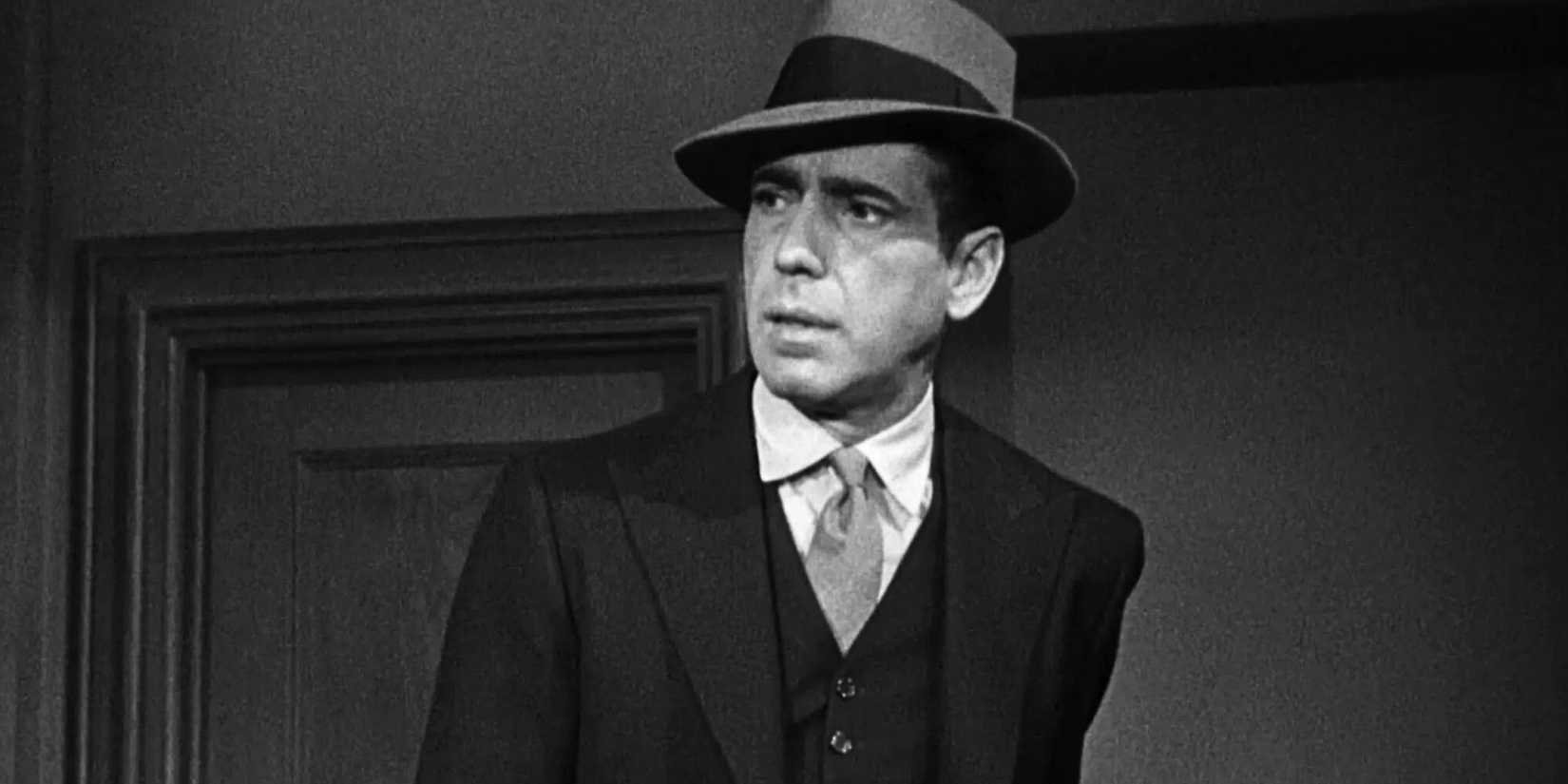
The Maltese Falcon is the greatest classic detective film. Directed by John Huston, San Francisco private detective Sam Spade (Humphrey Bogart) takes on a routine case for a mysterious woman, only for his partner to be murdered. Spade quickly becomes entangled in a deadly web of deceit alongside an eccentric group of ruthless criminals, all of whom are hunting for a priceless, jewel-encrusted falcon statuette. A quintessential thriller, The Maltese Falcon pairs a cynical, street-smart anti-hero with a labyrinthine mystery, memorable rogues, and the shadowy visual style that launched film noir.
Crafting the hard-boiled detective archetype, Bogart’s Sam Spade isn’t a noble crusader chasing clean justice. He’s calculating, unsentimental, and guided by a tough personal code, especially after his partner Miles Archer (Jerome Cowan), is killed. By giving him that edge, every conversation feels like a high-stakes chess match where Spade is always reading the room. The story is filled with alluring individuals where nobody is purely innocent, and everyone wants the jewel-encrusted falcon statuette. Mary Astor plays Brigid O’Shaughnessy, using poise and theatrical vulnerability to mask cold calculation rather than relying on simple glamour. Peter Lorre brings anxious, slippery tension as Joel Cairo, while Elisha Cook Jr. plays Wilmer, a volatile young gunman. Sydney Greenstreet as Kasper Gutman becomes a cultured, larger-than-life schemer whose polite manners hide ruthless menace. In his directorial debut, Huston worked with cinematographer Arthur Edeson to build a tense, claustrophobic world of deep shadows, low angles, and moral gray areas. Confined rooms and shifting alliances keep the focus on psychology, betrayal, and sharp dialogue. It’s a style that continues to be replicated. The Maltese Falcon leans into irony and disillusionment, a twist that turns greed inside out.
3 'Se7en' (1995)

Se7en has one of the most iconic, yet devastating endings in cinema history. Crafted by pristine performances and David Fincher's elite direction. The crime thriller follows disillusioned, soon-to-retire detective William Somerset (Morgan Freeman) and his impulsive new partner, David Mills (Brad Pitt), as they investigate a string of brutal murders in a perpetually rain-soaked, unnamed city. They soon realize they are hunting a calculated serial killer, John Doe (Kevin Spacey), who stages each gruesome crime to punish victims for committing one of the seven deadly sins. Se7en blends a gritty, methodical police procedural with an oppressive noir atmosphere, sharply contrasting cops, and an unforgettable payoff that helped define '90s crime cinema.
The film is all about the detectives and their ambitious investigation. By pairing opposites, their friction and their moments of camaraderie gives their quest great weight before everything spirals. Fighting a chilling antagonist, the hunt turns into a psychological trap rather than a generic hard-boiled cat-and-mouse chase. Fincher and cinematographer Darius Khondji turn the unnamed city into a character of its own. The relentless weather becomes a suffocating, morally decaying reminder of the dread looming. Dim shadows, flashlight beams, and a cold, tense score keep every clue and crime scene feeling overwhelmingly claustrophobic. With an uncompromising conclusion, Se7en pushed the detectives into a moral nightmare where the killer ultimately wins. The final box confrontation sticks with audiences long after the credits conclude.
2 'Chinatown' (1974)
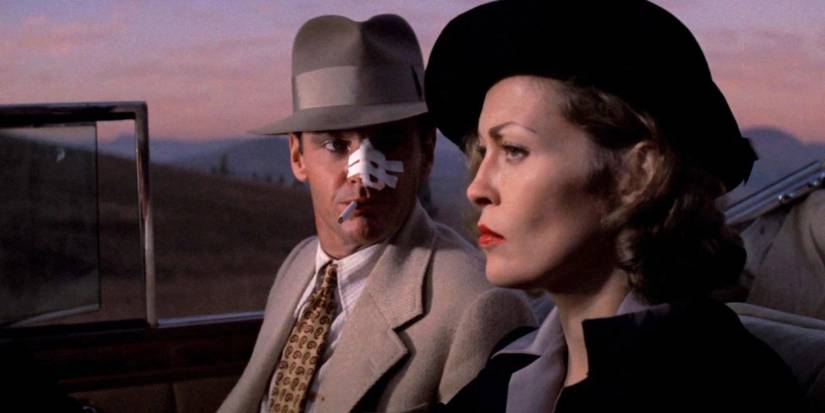
In the conversation as the top neo-noir mystery film of all time, Chinatown is a masterpiece. Directed by Roman Polanski and written by Robert Towne, the 1937 Los Angeles-set thriller follows private eye J.J. "Jake" Gittes (Jack Nicholson) as he is hired to investigate a routine infidelity case involving the chief water engineer, Hollis Mulwray (Darrell Zwerling). Following Mulwray's murder, Gittes uncovers a far-reaching conspiracy of municipal corruption, land fraud, and dark family secrets orchestrated by wealthy power broker Noah Cross (John Huston). Combining an award-winning screenplay, taut direction, and a tragic, sun-drenched twist on a classic noir, it turns a routine investigation into a story about systemic corruption.
COLLIDER The Mystery Desk
Case File 0481 · Open
Collider/ Movies/ Mystery/ Which Classic Mystery Movie Are You
8 Questions · 2 Minutes Which Classic Mystery Movie Are You? Every answer counts toward the verdict.
Four films that solve a mystery four completely different ways, from a comedy with three separate endings to a thriller told backwards. One of them has been describing you all along.
The Suspects01🕯Clue1985
02🪟Rear Window1954
03📦Se7en1995
04📸Memento2000
Prime suspect
Evidence logged automaticallyExhibit 01 of 08Film Night
What kind of film night are you after? Pick the one that sounds most like you
Press 1 to 4 to log an answer
Prime suspect
Evidence logged automaticallyExhibit 02 of 08Character Witness
How would your friends describe you? Be honest
Press 1 to 4 to log an answer
Prime suspect
Evidence logged automaticallyExhibit 03 of 08Whereabouts
What do you do when you are stuck at home? One answer only
Press 1 to 4 to log an answer
Prime suspect
Evidence logged automaticallyExhibit 04 of 08The Twist
How do you react to a plot twist? Pick the closest answer
Press 1 to 4 to log an answer
Prime suspect
Evidence logged automaticallyExhibit 05 of 08The Scene
Pick a room. No wrong answers here
Press 1 to 4 to log an answer
Prime suspect
Evidence logged automaticallyExhibit 06 of 08Testimony
What is your memory like? Pick the closest answer
Press 1 to 4 to log an answer
Prime suspect
Evidence logged automaticallyExhibit 07 of 08Closing Argument
How do you feel about endings? Think about the last film that got you
Press 1 to 4 to log an answer
Prime suspect
Evidence logged automaticallyExhibit 08 of 08The Verdict
What should a mystery film do to you? Last one
Press 1 to 4 to log an answer
Case Closed Verdict Your Mystery Movie Is
🕯 Clue Jonathan Lynn · 1985 You are the most fun thing in the room, and you are not remotely in control of it.
Clue is a murder mystery built from a board game, played at farce speed by one of the best comic ensembles ever assembled, and it refuses to commit to a single answer. That is you: loud, quick, impossible to plan around, and the reason anybody had a good time. Case Notes
- You keep the energy up and the plan loose, and people have a much better evening because of it.
- Three different endings were sent to different cinemas in 1985, so the answer depended on which screen you walked into.
- It flopped completely, found its audience on video, and went back into cinemas for its fortieth anniversary with the endings randomised again.
- Your flaw is that chaos is excellent company and a terrible plan.
Chaotic Quick Sociable Unserious
🪟 Rear Window Alfred Hitchcock · 1954 You watch, and you notice the thing everybody else walks past.
Hitchcock trapped James Stewart in one room with a broken leg and a view of his neighbours, and built an entire thriller out of a man looking out of a window and being right. You are the one who clocks the detail nobody announced, and you are usually correct before you can prove it. Case Notes
- You are quietly the most observant person in your circle and you notice changes before anybody mentions them.
- The courtyard was one of the largest sets ever built at Paramount, with thirty-one apartments and working plumbing.
- It was nominated for four Academy Awards including Best Director and is still taught as the cleanest thriller ever constructed.
- Your risk is that watching and doing something about it are not the same, and you know it.
Observant Patient Curious Detached
📦 Se7en David Fincher · 1995 You take things on, and you do not put them down.
Fincher made a serial killer film where the detectives are losing the entire time, shot it so dark the studio complained, and refused to change an ending that everybody told him would sink the film. You have that same refusal in you, and it has cost you more than you let on. Case Notes
- You are the one who keeps going after everybody else has accepted it cannot be solved.
- New Line wanted a different ending and Brad Pitt reportedly refused to make the film without the one they shot.
- It turned Fincher from the director who had a bad time on Alien 3 into the defining thriller director of his generation.
- Your weakness is that carrying something this long does real damage, and you are usually the last to notice.
Relentless Serious Principled Haunted
📸 Memento Christopher Nolan · 2000 Nobody can quite follow your thinking, and you get there anyway.
Nolan told the story backwards, so the audience knows as little as the man at the centre of it does, and the whole film becomes an argument about how much of what you believe you simply decided to believe. You arrive at the right answer by a route nobody else would have taken. Case Notes
- You work things out sideways, and explaining the route takes longer than the answer did.
- It was nominated for Best Original Screenplay and Best Film Editing in 2002 and won neither, which still annoys people.
- It cost around nine million dollars, made over five times that, and built the career that led to everything after.
- Your flaw is trusting your own version of events slightly more than the evidence supports.
Lateral Private Analytical Unreadable
Evidence Log
Clue
Rear Window
Se7en
Memento
Copied to clipboard
Case filed by COLLIDER Collider.com · The Mystery Desk
Chinatown starts out small, but evolves into a massive scope. The narrative snowballs into a tale inspired by real California water history. The plot routinely peels the layers back to expose brutal secrets. As the mystery deepens, personal family horrors collide with powerful institutions, making you question everything in your own world. Every scene moves the investigation forward without wasted exposition. It's a highly economical script. Nicholson plays Gittes as sharp, resourceful, and stubborn, yet out of his depth once he steps beyond his typical, safe terrain. Polanski's camera stays close to Gittes' point of view, allowing you to piece together the clues alongside him. But like Gittes, you'll never see the end coming. Instead, it doesn't end the way you'd expect a Hollywood narrative to. Chinatown ends in tragedy and powerlessness, concluding with a grim resignation and an iconic final line.
1 'The Silence of the Lambs' (1991)

When you sweep the Big Five at the Academy Awards, you earn a spot at the top of any list. The Silence of the Lambs takes Thomas Harris' novel and turns it into a brilliant psychological horror thriller that puts the genre front and center in the mainstream mindset. Young FBI trainee Clarice Starling (Jodie Foster) seeks psychological insight from imprisoned cannibalistic psychiatrist Dr. Hannibal Lecter (Anthony Hopkins) to track down a serial killer known as "Buffalo Bill" (Ted Levine) who abducts and skins women. In exchange for clues that could save a kidnapped senator's daughter, Lecter demands personal details from Clarice's traumatic past as she races to solve the case. A top-notch detective thriller, The Silence of the Lambs blends grounded FBI investigation with high-stakes psychological tension, where clue-gathering, behavioral profiling, and character dynamics become masterfully urgent.
Adapted by Ted Tally, The Silence of the Lambs leans into FBI profiling and legwork where detail actually pays off. Small clues, like a moth cocoon recovered during an autopsy, feed directly into solving the case rather than sitting around as mere set dressing. The narrative is a high-stakes psychological chess match as the quid pro quo interrogation becomes central to the dynamic. Director Jonathan Demme uses tight, forward-facing close-ups and point-of-view shots that put you right across from the individual speaking. It makes the interviews and silences feel raw and uncomfortable. With a nerve-wracking payoff, the final investigation inside Buffalo Bill's house, complete with night-vision tension and split-screen instincts, delivers a climax well worth it. Clarice's training and realistic adrenaline shake afterward make the ending hit harder. The Silence of the Lambs is a cinematic game changer.
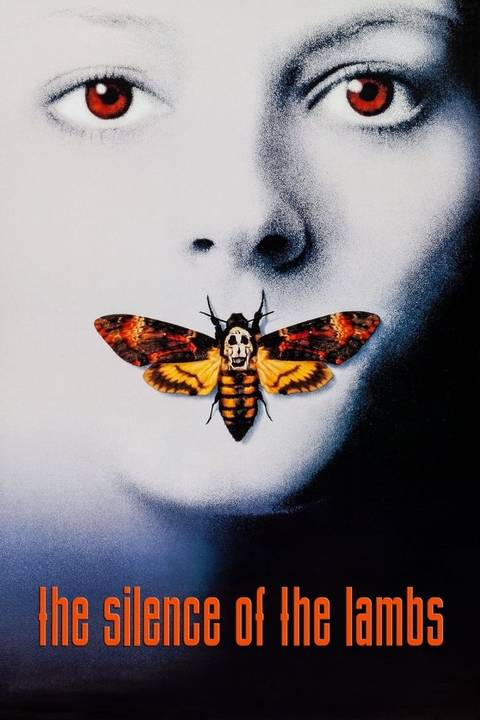
The Silence of the Lambs
- Release Date
- February 14, 1991
- Runtime
- 119 minutes
- Director
- Jonathan Demme
- Writers
- Ted Tally, Thomas Harris
KioskNews shows a cleaned-up reading view extracted from the publisher’s page — the original always lives on their site, not ours.