Eisenkot says Ra’am won’t be in his government, calls Netanyahu ‘a pathological liar’
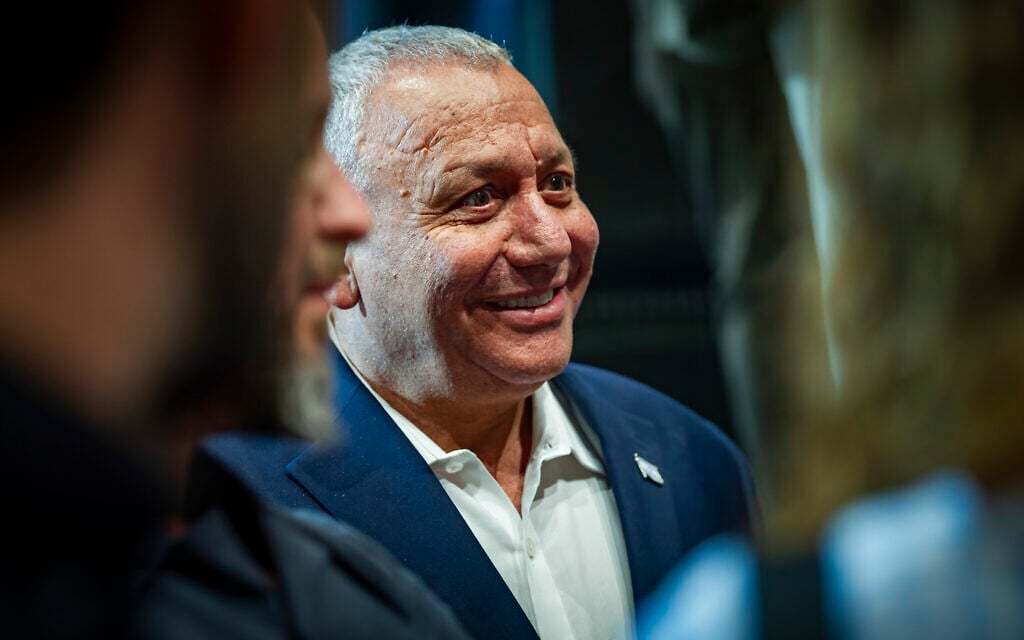
Gadi Eisenkot, the main rival to Prime Minister Benjamin Netanyahu in next month’s general election, publicly vowed Saturday not to include the Arab Ra’am party, in its current form, in a potential government he leads.
In a Channel 12 interview, the Yashar party leader also cast the premier as a “pathological liar” and accused him of possible “treason” over Qatari payments to Gaza that propped up Hamas in the years before the Palestinian terror group’s onslaught of October 7, 2023.
Later on Saturday, Eisenkot met the leaders of the other three main Zionist opposition parties, and they publicly declared they would stop attacking each other in the month left until the election.
0:00 / 0:00
Promoted: Theatron Hotel and Residences

In the interview, Eisenkot declared that no Arab or ultra-Orthodox party currently meets his criteria for joining a future government headed by him, countering reports that he is planning to rely on backing from the Islamist Ra’am party to rise to power.
He said he was working to win 64-65 seats for the Zionist anti-Netanyahu bloc, claiming that internal surveys indicate that “16-18% of our supporters are people who backed the [current] coalition in the previous election.”
Get The Times of Israel's Daily Edition by email and never miss our top stories
By signing up, you agree to the terms
He was then asked about polls that consistently show the bloc well short of the 61-strong majority in the 120-member Knesset generally needed to form a coalition, and about reports that he plans to form a minority government backed by Ra’am.
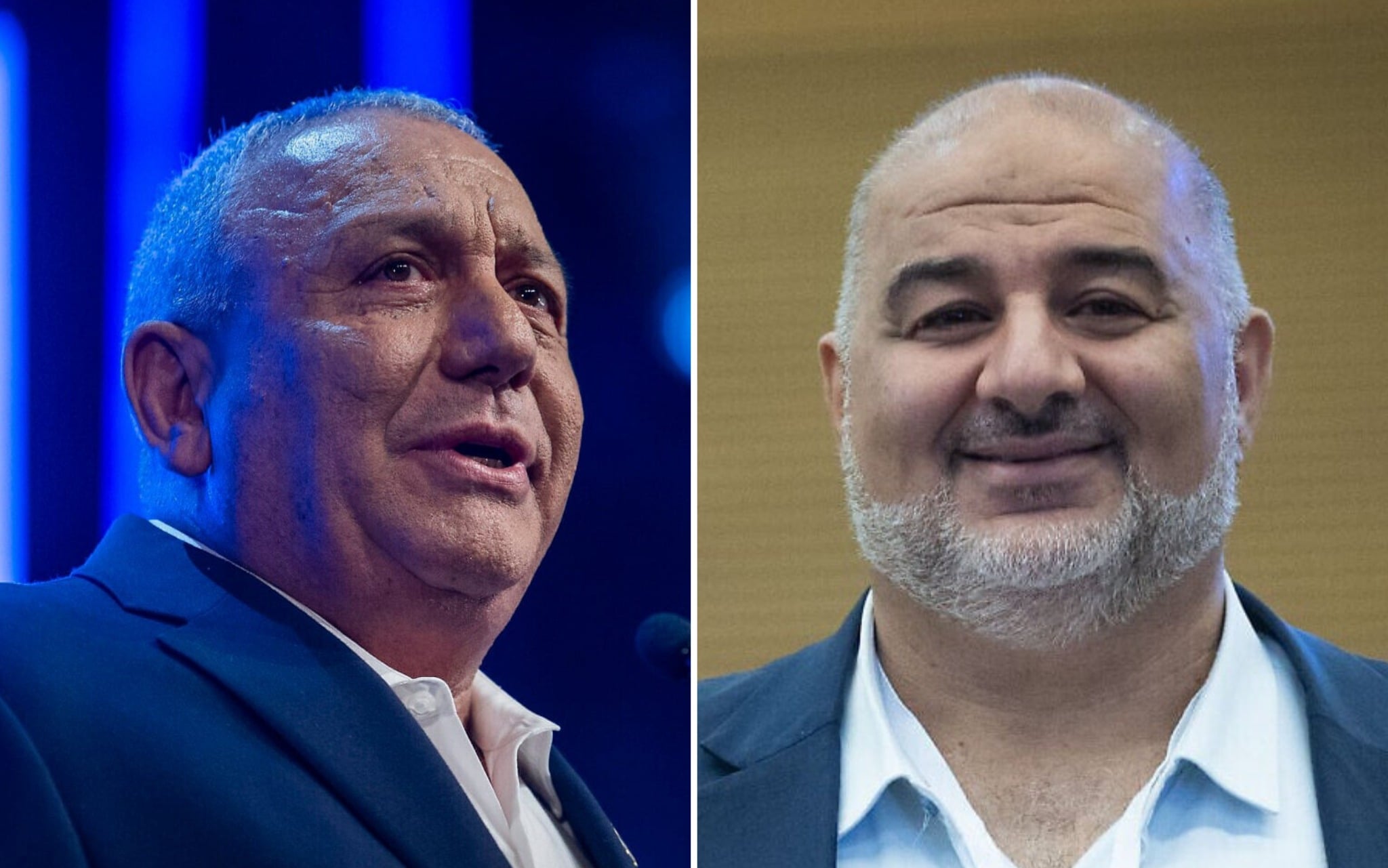
Eisenkot said that to be included in his coalition, parties must support Israel as a Jewish and democratic state, back the Declaration of Independence and universal conscription, as well as recognize Hamas as a terror group that must be destroyed.
“At the moment I don’t see any Arab or Haredi parties who accept these principles, including [Ra’am leader] Mansour Abbas, and therefore he won’t be part of my next government,” he said.
The prospect of a minority government relying on Ra’am’s outside support has become a central theme of the coalition’s campaign, with Netanyahu and his allies accusing Eisenkot and the other opposition leaders of intending to form a government dependent on Arab parties.
Netanyahu himself is widely reported to have courted Abbas while trying to form a government after the 2021 election, before Abbas ultimately joined Naftali Bennett’s and Yair Lapid’s short-lived coalition. Netanyahu denies this, but Abbas insists it was the case, and far-right Religious Zionism leader Bezalel Smotrich said he thwarted the alliance.
The Central Elections Committee, where the current coalition has a majority, has disqualified Ra’am and the other Arab-majority party, the Joint List, from running in the October 27 election. However, the High Court of Justice has reversed many such decisions in the past and is widely expected to do so again.
Asked about reports that he is demanding that his Yashar party members sign an ethics code requiring them to resign rather than defect to the rival bloc if they disagree with a future move he makes, Eisenkot said he wants to bring in new norms in which people don’t betray their voters, giving as an example Foreign Minister Gideon Sa’ar, who joined Netanyahu’s government after repeatedly declaring he wouldn’t do so.
However, he added that if he breaks an election promise such as the vow not to let Ra’am join his coalition without fulfilling his conditions, “I expect party members to take a stand.”
Reacting to the remarks, Ra’am candidate Yoav Segalovitz — a centrist former Yesh Atid MK who has teamed up with the party to become its first-ever Jewish candidate — accused Eisenkot of capitulating to Netanyahu’s Likud party.
“Whoever wants to lead the State of Israel to genuine change needs to display leadership and not bow to Likud’s scare campaign,” Segalovitz tweeted, warning that “Eisenkot won’t have a government without Ra’am.”
‘Culture of dishonesty’
Eisenkot also blasted the premier as a “pathological liar, in Hebrew and English,” who has instilled a “culture of dishonesty” in the Israeli public discourse.
The Yashar party leader was asked about comments he made in the tail end of his term as IDF chief in January 2019 backing the transfer of Qatari money to Gaza, for which he is now assailing Netanyahu, and said the one transfer he oversaw in November 2018 “went smoothly,” with all the money verifiably reaching its intended recipients. Reports at the time indicated that the recipients of the $15 million payment, which Qatar’s envoy to Gaza brought into the enclave in suitcases stuffed with US dollars, had been civilians in need and also Hamas’s civilian authorities to pay its civil workers.
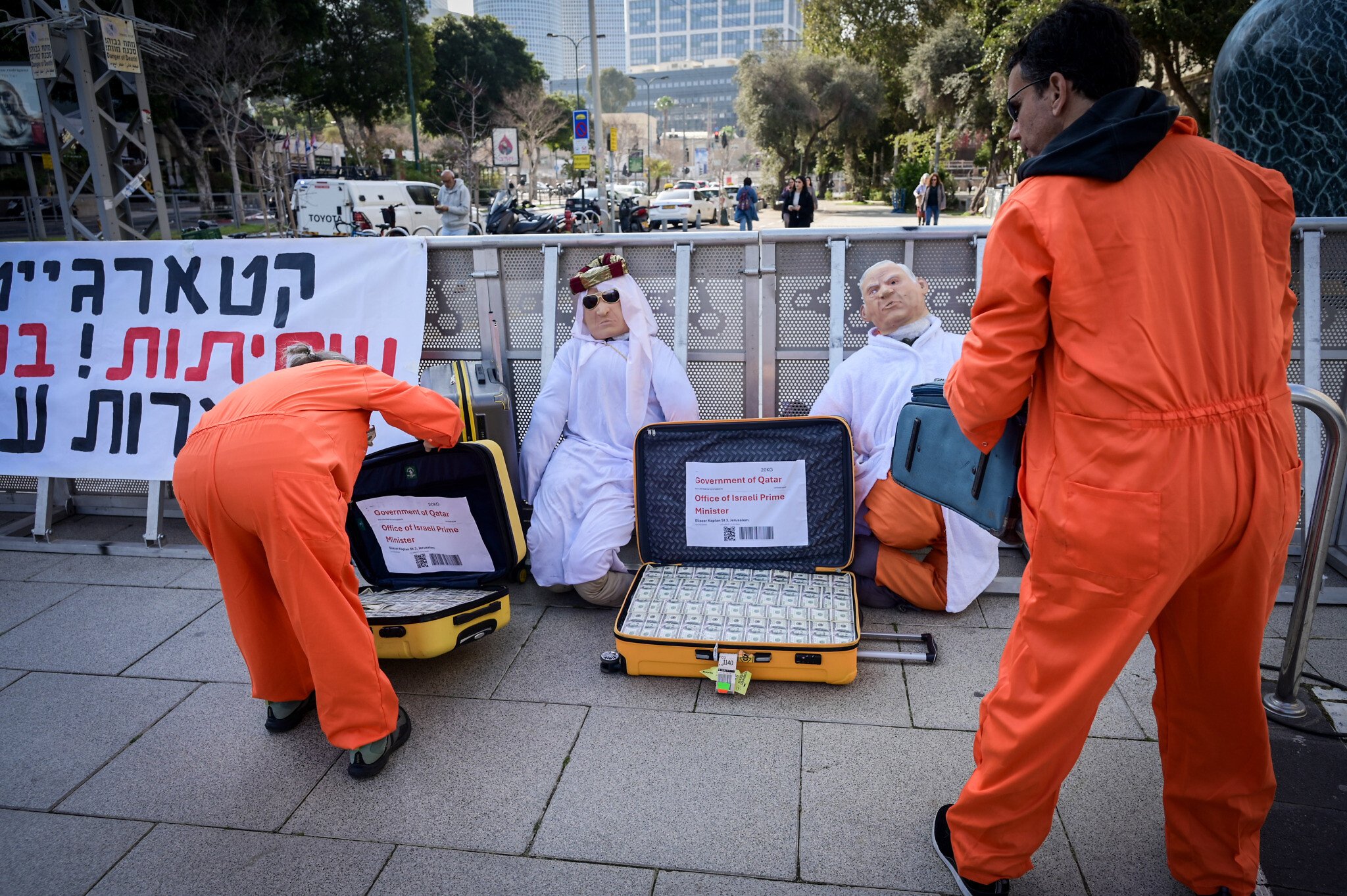
Eisenkot argued that he learned two years ago that later in 2019, after his term ended, the Shin Bet found that Hamas’s military wing had seized over $4 million out of a Qatari transfer of $15 million and recommended halting the payment system, but Netanyahu decided to let it continue for years, effectively propping up the terror group.
“This is an utterly unreasonable decision, or there is some secret fact I’m not aware of. This must be investigated,” he said. “This behavior is between breach of trust and treason against the State of Israel.”
“Netanyahu blindly, arrogantly and irresponsibly led the State of Israel to the greatest disaster in its history,” Eisenkot added, referring to the October 7, 2023, invasion of Israel from Gaza and the massacre of some 1,200 people, alongside the kidnapping of 251 hostages.
Asked about a stream of reports indicating that Netanyahu was warned by both the leader of the United Arab Emirates and the head of Egyptian intelligence that Hamas was mobilizing for a major attack, Eisenkot said Netanyahu knows the truth about the warnings, and that is why he is preventing a state commission of inquiry into the catastrophe.

Eisenkot also hit out at Netanyahu over the subsequent military campaigns against Hamas and Hezbollah, noting that neither terror group has been defeated despite the premier’s vows of “total victory.”
Eisenkot sidestepped repeated questions about public comments he made in 2024 that backed a diplomatic agreement to end the war with Lebanon’s Hezbollah terror group — before the operation to blow up thousands of pagers and walkie-talkies held by Hezbollah members. He claimed that behind closed doors he had urged Netanyahu to carry out a larger-scale pager operation, the preparations for which he had overseen, but that the premier objected. (It has been widely reported that the pager operation was only eventually approved when Israel realized Hezbollah was close to uncovering the plot.)
“That’s Netanyahu’s whole problem. He belittles the value of strategy, he extends the war [and] he views a forever war as a tool for political survival,” Eisenkot charged.
He also said he opposes the establishment of a Palestinian state and always has, accusing Netanyahu of backing such a state for decades, including as part of US President Donald Trump’s 20-point plan for Gaza, which the premier approved last year.
Though he once spoke in favor of a two-state solution, Netanyahu has long vowed to prevent the establishment of such a state, while accusing his rivals of seeking its establishment.
Eisenkot reiterated that he would not partner with Netanyahu in any future constellation and that Israel’s “supreme commander” on October 7 should have long since resigned for failing to prevent it and should hold no public position.
KioskNews shows a cleaned-up reading view extracted from the publisher’s page — the original always lives on their site, not ours.