When Delhi’s air became a deal-breaker: Six professionals on why they left
Delhi-NCR continues to draw professionals and entrepreneurs with its jobs and opportunities. However, worsening air pollution and dust are increasingly becoming a hurdle, pushing some to cities they believe offer a better quality of life.
A June 2026 Adecco India report, based on responses from 1,044 employers across five cities, found that pollution, traffic and flooding were affecting companies’ ability to attract and retain talent. In Delhi-NCR, 68% of services-sector employers and 67% of IT employers reported moderate or severe hiring challenges. The sample size is too small to establish this as the larger trend, but analysts say that even if the numbers are small, the challenge is real.
For those who left, the move meant giving up established professional and personal networks, though lower living costs offered some gains.
The Indian Express spoke to six people who moved out:
Rajesh Advani
Shifted from Delhi to Jaipur
Why he left: Worsening air pollution and congestion, compounded by his doctor’s advice during the Covid pandemic to leave Delhi if he could.
On August 22, 2016, 52-year-old Rajesh stepped out onto the balcony of his co-working space on the 15th floor of Eros Tower in Nehru Place. He could see areas as far as Kalkaji. He took a picture.
A couple of months later, he took another from the same spot. This time, only the dark silhouettes of two tall buildings were visible. The rest of the city had vanished under a thick blanket of smog.
Story continues below this ad
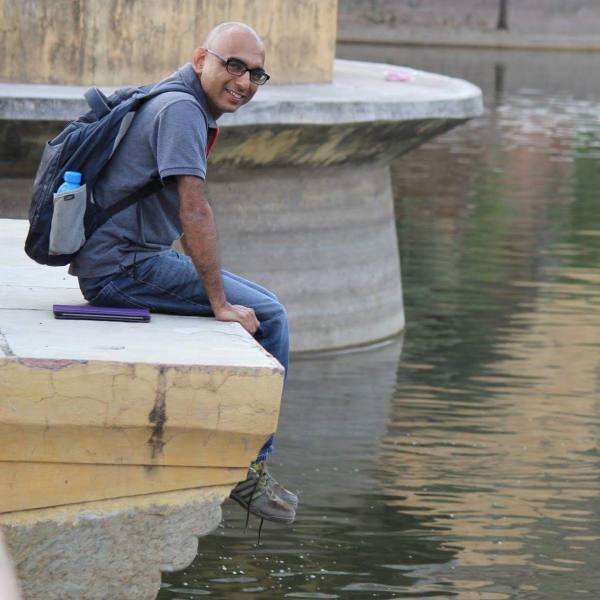 Despite the trade-offs, Advani says it was not an easy decision to make, “but health was a priority”. (Special Arrangement)
“I increasingly felt Delhi was becoming less and less like a place that I could live and work out of. The air was getting filthier. The congestion was getting worse,” he says.
Born in Nashik, Advani had come to Delhi in 2009 and launched his architecture portal, Architecture Live.
When the pandemic hit, his doctor advised him to leave if he had an option. “I thought, why not?” he says, and settled on Jaipur.
The move has not affected his business. His team of seven works remotely, while the professional relationships he built over a decade in Delhi continue to bring him opportunities.
Story continues below this ad
But he admits he paid a cost in moving to Jaipur. “Since Delhi is so crowded, you always keep meeting people.” In Jaipur, living on the eighth floor, compared with the first floor in Delhi, he feels a greater sense of disconnect.
He also says public transport was much better in Delhi: there were three metro stations near his house in Kalkaji — Govindpuri, Kalkaji and Nehru Place — and that the city was more culturally vibrant.
The move has not meant escaping pollution altogether, either. While Delhi’s AQI neared ‘severe’ levels after Diwali, Jaipur’s also worsened to 180.
His daughter studies in Delhi University. “Her health is deteriorating and she was coughing continuously when she came to Jaipur recently,” he says, despairingly.
Story continues below this ad
Despite the trade-offs, Advani says it was not an easy decision to make, “but health was a priority”.
Vidya Soundarajan
Shifted from Delhi to Goa
Why she moved: She fell sick constantly, it aggravated her son’s mental health.
Born in Tamil Nadu, Vidya, an environmental consultant and the founder and CEO of Eyekyam Risk Resolutions, moved to Delhi in 1976, when her father was in government service. She grew up with fond memories of South Delhi — its greenery, wide roads and flowers — and developed a deep attachment to the city.
When she moved to Chennai for work in 2008, she carried a ziplock bag of soil from near her house. “Dilli ki mitti alag hi hai (Delhi has a different soil). While South India has a kind of red soil, Delhi has a yellow-ish soil,” she says.
Story continues below this ad
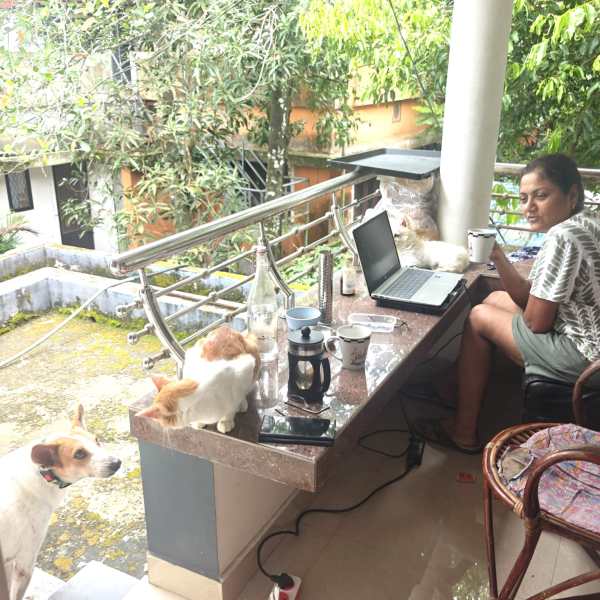 Vidya Soundarajan moved out of Delhi to Goa in May 2023. (Special Arrangement)
She returned to Delhi in 2016. People questioned her decision. “Are you mad coming back? Can’t you manage from there?,” she remembers people asking her.
By then, the winter pollution had become a constant fixture.
Vidya found herself spending a substantial part of her income on air conditioners and air purifiers, and getting them repaired. Her daily commute by car from Gurgaon to her office on Lodhi Road took five hours. “Just the physical labour of living here was so much that it took a toll,” she says.
She moved out of Delhi to Goa in May 2023.
The months leading up to her departure were particularly difficult. “I was also going through perimenopause at the time, and the extreme pollution was aggravating it,” she says.
Story continues below this ad
The impact was not limited to her own health. The smog also affected her son, who was already dealing with mental health disorders. “It triggered extreme periods of depression and anxiety for my son,” Vidya says.
Apart from the clean air, the move brought substantial financial relief. Her monthly rent fell from Rs 75,000 in Gurgaon to Rs 25,000 for a bungalow in Goa. Working from home meant she no longer needed to spend Rs 25,000 on a driver or Rs 15,000 on petrol. Her electricity bill dropped from Rs 12,000 to Rs 2,000, while household staff costs came down from Rs 25,000 to Rs 5,000.
She now lives in a village in Kerala.
Neeraj Sancheti
Shifted from Gurgaon to Siliguri
Why he moved: Daughter fell sick frequently, had to restrict her outdoor activities to going to playschool.
Neeraj, 35, the founder of a marketing agency, was increasingly distressed by how often his six-year-old daughter was falling sick.
Story continues below this ad
Visits to the paediatrician became more frequent. During the pollution months, he restricted her outdoor activities to going to playschool. He and his wife, too, found themselves cocooned inside their flat. He also has a three-year-old son.
“This was not how I imagined my children would grow up,” he says.
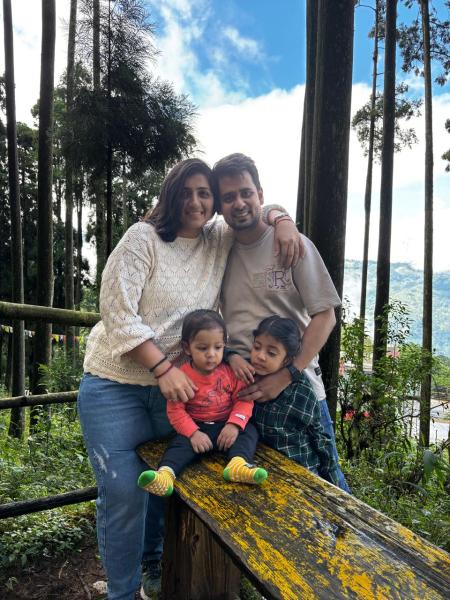 Neeraj Sancheti and his finally now live in Silliguri. (Credit: Special Arrangement)
“The one thing we used to hear back in the day was that breathing Delhi air was equal to smoking these many cigarettes. That was what hit me: how can you let your children smoke cigarettes? I couldn’t imagine my children growing up in the air like this,” Neeraj adds.
In 2024, he and his family finally moved from Gurgaon to Siliguri.
Story continues below this ad
He continues to run his company, headquartered in Gurgaon, remotely, while his team works in a hybrid mode. He visits Delhi for a week every month to meet his team and clients in person.
Sancheti says he cannot say how the company would have fared had he stayed in Gurgaon and worked remotely, but the move does not appear to have affected the business negatively.
For him, the move has also meant being able to spend time with his wife and children by a nearby stream.
Aman Raj
Shifted from Gurgaon to Pune
Why he moved: Years of worsening air quality and dust had forced him to give up outdoor activities he loved.
Aman, 30, once spent hours on the cricket field, practising in the nets. Having played professionally for the Bihar state team while in school, he was passionate about the sport. He also loved street food, recalling his days in Delhi University when he used to eat momos and shawarma.
But over the last decade, he was forced to give up these pleasures. Physical exertion outdoors would make him sick, while the dust made him wary of eating at roadside stalls.
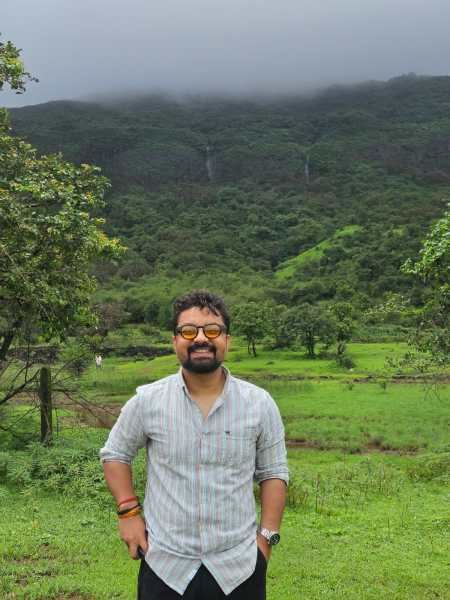 Aman Raj, who used to work at American Express, moved from Gurgaon to Pune this year in March. (Credit: Special Arrangement)
His car, no matter how thoroughly he cleaned it in the morning, would be covered in dust by evening. During the couple of years he lived in a rented flat in Gurgaon’s Sector 23A, he visited the park opposite his home only once because it was usually too dusty.
“It was all building up over the years,” Raj, an IT professional who was working at American Express at the time, says, fed up with the quality of life.
Whenever he returned to Delhi from his hometown in Ranchi, his throat started burning.
He eventually felt he had to make a choice. “I was already on the other side of my 20s, and this lifestyle was not sustainable. I couldn’t compromise on my health,” he says.
In March this year, when he found an opportunity in another city, he took it and moved to Pune.
“All these things are particularly painful when you consider how much you are paying to live in the city,” Aman says over a video call from Pune.
For Aman, Pune’s air has been a lifesaver. “I can physically feel the difference every day. I live near the airport, where there are fewer buildings and less traffic, so the air is even cleaner than in the main city,” he adds.
The move has allowed him to reclaim the active lifestyle he had given up. He has started going to the gym and has also returned to playing cricket and eating street food. He often takes long drives through the rolling green foothills outside Pune.
Kartikeya Batra
Moved from Delhi to Bengaluru
Why he moved: Worsening air pollution made him reconsider returning to Delhi after completing his doctoral studies in the US.
Born and brought up in Delhi, Kartikeya, an academic, remembers an earlier version of Delhi winters, one that people used to wait for.
People thronged Ramlilas happening in their localities, relatives and friends visited each other’s houses for the festivals and it was also the start of the wedding season.
“Dussehra, especially the Ram Leela and Ravan Dahan, were beautiful. During Diwali, we would visit the Diwali mela. By October, the weather used to become nippy and would smell of festivals,” he says.
 Kartikeya Batra joined a Bengaluru-based university, a decision driven by the pollution. (Credit: Special Arrangement)
But when Kartikeya began considering university job offers two-and-a-half years ago, after completing his doctoral studies in the United States, the Delhi he remembered was no longer a city he saw himself returning to.
“Now I am more worried about pollution. Plus, average temperatures have risen,” he says.
Pollution became a major factor in his decision to join a Bengaluru-based university. “For around four months of the year, you are just locked in your house with masks and air purifiers,” he says.
He says the concern is shared by other academics who have also been weighing the impact of pollution on their lives.
In Bengaluru, winters are pleasant, he says, and air quality is not a concern. “It all came down to this,” adds Kartikeya. “I can buy my water, I can buy my electricity. But I can’t buy my air.”
Amit Gupta
Moved from Delhi to Sri Ganganagar
Why he moved: Delhi’s worsening air quality made the city increasingly difficult to live in.
Amit, 44, returned to India from the United States earlier this year in March.
The CEO of digital immigration paperwork platform EazyPetition, he had lived in Delhi several times over the decades. But this time, he decided against returning to the capital.
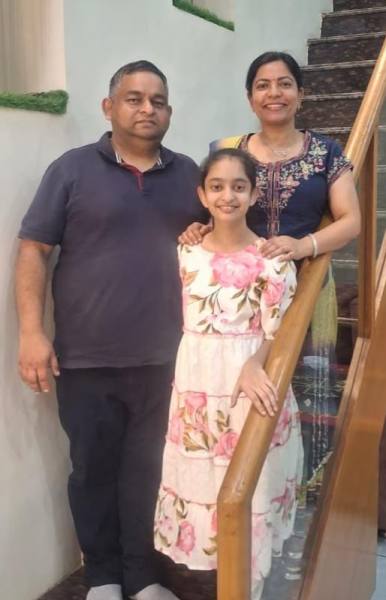 Amit Gupta lives with his family in Rajasthan’s Ganganagar. (Credit: Special Arrangement)
Recalling his time in Paschim Vihar, Amit says, “The Ring Road was too crowded, with constant traffic jams and exhaust fumes. The air was always dusty. Even after construction work was completed, the ground was often left unpaved.”
He recalls that in 2002, when he was an engineering student, the journey from Wazirabad to Peeragarhi took him just 35 minutes. Over the years, travel time had increased to around an hour and 15 minutes, despite the construction of flyovers and underpasses.
Longer traffic snarls also meant more vehicles idling on the roads, adding to pollution, he points out.
He felt that public transport, particularly last-mile connectivity, was also deteriorating. “Delhi was not improving, in fact it was getting more and more difficult to live here. I felt that the city is not fit for us anymore,” Gupta adds.
He now lives with his family in Rajasthan’s Sri Ganganagar.
When deciding where to settle, Gupta considered other cities too. But he felt that even Tier-2 cities had become more expensive, while Meerut, his birthplace, was already too crowded. He eventually chose Ganganagar, his maternal grandparents’ hometown, where his grandfather had worked as a teacher.
KioskNews shows a cleaned-up reading view extracted from the publisher’s page — the original always lives on their site, not ours.