The stockpiling items you should avoid, according to experts

Experts have advised which items you shouldn’t keep in your emergency stockpile after the government advised UK households to keep a three-day supply of cash, bottled water and tinned food at home.
The new national initiative urges people to prepare for food shortages and widespread disruption from cyber attacks and emergencies.
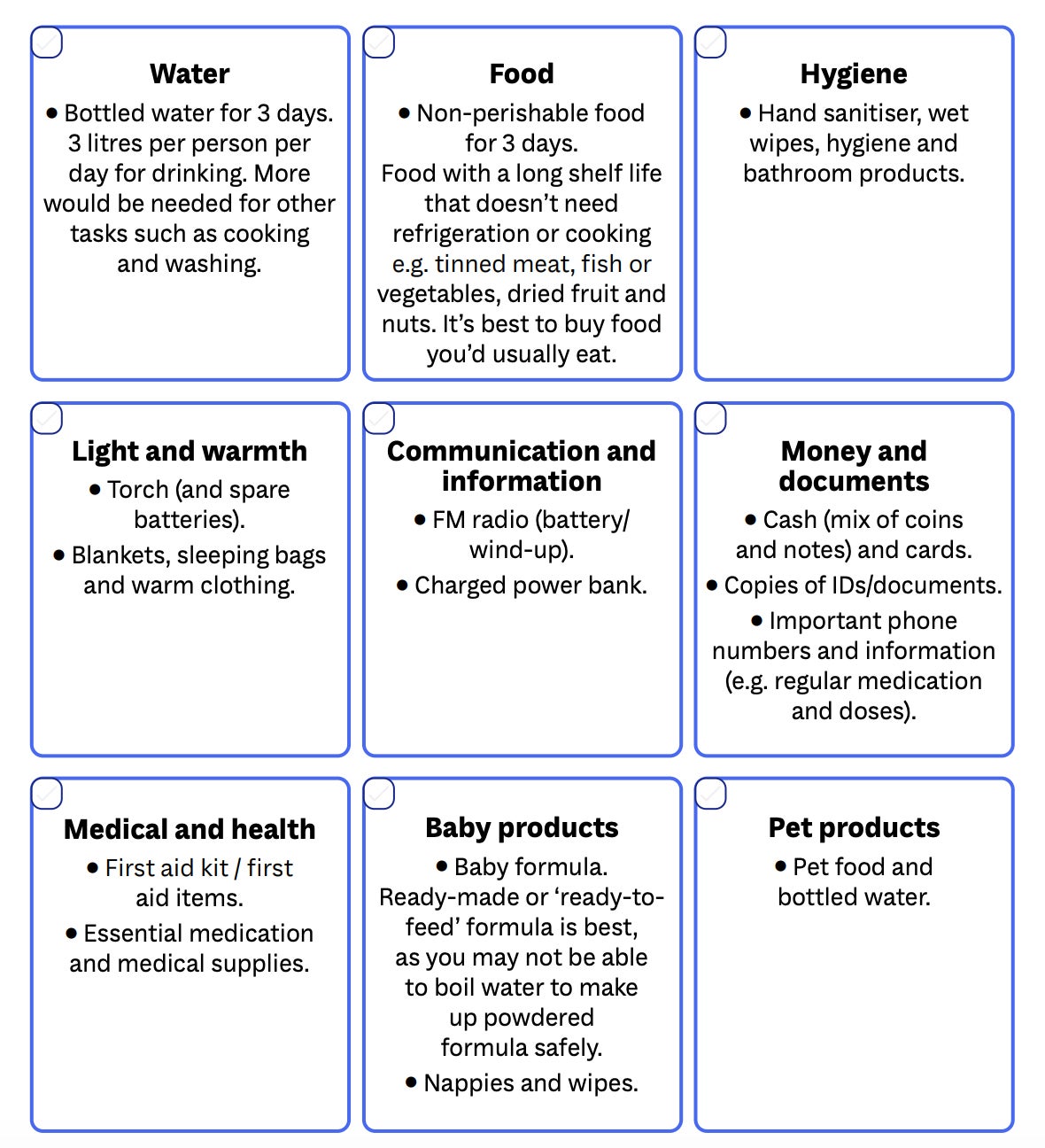
A new government website has also been launched with an emergency kit checklist that can be downloaded. Items suggested by the government included bottled water, blankets and a torch.
Since the advice was announced the sale of tinned food and hand sanitizer has spiked. The number of people buying tinned meat each day after the launch rose by 43 per cent, equivalent to an extra 400,000 shoppers a day.
But there are some times that won’t help households survive an emergency situation where the power or water has been cut.
Perishables
Any fresh food, such as fruit and vegetables, meat or dairy that’s not preserved in a can or jar does not belong in an emergency stockpile.
That’s because households need to store food with a long-shelf life as it is unknown when an emergency may hit the UK.
But households can still store tinned fruit or vegetables, or tinned fish such as tuna and meat such as corned beef.
Long-life milk is also a good alternative because it does not need to be stored in a fringe before opening.
“Perishable foods have a short shelf life, so buying more than you can use can lead to waste,” said James Miller, a food hygiene consultant and CEO of food tech company Grape Software.
He added: “For foods with a use-by date, there’s also a safety risk. If you’ve followed the storage instructions, you can eat or cook the food up to midnight on that date, or freeze it by then if it’s suitable for freezing.
“Once the date has passed, don’t eat, cook or freeze it, even if it looks and smells fine. A best-before date is about quality. Food may still be fine to eat after that date if it’s been stored correctly, although it may no longer be at its best.”
Frozen food
While frozen peas, chips and breaded fish will keep fresh for months, it won’t last long if there is a power cut.
Meal prepping and freezing food will also not stay fresh in a power cut and will most likely require the food to be heated to a high temperature before is safe to eat.
Instead, households should make sure they also have food with a long shelf life in the cupboard.
“A freezer can help you make the most of food you already have. Check the label to see whether the food is suitable for freezing and how long it should be kept. Keep some cupboard food on hand in case a power cut affects your freezer,” Mr Miller said.
“Perishable foods require carefully controlled storage temperatures, and during emergencies, particularly power outages, they can rapidly become unsafe to eat. Harmful bacteria can multiply without any obvious changes in appearance, smell or taste, creating a serious risk of food poisoning,” Professor Chris Elliott, at the Institute for Global Food Security, Queen’s University, Belfast, said.
Pulses and pasta
While the canned version is good, the dried packets of pulses need to be soaked in water and cooked thoroughly to be safe to eat.
Pasta also requires water and heat to cook which may not be accessible in a power cut or if there are water shortages.
Store food correctly
Whether it is water, tinned food or juice cartons it needs to be stored safely.
Mr Miller stresses shelf-stable supplies should be kept in a “cool, dry, dark place, such as a cupboard or larder away from heat and direct sunlight.”
Unopened, factory-sealed bottled water is also the safest and easiest option with the longest shelf life.
But this too should be kept in a cool, dark place away from direct sunlight, which can cause plastic to degrade and promote algae growth.
KioskNews shows a cleaned-up reading view extracted from the publisher’s page — the original always lives on their site, not ours.