Parties’ weaknesses behind Melaka pact uncertainty, say analysts
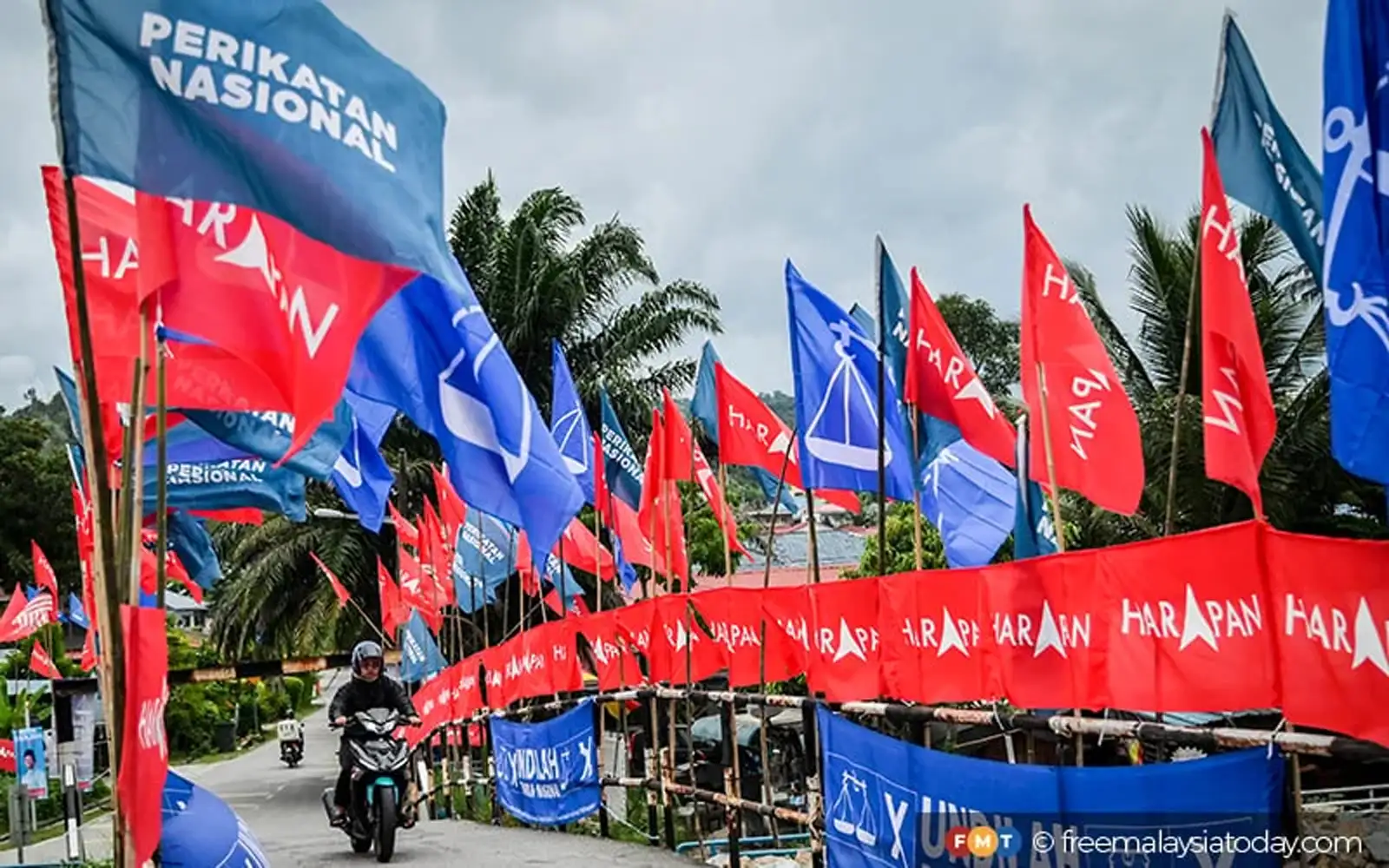
Political parties are being pushed towards electoral cooperation by a lack of confidence in their strengths, but mixed signals over potential partners risk leaving voters unclear about who they are being asked to put into government, analysts said.
They warn that the same problem could become even sharper at the next general election (GE16), with no single party likely to command a majority, making alliances necessary even before parties settle how they intend to govern together.
Tawfik Yaakub of Universiti Malaya said almost every party now faces limits in terms of geographical influence, voter segments and the ability to win outright at the polls.
“Political cooperation today is not merely about ideological similarities, but also a strategy to avoid clashes between parties and vote-splitting,” he told FMT.

He said this was why parties were exploring different forms of cooperation, although the challenge was balancing electoral gains against the risk of each coalition or party losing their own identity and traditional base.
That dilemma has already become visible in Melaka, he said, with Pakatan Harapan sending conflicting signals about possible cooperation.
On Sept 29, Amanah communications director Khalid Samad said PH had no intention of working with Barisan Nasional or Perikatan Nasional, only for Melaka Amanah chief Ashraf Mukhlis Minghat to later suggest that the coalition had not closed the door on cooperation with BN or Bersatu.
BN has also kept its options open: chairman Ahmad Zahid Hamidi earlier said the coalition was willing to extend its cooperation with PN to Melaka, while Umno secretary-general Asyraf Wajdi Dusuki later added that BN’s doors remain open to all parties, including PH.
Bersatu, meanwhile, has said it will not enter into any pact for the Melaka polls, including with PH.
Tawfik said conflicting statements from political leaders risk creating three perceptions among voters: that parties lacked a clear direction, decisions were driven mainly by elite negotiations, and positions announced today could change tomorrow.
Ahmad Zaharuddin Sani Ahmad Sabri of Global Asia Consulting said cooperation should not be treated only as a matter of seat arithmetic, as each party carries its own records and baggage.

“A party does not only carry a logo. It carries history, administrative records, leadership track records, controversies and voters’ perceptions.
“For instance, whoever cooperates with BN may benefit from its governance experience, but may also have to face questions on integrity and perceptions over institutional management that continue to plague the party,” he said.
Zaharuddin said a growing number of voters were questioning not only who their candidates were, but what post-election pact their party is likely to strike.
“Voters are increasingly asking, ‘If I vote for this party, who will they sit with after the results are announced?’” he said.
Seat arithmetic may decide who has enough numbers to form a government, Zaharuddin said, but not how it governs.
The challenge after GE16, Tawfik said, would be whether parties could move beyond a “coalition of numbers” to a “coalition of purpose”.
Both analysts said disputes could emerge after a government is formed, especially over the distribution of posts, economic policy, identity issues, federal-state relations and matters central to each party’s identity.
For voters, they said the issue was no longer only who wins in Melaka, but whether parties can explain why they are joining forces, with whom, and what kind of government that would produce.
Subscribe to our newsletter and get news delivered to your mailbox.
KioskNews shows a cleaned-up reading view extracted from the publisher’s page — the original always lives on their site, not ours.