The pros and cons of using your phone as a mobile hotspot
Skip the questionable coffee shop Wi-Fi and bring your own internet.
K2L Family Stock/Shutterstock
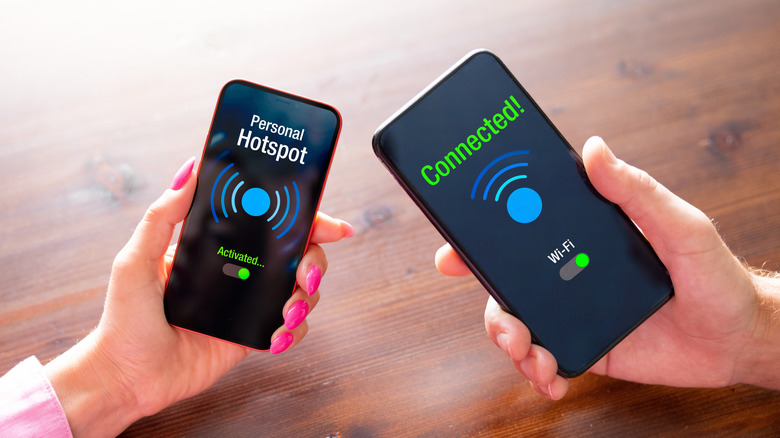
Whenever you're out and about with your laptop and you don't have a Wi-Fi network to connect to, a mobile hotspot can save the day. Thankfully, your phone can be used to share its cellular data connection with other devices, from your laptop to your tablet to your friend's phone. On iPhones, this feature is called Personal Hotspot; on Android devices, it's usually found under Hotspot & Tethering, depending on brand.
As remote work and travel keep more and more people away from traditional office spaces and your comfy home desk, it makes sense that more people need to connect to portable internet options. Of course, hotspot devices are available to buy, but more often than not flipping a simple switch on your phone's settings makes a lot more sense. Still, as appealing as this option is, there are some trade-offs that you should consider about using your phone, from battery drain to the cost of your data plan. It's not the end of the world by any means, but it's something that comes with both pros and cons, much like anything else in the world.
What are the benefits of using your phone as a mobile hotspot?
Kaspars Grinvalds/Shutterstock
There are quite a few benefits to using your phone as a mobile hotspot. First of all, it's so convenient to set up your laptop on the table of your go-to coffee shop, grab your phone and turn on the hotspot feature before quickly connecting to it. Your phone now handles your internet sharing, as well as all the other things you use it for, like calls, texts and the endless list of apps without worrying about a second gadget to charge, update or remember to pack.
Using your phone as a mobile hotspot is also extremely useful because you can do this anywhere you go, whether you're connecting your own laptop or you're making it easy for your kids to play Roblox on your trip. This can also be cost-efficient because you skip the expense of a dedicated hotspot device and a potential extra data plan.
There's also another fact that should most definitely be mentioned here, and that's tied to online security. Using a mobile hotspot is a safer option because you control who connects to it. That's preferable to joining potentially unsafe open Wi-Fi networks any day of the week (and twice on Sunday). It's important, however, that you set up a strong password so random people can't join, and to make sure your hotspot uses WPA2 or WPA3 encryption. For someone who only needs a backup connection a few times a month, these benefits often outweigh the drawbacks of a dedicated device sitting unused in that tech drawer filled with cables and random gadgets.
What are the downsides of using a mobile hotspot?
Eza_Nanda/Shutterstock
The convenience of using your phone as a mobile hotspot does come with some downsides that matter the more you rely on it. One of the most obvious ones is that running a hotspot is quite power-intensive, so your battery will drop noticeably faster while it's active. This can be solved by quickly refilling that battery with the help of a power bank or your laptop's charger.
Besides battery drain, it's also worth considering your data plan limitations. If your plan has a hotspot data cap, exceeding it can dramatically slow your internet speed or cost you a lot more money at the end of the month. Of course, it all depends on what you'll be using your hotspot for because video calls and streaming will burn through that data cap quickly.
You should also be aware that sharing a mobile hotspot with multiple people may mean slower speeds for everyone. Every connected device shares that same cellular connection, so performance drops as more devices join. Just be sure to remember the risks of leaving it password-free. An unsecured hotspot is very much an open door for anyone nearby, and you never really know who poses a risk. So tighten that security with a strong password.
How to turn on mobile hotspot – and should you rely on your phone for it?
AKACHA/Shutterstock
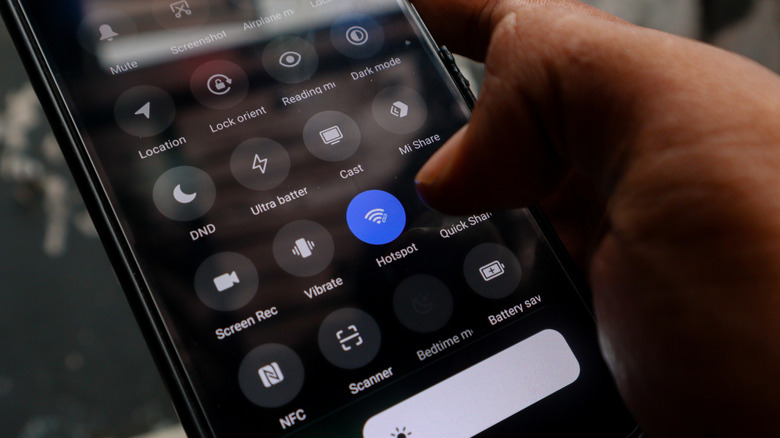
In order to activate the mobile hotspot on your Android device, pull down the quick settings panel and tap on the Mobile Hotspot icon. On most phones, long-pressing on the icon will take you directly to the configuration menu where you can name the network, set up a strong password and choose the frequency band (2.4GHz or 5GHz, or 6GHz on some new phones). Depending on your phone, you may also find options for the MAC address type and an automatic shut-off timer for when no one is connected to the network. The procedure is similar on iPhones. Open Settings, then Personal Hotspot (or Cellular, then Personal Hotspot). You'll need to turn on Allow Others to Join and set a strong Wi-Fi password.
For occasional use, using your phone as a hotspot is a practical option that often costs nothing extra as long as your plan includes hotspot data. It usually saves you money, doesn't require any extra purchases and gets the job done without issue. But if you're tethering daily, streaming video or connecting multiple devices for hours at a time, the downsides pile up fast. For such situations, a dedicated hotspot device may be the best option and worth the investment. You should review your data plan and your usage patterns before deciding on the best way for you.
KioskNews shows a cleaned-up reading view extracted from the publisher’s page — the original always lives on their site, not ours.