64 Years Later, the Greatest Western's Final Line Still Officially Defines the Genre

Thomas Butt is a senior writer. An avid film connoisseur, Thomas actively logs his film consumption on Letterboxd and vows to connect with many more cinephiles through the platform. He is immensely passionate about the work of Martin Scorsese, John Ford, and Albert Brooks. His work can be read on Collider and Taste of Cinema. He also writes for his own blog, The Empty Theater, on Substack. He is also a big fan of courtroom dramas and DVD commentary tracks. For Thomas, movie theaters are a second home. A native of Wakefield, MA, he is often found scrolling through the scheduled programming on Turner Classic Movies and making more room for his physical media collection. Thomas habitually increases his watchlist and jumps down a YouTube rabbit hole of archived interviews with directors and actors. He is inspired to write about film to uphold the medium's artistic value and to express his undying love for the art form. Thomas looks to cinema as an outlet to better understand the world, human emotions, and himself.
There's something poetic about the fact that the famous "final line" of The Man Who Shot Liberty Valance isn't technically the last words uttered in the 1962 revisionist Western by John Ford. A train scene follows the fateful line, "When the legend becomes fact, print the legend." But the film's collective consciousness trains us to believe this profoundly insightful line took viewers straight to the end credits. Considering that this remarkable, genre-defining movie cemented the modern themes of the Western that have carried through into the 21st century, we're willing to abide by the myth and celebrate "print the legend" as one of the most powerful and impactful closing lines in cinematic history, and one that taps into the heart of American history, culture, and the nation's glorification of false heroes. It's hard to argue that it's not a climactic piece of dialogue, at the very least.
'The Man Who Shot Liberty Valance' was John Ford's Coda for the Western
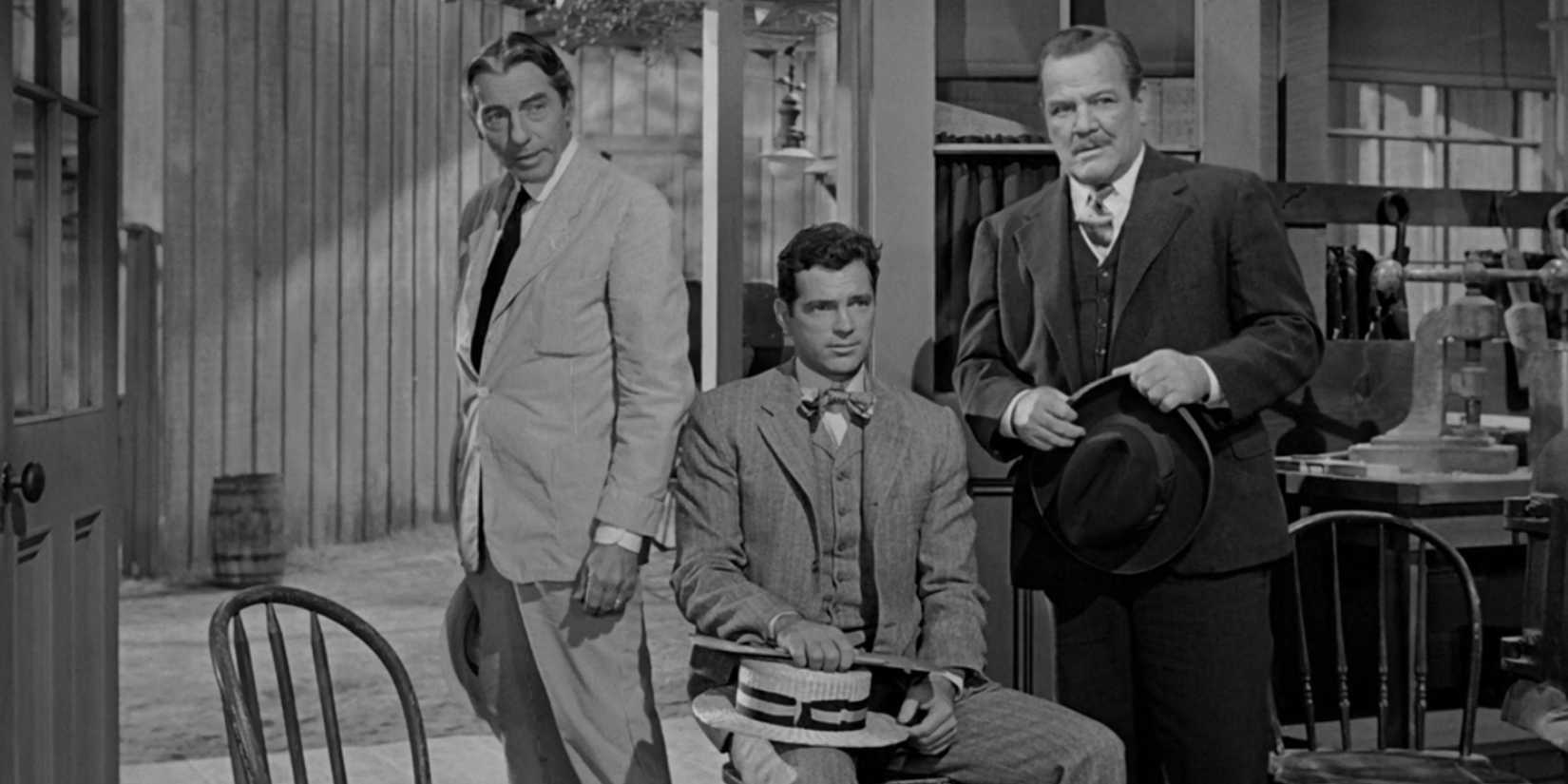
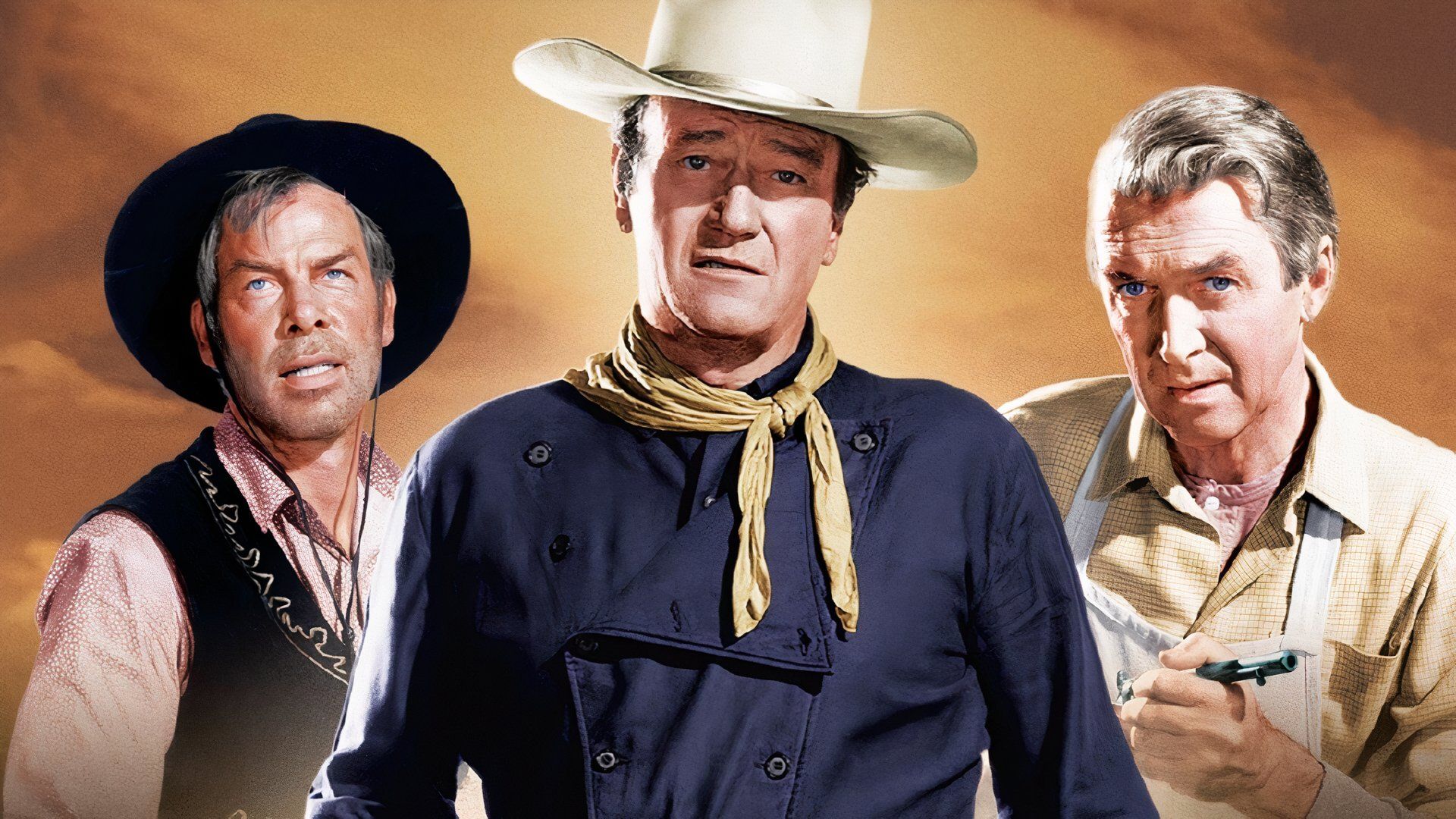
The Man Who Shot Liberty Valance stars Jimmy Stewart, John Wayne, and Lee Marvin, three Hollywood legends who could deliver any line with conviction, but none of them are responsible for the film's signature words of wisdom. This line delivery, which lives in the canon of American film history, was uttered by a minor but integral supporting character, Maxwell Scott, a small town reporter played by Carleton Young. When U.S. Senator and potential Vice Presidential candidate Ransom Stoddard (Stewart) returns to the town of Shinbone, where he allegedly slayed the ruthless bandit Liberty Valance (Marvin), he comes bearing a harsh truth: he was not the man who shot the titular outlaw. However, Scott isn't interested in correcting history. "This is the West, sir," he tells a fellow journalist, "When the legend becomes fact, print the legend." Even after his confession that it was the recently deceased rancher, Tom Doniphon (Wayne), who killed Liberty Valance, Ransom's legacy will still forever be defined by this myth — a myth that helped him become a revered politician.
John Ford was a director of contradictions. Simultaneously sentimental and hard-nosed as a person and creative artist, Ford routinely indulged and deconstructed Western myths throughout his six-decade career in Hollywood. Movies like The Searchers and She Wore a Yellow Ribbon could both crudely antagonize Native Americans while also exposing the dark and corroded soul of America and its supposed noble upholders of justice. The Man Who Shot Liberty Valance is a daring balancing act of mythmaking and deconstruction, as it uses the genre's tropes to craft a thesis about the inherent sins of the Western on the big screen. The film has everything: the noble idealists, the wicked outlaws, the local sheriff who's completely outmatched, and the wistful love interest, played by Vera Miles. It may seem rote from afar, but Ford deploys these clichés to lull the viewer into the genre's familiarity, only to make a scathing statement.
The Climactic Line in 'The Man Who Shot Liberty Valance' Ended the Classic Western
These days, any Western released as a film or television series is expected to be textually revisionist. Due to societal expectations and the standards set by towering masterpieces like The Wild Bunch and Unforgiven, a Western that clings to old tropes and whitewashed portraits of the new frontier will be seen as an ancient, outdated relic. Ever since Carleton Young delivered his immortal "print the legend" line, Westerns have been trying to live up to its poignant insight, as the line and Liberty Valance as a whole identified that the genre is rooted in mythmaking. The reason why the genre was so popular in movie and TV form in the 1950s and 1960s was that it offered a glossy, romantic view of the founding of modern American civilization, which cavalierly ignored the plight of Indigenous people, women, and the nuances of Western expansion.
Ending The Man Who Shot Liberty Valance with this statement reflects John Ford's culpability in enabling legend-making as a director, but he also can't help but admire this period of history and its picturesque backdrop and evocation of America as the land of the free. For better or worse, mythmaking is something that exists, whether we like it or not. However, Liberty Valance is Ford at his most cynical, as he exposes the media manipulation that comes with the valorization of Western heroes. Ransom Stoddard, a clean-cut, All-American golden boy with a college education who upholds values of law and order, is the kind of figure America will do whatever is possible to champion, even if it means dignifying falsehoods. In the end, Ransom's confession was nothing but personal reconciliation. Ransom shot Liberty Valance, and that's the fact, because the legend says so.
KioskNews shows a cleaned-up reading view extracted from the publisher’s page — the original always lives on their site, not ours.