NASA chief concerned China may deny access to parts of South Pole
No country has softly landed a spacecraft at the lunar poles, which are more difficult to reach than equatorial regions of the Moon. The delay of Chang’e 7 opens up the possibility that NASA could reach this terrain first, with the initial launch of Blue Origin’s Blue Moon Mark 1 vehicle. This large lander will carry two NASA probes to the South Pole, possibly as early as spring of 2027.
Isaacman’s comments come amid a debate about whether it really matters if NASA gets back to the Moon with humans before China lands there. The Asian nation has set a target of landing its first astronauts on the Moon by or before 2030 and is making considerable progress in developing a crewed spacecraft, rocket, and lander to accomplish this.
Does the race actually matter?
Does it matter if China gets to the Moon before NASA gets back? After all, China would only be repeating what the United States did in 1969 with the Apollo mission. In Isaacman’s view, it does.
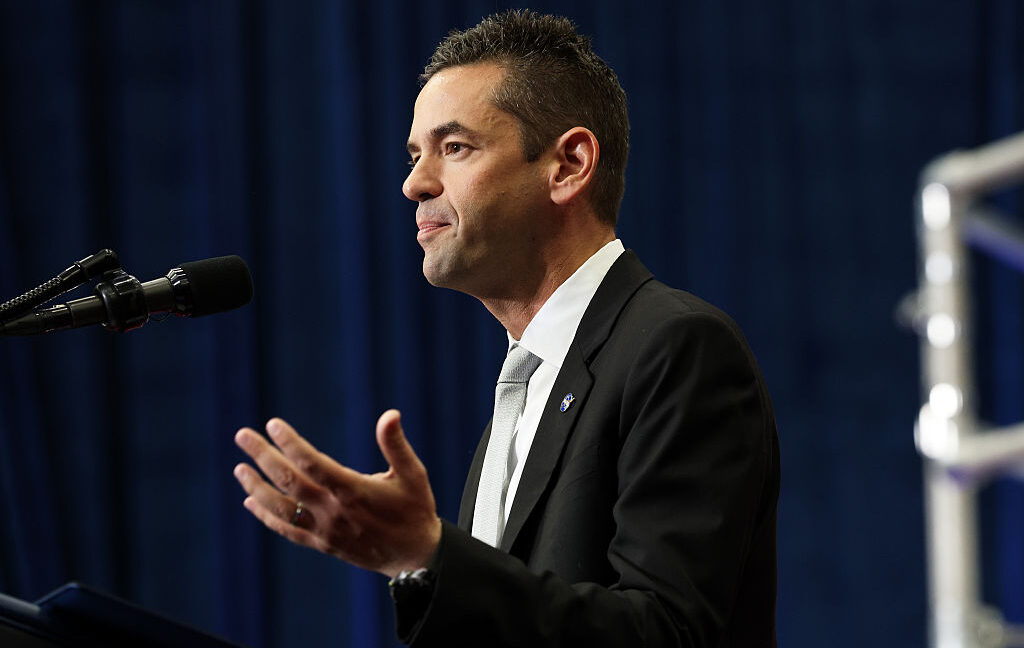
“That will call into question every other country around the world,” Isaacman said of China landing on the Moon next. “Like, whose security guarantee should I trust? Should I trust the United States and NATO? Should I trust China if they’re the emerging technical superpower here? Whose technology should I buy? Whose military hardware should I buy? Whose standards should I adhere to? Who am I listening to on AI? Am I listening to the United States or am I listening to China on that? All of that’s on the table.”
This should never have been a race, Isaacman said, noting US space policy failures going back to the Reagan administration. He estimates that NASA has spent $100 billion across multiple presidential administrations, Democrat and Republican, that has led nowhere. Meanwhile, China just had its first human spaceflight in 2003 and has since expanded its capabilities to the point where it now rivals the United States in space.
“If you come up short with who comes down the ladder first, the impact is felt around the world,” Isaacman said.
KioskNews shows a cleaned-up reading view extracted from the publisher’s page — the original always lives on their site, not ours.