NASA wants to send humanoid robots to the moon
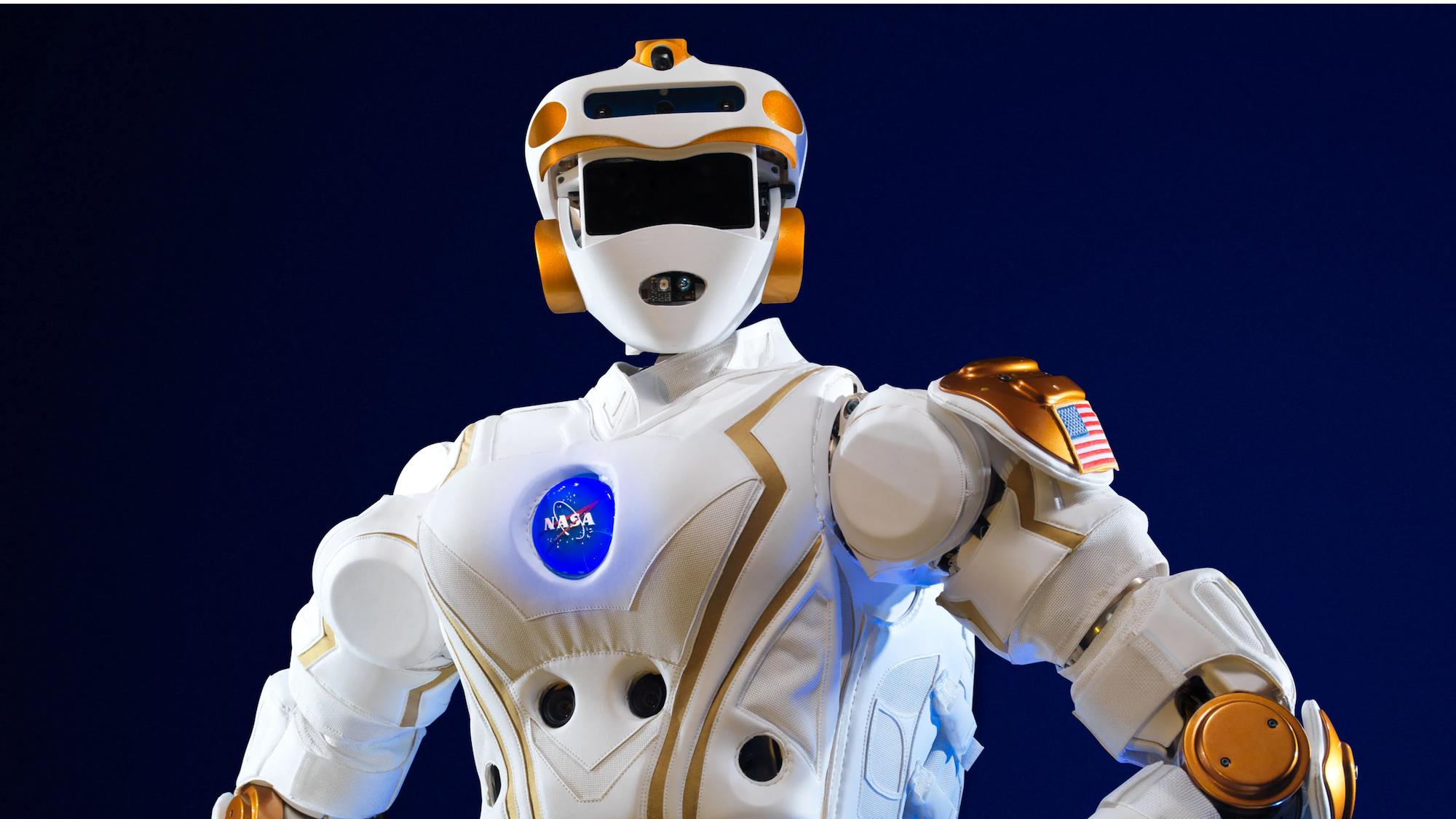
Humans won’t be the only ones aboard future NASA missions. At Johnson Space Center in Houston, Texas, researchers on the agency’s Dexterous Robotics Team are working on the next generation of advanced robots to aid crews during their increasingly uncharted journeys to the moon and possibly even Mars. But while job-killing automation is an increasing concern when it comes to robots, NASA’s engineers are focused on the opposite—they’re trying to keep the humans in space not only employed, but alive.
“Our team is not trying to replace human explorers with robots, but instead make human exploration safer and more sustainable” Dexterous Robotics Team lead Shaun Azimi said in a recent agency profile.
As Azimi explained, building a “highly capable, reliable, and trustworthy” robot for space is far more complicated than constructing bots on Earth. In addition to its standard responsibilities, these machines must be engineered to operate in harsh environments full of microgravity, damaging lunar dust, and intense solar radiation. That is challenging enough for humans, but it’s magnitudes more difficult for robots.
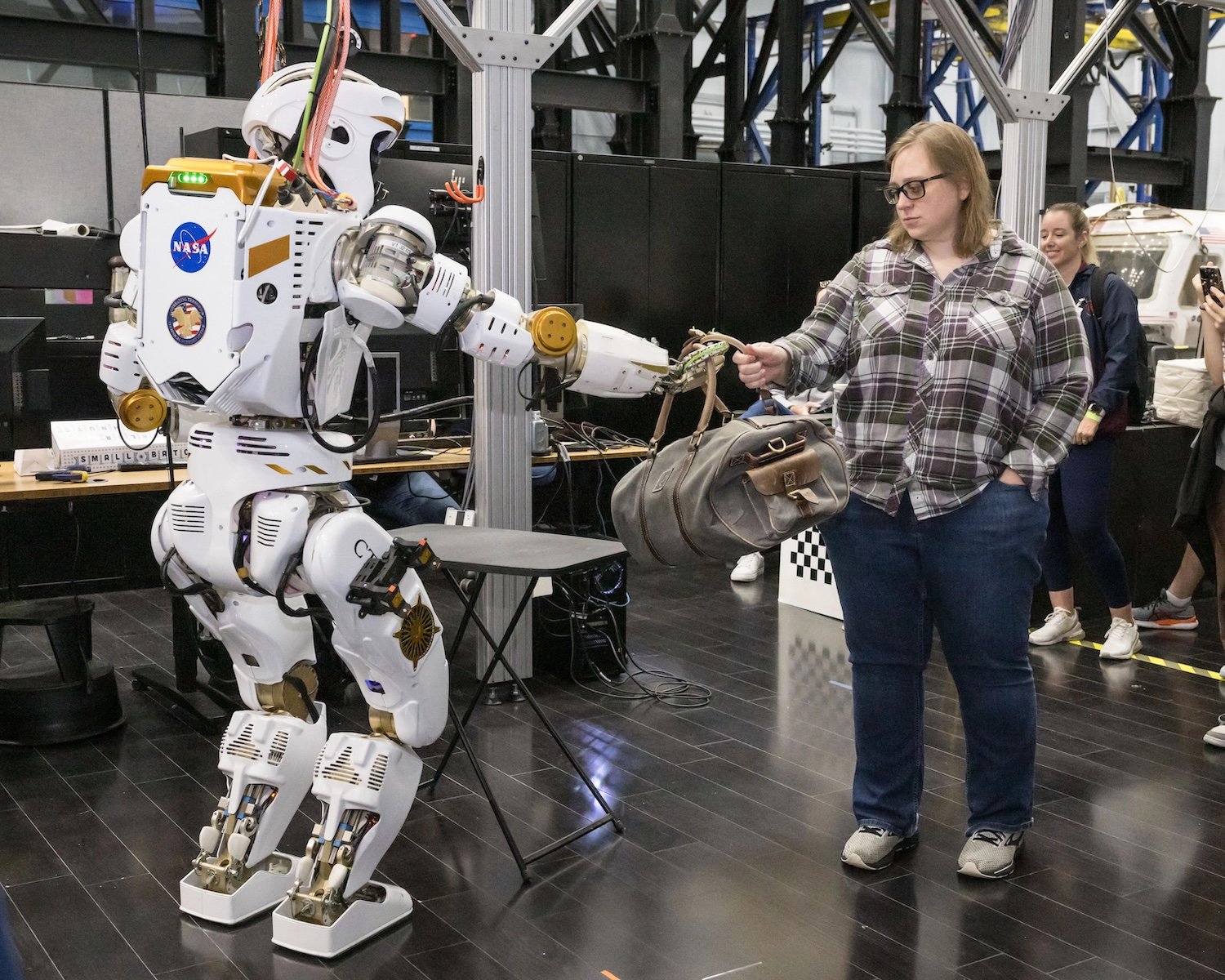
The Dexterous Robotics Team is a subcomponent of NASA’s larger Robotic System Technology Branch and is primarily interested in both software and mechatronics, a term that refers to the interactions between programming and hardware.
Integrating robots into space crews isn’t a new objective at NASA, however. For over 15 years, researchers have been testing and refining a pair of bipedal robots—Valkyrie, NASA’s first upright bot, and Robonaut 2, the agency’s first two-legged bot that has already visited the International Space Station.
More recent projects include designing and constructing the Integrated Mobile Evaluation Testbed for Robotics Operations (iMETRO). Based at Johnson Space Center, iMETRO provides both NASA and private companies a place to fine-tune various potential technologies that astronauts will rely on for day-to-day tasks like lunar base maintenance and research experiments. iMETRO includes a range of simulation environments including mode lunarl exploration rovers, living spaces, and a rocky outdoor enclosure that mimics the moon’s surface. This allows developers to identify and solve problems before they ever happen during a mission, especially problems they may not have anticipated.
Although the bipedal descendants of robots like Valkyrie and Robonaut 2 may handle everything from equipment transport to dangerous repairs, some of their most useful tasks might appear far more mundane. In one recent project, a company called PickNik tested new software that directs a robotic arm to identify a spacecraft hatch, open it, then transport cargo bags. It may not sound like much, but the robots that take on these jobs will reduce astronauts’ risk of injury, as well as free up their time to work together on far more human-centric research and exploration.
“If we can send more capable robots, we can reduce the risk and make people more effective in doing the things that people do best,” said Azimi.
KioskNews shows a cleaned-up reading view extracted from the publisher’s page — the original always lives on their site, not ours.