For Gabriel Federico, hearing impairment never stopped the music
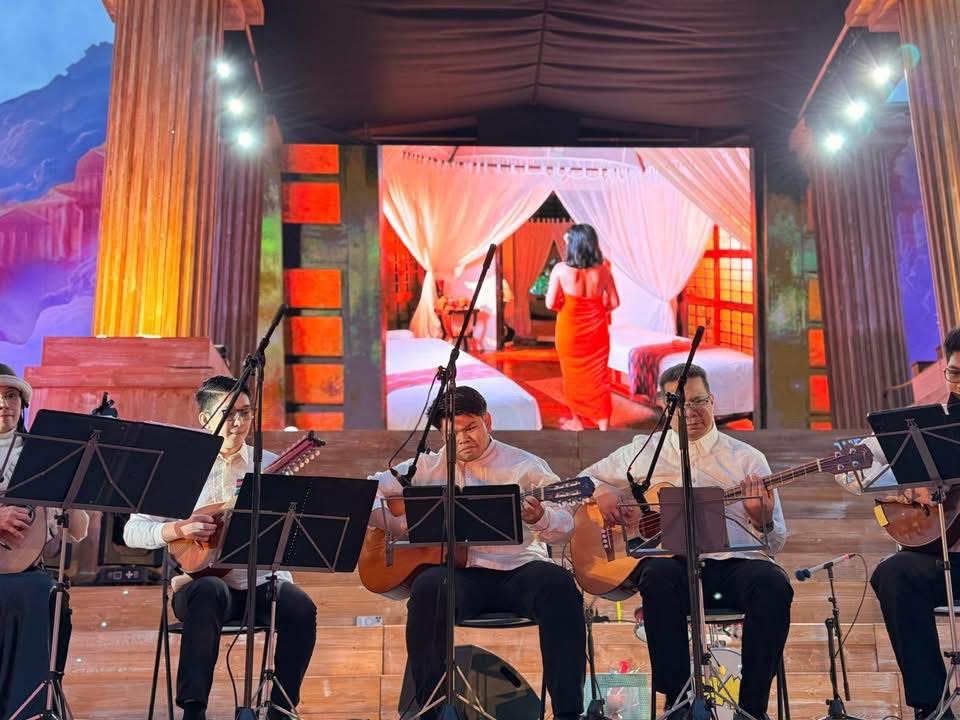
“I suggest, I encourage you, to transfer courses,” Gabriel Federico’s doctor told him during a check-up, as his hearing impairment worsened when he was a college music student.
Gabriel was down and discouraged. He prayed and talked with his mother about what to do next. After several days, he came to a decision.
“I’m sad, but I will still continue,” he said. “The Lord has a plan for me. I will persevere.”
Gabriel didn’t transfer. He kept studying music at the University of the Philippines Diliman.
He got there with an underdeveloped right ear and a left ear that requires a hearing aid. His moderately severe to severe hearing impairment eventually forced him to change the way he listened, practiced, performed, and communicated.
The music-centered academic setting at UP became an early test for Gabriel to adapt to his condition. One of the hardest parts was dictation, he said, which required students to listen to melodies, rhythms, and multiple voices and write them down.
For Gabriel, it meant extra hours most classmates didn’t need. “Every time I listened to an orchestra or a choir, I had to repeat it over and over,” he said.
“I would focus on a specific instrument or voice for each repeat and with my condition, I had to listen to it with maximum volume every time. I also had to make ways to isolate each distinct sound, which meant extra hours dedicated to practice.”
Gabriel also found ways to adapt outside the classroom. During the pandemic, his father bought him a bone-conduction device after his doctor advised him to avoid conventional earbuds because of the risk of infection.
“I think I’m a pioneer of using the bone conductors,” Gabriel said jokingly.
The device lets him experience music through vibration. He remembers listening to Vivaldi’s Four Seasons and realizing how much he could perceive through it.
“When I listened to Four Seasons with the vibration earphones (how Gabriel referred to the bone conductors at times), I heard that there was significant harp support that I wasn’t able to notice before,” he said.
The same discipline also carries into ensemble work. Before every rehearsal, he makes sure he catches every interpretation and cue the director wants implemented for his part. This preparation is essential for Gabriel to get familiar with an ensemble through both the music and the cues around him.
When the director is giving instructions, he doesn’t hesitate to ask for silence.
“Every time the director speaks, I always ask the other performers to be silent so I can hear the instructions better,” he said. If he still can’t catch something, he turns to whoever is beside him.
“I am very reliant to both social cues and music,” Gabriel said. That is why he makes sure to wear his hearing aid at every rehearsal and performance.
But Gabriel’s journey through music is not only a story about working harder because of his hearing impairment. It is also about learning to trust God and recognizing the people who helped him along the way.
Gabriel first encountered music through his grandmother’s piano. Playing it whenever he could gave him joy that other hobbies did not.
“I tried and did a lot of things,” he said. “I took drum lessons and got involved in different sports. Come high school, I realized that playing the piano is the one I like the most.”
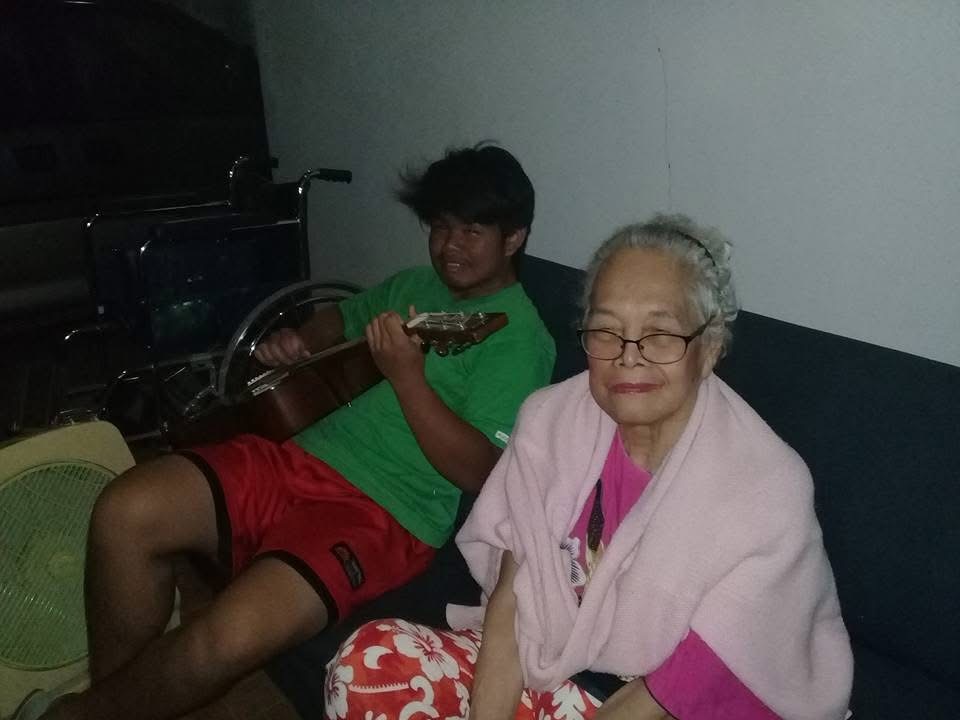
Playing also gave him a way to connect with his grandmother. “Whenever I visited my lola, I made sure to play the piano in her living room,” Gabriel said in Filipino.
“Most of the songs I played were also from her era, which gave her a somewhat happy and nostalgic feeling. She would just sit there, listening. After an hour, she would clap with joy.”
Gabriel doesn’t consider himself someone who was simply gifted. “People would more often than not say that I was given this talent and that I had it since birth,” he said. “I never agreed with that notion. I got to this level of talent because I work hard.”
The insane amount of work he put in had a cost. There was a period in his early college years when he put immense pressure on himself to immediately be great.
“Pressure was building up inside of me,” Gabriel said. “I was practicing immediately right after classes, which was at around 6 pm. At around 8 pm, I would take a quick break and would continue until 11 pm. I would sometimes go beyond midnight just practicing and listening to songs. This was when the anxiety grew and I felt the negative effects it had on my body.”
A friend from the same college, whom Gabriel looked up to as an older brother figure, eventually stepped in.
“You just got here,” his friend told him. “Enjoy it for what it is and don’t worry too much. You don’t have to tire yourself out to succeed.”
Another moment came when Gabriel began questioning his decision to stick to his music course.
“I feel like I don’t belong here,” he told a senior from one of his organizations. “I think they made a mistake by picking me to be part of this program because I am really having a hard time right now.”
His friend reminded him that it wasn’t luck that got him in the program.
“There’s a reason why the panel chose you over the others. We don’t know what it is but what you can do now is to press on and continue working hard. Show them that they were right in picking you.”
The words stayed with Gabriel. “It’s very important to have a community of friends that can align you, keep you grounded, and humble you if needed,” he said.
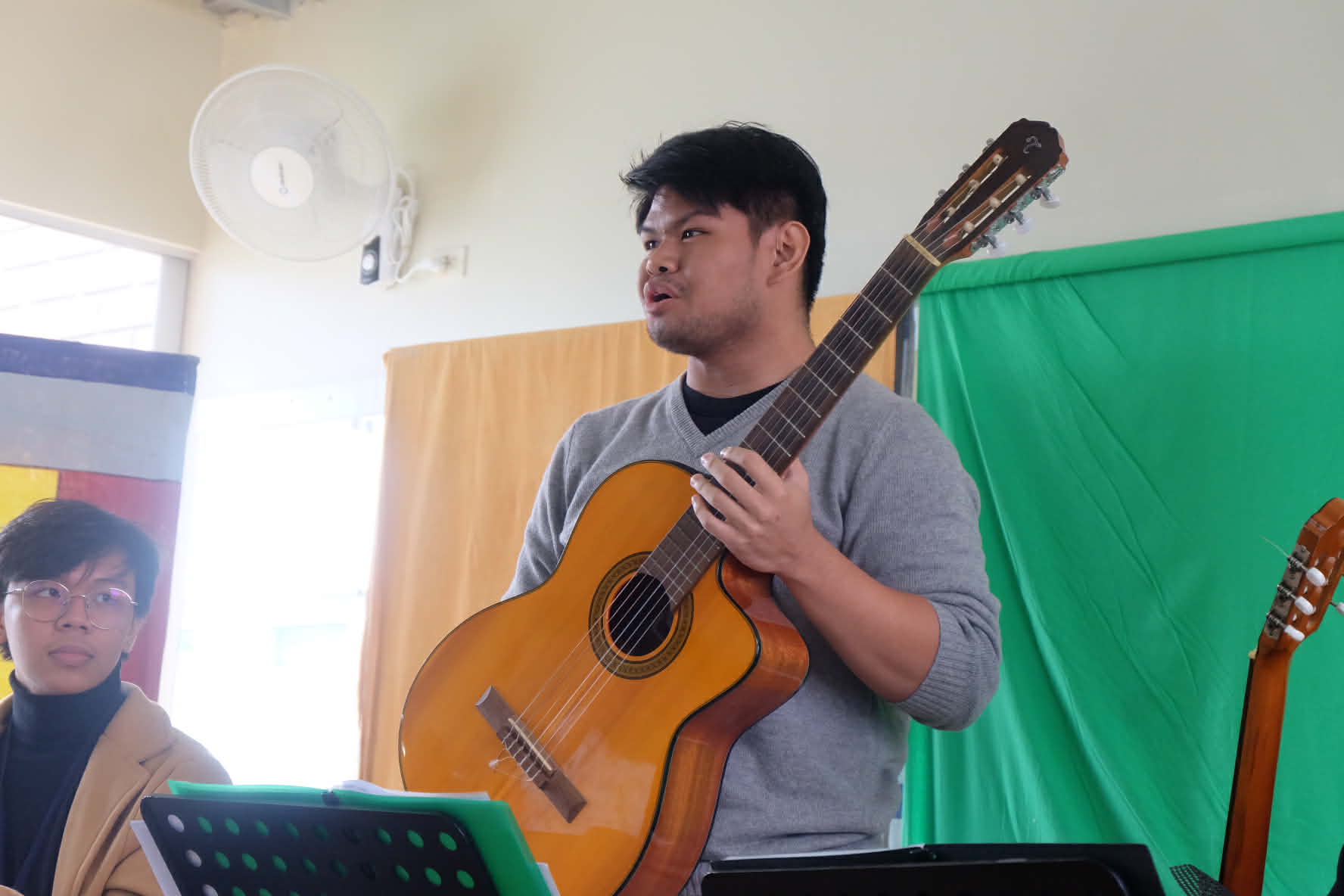
For every trial, doubt, and challenge, Gabriel had something or someone to help him through it. His faith was one of those things. This is why when his doctor told him to transfer courses, he made sure to pray for discenment.
“I kept asking God if I was in the right path,” he said.
After several days, he decided to continue. “Jesus will never leave me even in the hard times,” he said. “He will provide strength and necessities for me to pursue this dream.”
By the time he became part of UP’s recent graduating class, Gabriel knew that God made it possible for him to get this far. He finished with an Associate in Arts in Piano Performance in 2024 and earned a Bachelor of Music in Composition this year.
“I realized after graduation that God’s faithfulness means a lot,” he said. “I have been through a lot and have grown a lot. I am so much different now than who I was as a freshman.”
Over the past year, Gabriel has traveled to Europe, South America, and Hawaii to represent the Philippines as part of the UP Abelardo Rondalla in international concerts and workshops. Now, he is working as a musician, composer, arranger, and music educator.
Looking back, Gabriel saw not only the work he had put into his degree but also the people and resources that helped him along the way.
“Jesus provided the friends, family, strength, and wisdom for me to graduate,” he said.
Now in his next chapter of teaching, Gabriel is applying the lessons from his journey.
“I’ve learned how to be more authentic, how to sympathize, how to be deliberate, and how to understand things,” he said. “I seek and encourage quality over quantity when it comes to teaching and learning.”
His experience with hearing impairment has also changed the way he approaches his students.
In high school, Gabriel said he was embarrassed to disclose that he had a PWD (person with disability) card. Eventually, he realized that he shouldn’t hide that part of himself.
“I learned over time that it’s not something that you should be ashamed of,” he said. “It’s something that you should be transparent about. Life will be miserable if someone denies you. I should not deny who I am.”
Gabriel eventually realized that the same understanding should apply to his students.
“I shouldn’t deny who my students are,” the 25-year-old Gabriel said. “I should also be transparent to my students. So that I know how to approach them and how to give them individualized lessons.”
Gabriel once needed people who understood his struggles, encouraged him when he doubted himself, and reminded him that he belonged. Now, he hopes to become that person for his own students.
“I’m not pushing them to pursue music,” he said. “I just want them to love music. To love what they are doing. To enjoy it.”
When asked to summarize his journey in one word, Gabriel did not mention perseverance, music, or hearing impairment. He simply gave one word: “Trust.”
His mother repeatedly reminded him of Proverbs 3:5-6, which has somewhat served as his life verse.
“At all times, I trust in the Lord because I acknowledge that if it’s just me, I will fail,” Gabriel said. “I know the Lord. He is faithful. He knows everything. He wants what’s best for me.”
For Gabriel, trust means continuing even when he does not know exactly what lies ahead. It meant trusting God when his doctor told him to consider leaving music, and trusting the people who reminded him that he belonged. Now, as a teacher, it also means creating the kind of environment for his students that others created for him. – Rappler.com
KioskNews shows a cleaned-up reading view extracted from the publisher’s page — the original always lives on their site, not ours.