PM Modi, Polish PM Donald Tusk agree to deepen cooperation in defence, space, nuclear energy
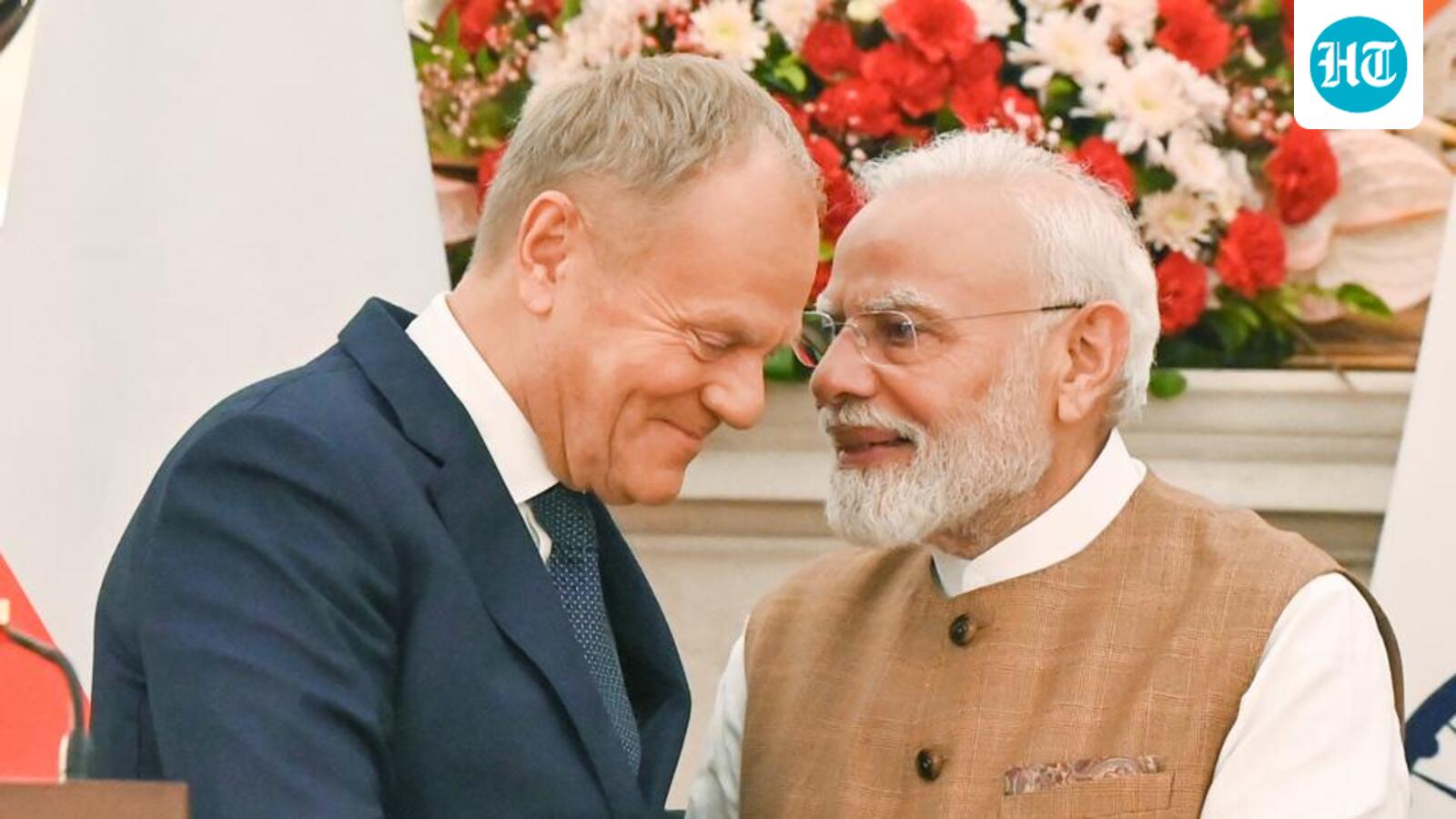
India and Poland on Thursday agreed to deepen cooperation in defence, space and nuclear energy as Prime Minister Narendra Modi and his Polish counterpart Donald Tusk focused on leveraging the economic growth of both countries to achieve the shared target of doubling trade from the current level of around $6 billion by 2030.
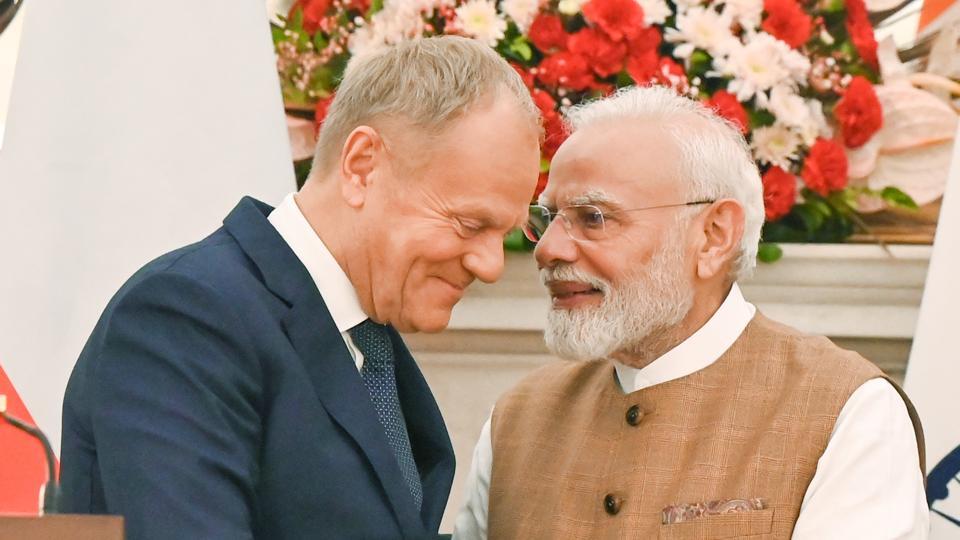
Bilateral ties got a major boost with Modi’s visit to Warsaw in 2024, the first by an Indian PM in 45 years, and defence and security have emerged as a key area for cooperation as Poland is currently engaged in the largest military modernisation campaign in Europe**, spending** almost 5% of its GDP on its armed forces against the backdrop of the war in Ukraine.
Modi described his discussions with Tusk as “excellent” and said on social media that the two leaders discussed bolstering cooperation in trade, investment, defence, nuclear energy, space and critical minerals. Regional and global issues also figured in the talks, and Indian officials said the Polish side appreciated India’s recent proposal for a Russia-Ukraine ceasefire.
“Today, we agreed to deepen our cooperation in defence, space and nuclear energy. In all these strategic sectors, we invite Polish companies to partner with India in co-development and co-production,” Modi said at a media interaction with Tusk.
Tusk added, “We are very aware of political threats and the need to become independent as much as possible in the area of…minerals and strategic resources…to make sure that Poland and India are independent in those areas.”
India and Poland, Modi said, have emerged as centres of growth and technology at a time of uncertainty and change. “Last year, Poland’s GDP crossed the historic milestone of $1 trillion…Meanwhile, India recorded an impressive growth rate of 7.8% in the last quarter,” he said, noting that the proposed India-European Union (EU) trade deal will open new opportunities for India to export machinery, chemicals, plastics and engineering goods to Poland.
“At the same time, we will seek new investments from Poland in sectors such as railways and mobility, advanced manufacturing, food processing and biotechnology,” Modi said, adding that Tusk was accompanied by a large business delegation that would focus on developing trusted supply chains to achieve the shared goal of doubling trade by 2030.
The two sides will also develop new partnerships in critical minerals and coal gasification using Polish expertise, and establish a bilateral “startup bridge” to build on cooperation in AI, cybersecurity and fintech, Modi said.
The business delegation of almost 100 Polish companies will participate in two business forums in New Delhi and Bengaluru to explore collaboration in defence, agri-tech, food processing, pharmaceuticals, mining, technology and infrastructure. Two-way trade is currently worth $6.3 billion, and Indian investments in Poland have grown to $3 billion, with Indian IT companies having a significant presence.
Tusk noted that the two countries were able to build synergy as they have no conflicts of interest or historical issues that divide them. He also lauded Modi’s role on the global stage, describing it as a “beacon of hope” at a time of destabilisation and political uncertainty.
He pointed to growing defence cooperation between the two sides and said: “Our drones were very useful…recently and I am convinced that cooperation in satellites and drones has helped our countries in times of political tensions and crises.”
Tusk’s comments were an apparent reference to the use of Polish loitering munitions or drones by India’s military against Pakistan during Operation Sindoor, the campaign launched last year that targeted terrorist infrastructure on Pakistani soil in retaliation for the Pahalgam attack. Poland’s WB Group supplied 100 units of Warmate loitering munitions to the Indian Army in 2022, and Polish officials said earlier this year that the army had signed three more defence contracts.
Poland is also eyeing tie-ups with Indian manufacturers of munitions to replenish ammunition stocks depleted by supplies provided to Ukraine since the start of the Russian invasion in 2022. However, some Polish firms have concerns about India’s long-standing military ties with Russia, and New Delhi and Warsaw are finalising an agreement on secure information exchanges to boost defence industrial cooperation.
Sibi George, secretary (West) in the external affairs ministry, told a media briefing that the two sides were working on an agreement on mutual protection and exchange of classified information that was expected to build on the growing trust between India and the EU in areas such as defence and technology. With both countries eyeing joint development and production of military gear, it was important to have agreements in place to ensure trust and confidentiality, he said.
The two sides also agreed to establish a defence industry dialogue and a counter-terrorism dialogue, George said. The security and defence partnership concluded by India and the EU earlier this year provides an additional framework for strategic cooperation with Poland in defence, counter-terrorism, technology, cybersecurity, space and shipbuilding, he said.
Modi also referred to his discussions with Tusk on regional and global issues and said: “Whether in Ukraine or West Asia, India will continue to support every meaningful effort towards peace.”
George said Poland was “very appreciative” of India’s approach to finding a diplomatic solution to the Russia-Ukraine conflict, and Modi’s recent call to Russian President Vladimir Putin to move from “endless war to the end of war”. He added that India had shared ideas with Russia and Ukraine, including the safety and security of commercial shipping, exports of grains and energy, and “non-attack possibilities”.
Modi and Tusk both highlighted people-to-people ties, including the role played by the royal families of Jamnagar and Kolhapur in providing refuge to thousands of Polish children and families during World War II, and the assistance provided by Polish authorities in evacuating thousands of Indian students from Ukraine in 2022. Poland is currently home to around 30,000 Indians, including 3,500 students.
KioskNews shows a cleaned-up reading view extracted from the publisher’s page — the original always lives on their site, not ours.