Trump says China agreed to trilateral despite reluctance, notes nuclear gap
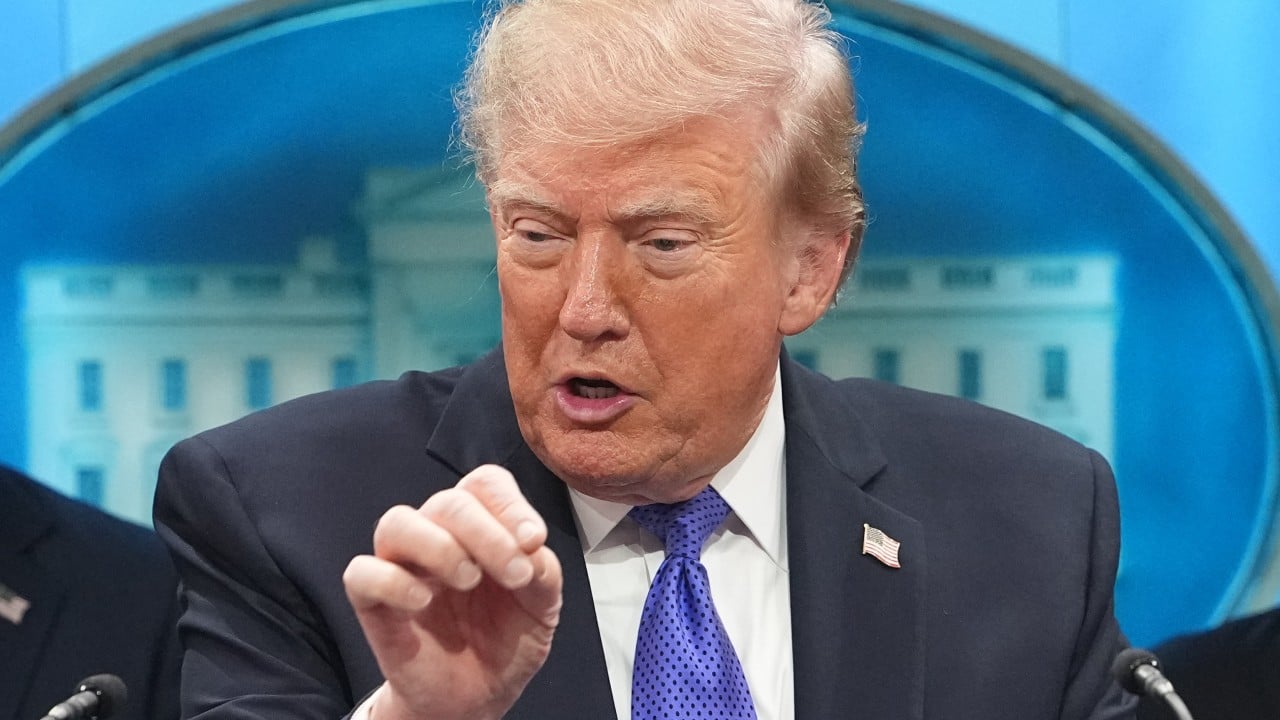
US President Donald Trump said on Friday that China had agreed to hold trilateral nuclear risk-reduction talks for the first time despite earlier reluctance, as he acknowledged the wide gap between Beijing’s arsenal and the much larger stockpiles held by the US and Russia.
“They didn’t want to do that because China ... is way behind,” Trump said in a press conference at the White House.
“We have estimates of 4,000 nuclear weapons. Russia’s second to us, and China’s way behind. But they’ll catch us within 10 years.”
The United States and Russia held total inventories of 5,042 and 5,420 nuclear warheads, respectively, as of January, compared with an estimated 620 for China, according to the Stockholm International Peace Research Institute (SIPRI).
02:48
Xi, Trump and Putin meet for historic trilateral summit at Shenzhen Apec meeting
The leaders of the world’s major nuclear powers released a joint statement pledging dialogue on reducing nuclear risks, commitments to reform the United Nations, plans to boost refined petroleum supplies and warnings against international courts.
“The three heads of state reaffirmed that a nuclear war cannot be won and must never be fought,” the statement said.
“The three countries will conduct a dialogue on reducing nuclear risks and preventing the proliferation of nuclear weapons.”
The South China Morning Post earlier reported that the joint statement would focus on nuclear risk reduction and include the specific pledge against nuclear war.
During the meeting, Xi said that “nuclear weapons, the Sword of Damocles that hangs over humanity, should be completely prohibited and thoroughly destroyed over time to make the world free of nuclear weapons”.
He also laid out a four-point framework for how China, Russia and the US should manage ties, urging them to act as “partners and friends”, avoid conflict and confrontation, maintain peaceful coexistence and overcome the Thucydides Trap – the risk of war when a rising power challenges an established hegemony.
He added that China, Russia and the US should “put themselves in each other’s shoes and act prudently on major sensitive issues involving one another – and in particular, avoid crossing each other’s red lines.”
SCMP Plus is a new premium news platform that gives you an
all-inclusive edge to stay ahead on China news.
To access our exclusive content you’ll need to subscribe.
Already a subscriber?
LOG IN
Trump echoed the sentiment, saying: “We have a special responsibility to maintain open, respectful and productive dialogue on issues impacting not just our people but the entire planet.”
In a statement on Friday following Trump’s four-day visit to the Philippines and China, the White House also highlighted his first-ever trilateral summit with Xi and Putin.
“President Trump will meet with anyone who is willing to work together to make the lives of Americans – and the world – more prosperous and secure,” it said, adding that he called for nuclear weapons reductions and an end to the Ukraine war.
Xi reiterated that the two countries had agreed to build a “constructive China-US relationship of strategic stability and added new substance to it by placing the relationship on the basis of respect, fairness and reciprocity”, according to a readout released by China’s Ministry of Foreign Affairs.
Xi added that the “overall stability” of bilateral ties had brought tangible benefits to both nations and he looked forward to working with Trump to keep “this giant ship” on the right course and “forge ahead at full sail”.
On Taiwan, Xi said that the “US side should keep doing the right thing and avoid major setbacks in China-US relations”.
The White House did not release a separate readout of the bilateral meeting.
US Trade Representative Jamieson Greer said on Friday that the Chinese side raised the Taiwan issue during the talks, but it’s not a “point of contention” between the two sides.
“The Chinese have their views on Taiwan and independence. We have our one-China policy we’ve had for decades that hasn’t changed,” Greer said in an interview with Bloomberg.
Beijing sees Taiwan as part of China to be reunited by force if necessary. Most countries, including the United States, do not recognise Taiwan as an independent state, but Washington is opposed to any attempt to take the self-ruled island by force and is committed to supplying it with weapons.
On rare earths and discussions on extending the Busan agreement, Greer said the issue was “addressed” in the Trump-Xi bilateral and that Xi “himself acknowledged that this is something where they want to make sure that they are responsive to US requests”.
“The Chinese, of course, have their own requests of us, and so we’re trying between the two of us to maintain this Busan agreement, this Busan accord, where we can have stability in these discrete areas, rare earths, tariff levels, etc …” he added.
“We are in full compliance with Busan. We expect the Chinese to fully comply as well.”
The deal reached in Busan, South Korea, in October 2025, helped ease bilateral tensions that had surged following Trump’s “Liberation Day” tariffs.
Under the pact, Washington agreed to cut tariffs on certain Chinese imports and shelve further trade restrictions. Beijing, in turn, paused some rare earth export controls and pledged to purchase US soybeans and curb exports of chemicals used to make fentanyl.
The US has repeatedly pressed Beijing to increase rare earth shipments, linking the flows to the extension of the Busan agreement. The agreement was extended by just two months in September and faces a January 10, 2027, deadline.
KioskNews shows a cleaned-up reading view extracted from the publisher’s page — the original always lives on their site, not ours.