Four indicted in alleged espionage case
INFILTRATION: Retired military captain Yu Cheng-yu allegedly collected cryptocurrency on behalf of Chinese contacts and paid service members for classified information
By Liu Yung-yun and William Hetherington / Staff reporter, with staff writer


The Taiwan High Prosecutors’ Office yesterday indicted four people, including a retired military police captain already facing separate espionage charges, for allegedly helping Chinese contacts pay Taiwanese service members for leaking classified military information.
Retired captain Yu Cheng-yu (尤正宇), who was previously indicted for allegedly accepting tether cryptocurrency in exchange for military secrets, allegedly collected cryptocurrency on behalf of Chinese contacts, converted it into cash and distributed payments to service members who leaked classified information. He allegedly earned NT$430,403 from the scheme, prosecutors said.
The other defendants are two retired servicemen surnamed Lee (李) and Sen (森), and a coast guard member surnamed Tsai (蔡), who allegedly provided a bank account to receive payments. Prosecutors urged the court to impose heavy sentences on all four. The case was yesterday transferred to the High Court.
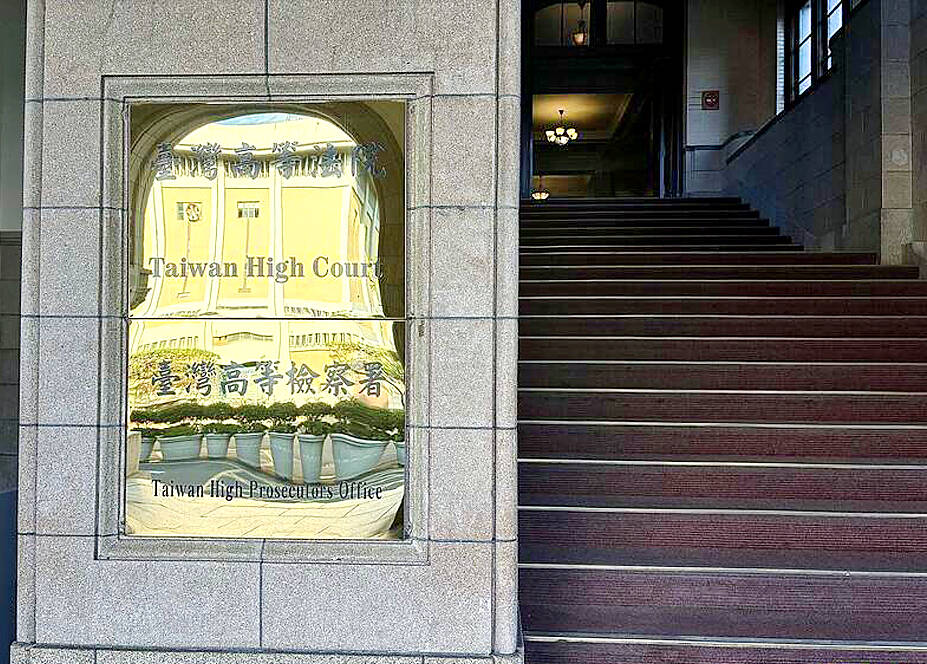
A plaque at the Taiwan High Prosecutors’ Office in Taipei is pictured in an undated photograph.
Photo: CNA
Yu allegedly used a cryptocurrency wallet in his name to receive digital currency from Chinese contacts between March and October 2024, prosecutors said.
He sold the cryptocurrency to dealers for cash and deposited the proceeds into accounts belonging to Lee and Tsai, allegedly concealing the source of the funds, they said.
Yu previously served as a captain at the Reserve Command of the Ministry of National Defense’s All-Out Defense Mobilization Agency. In a separate case, he allegedly accepted tether from a Chinese Internet user using the screen name “Pleasant Voice” (聲音好聽), after seeking money to repay loans.
From early 2022 through the end of 2023, Yu allegedly photographed classified military documents with his cellphone at least five times and sent them to the contact via Telegram in exchange for 4,998 tether tokens with a total value of about NT$150,000. The Ciaotou District Prosecutors’ Office previously indicted him in that case and requested a heavy sentence.
Investigators found that Lee and Sen also allegedly collected and passed military intelligence to China while serving in the armed forces.
Lee allegedly engaged in the activities from around March or April 2024 through August last year, while Sen allegedly did so from around October or November 2023 through March last year. Both have since left the military.
Tsai, a coast guard service member, allegedly lent his bank account to Sen to receive payments from Chinese contacts for leaking classified information. Lee allegedly received NT$884,000, while Sen and Tsai received a combined NT$515,000, prosecutors said.
Prosecutors directed the Investigation Bureau to investigate the case. The four defendants allegedly contravened the Criminal Code of the Armed Forces (陸海空軍刑法), the National Security Act (國家安全法), the Classified National Security Information Protection Act (國家機密保護法) and the Money Laundering Control Act (洗錢防制法), among other laws. The alleged offenses also included leaking and gathering national defense secrets under the Criminal Code and corruption-related offenses under the Anti-Corruption Act (貪污治罪條例).
Prosecutors said Lee and Sen were serving military personnel when the alleged offenses occurred, while Tsai was a public official. The three allegedly participated in the scheme for personal gain, jeopardizing national security, military operational security and national defense interests.
Yu allegedly played a key role by helping Chinese contacts channel payments through an alternative means. Prosecutors also accused him of offering evasive explanations and showing no remorse after the alleged offenses.
KioskNews shows a cleaned-up reading view extracted from the publisher’s page — the original always lives on their site, not ours.