How long can fiber optic cables be before they lose signal?
SatawatK/Shutterstock
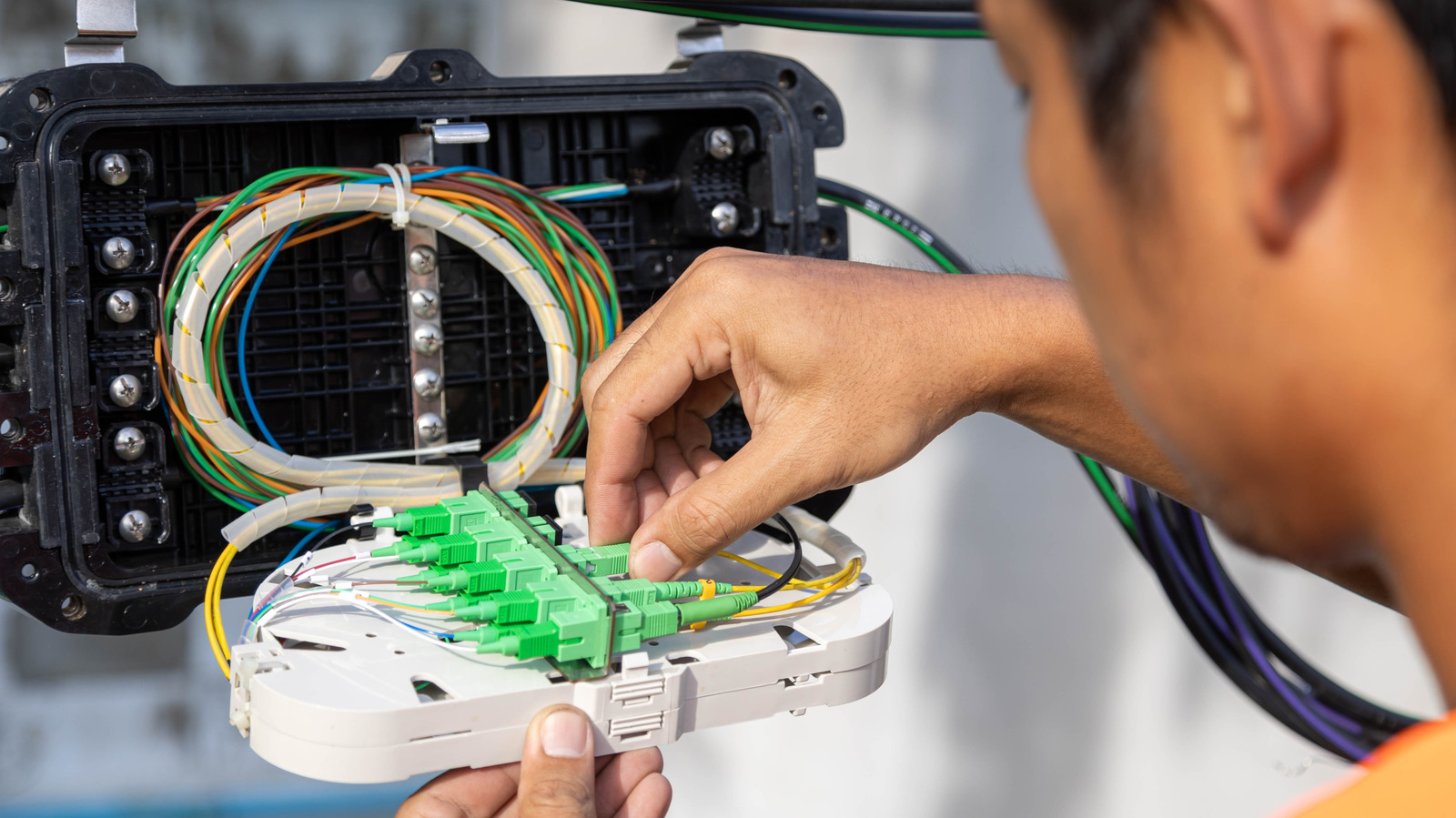
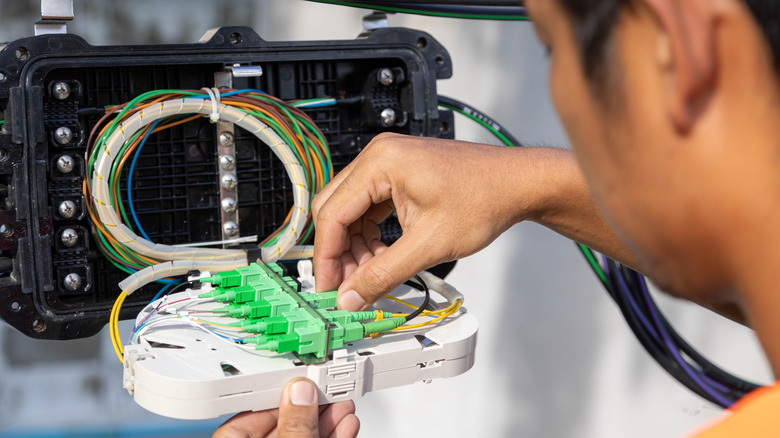
Fiber optic cables are responsible for a significant portion of the world's Internet infrastructure. You may know that the technology is responsible for carrying data signals across oceans, but fiber has also become increasingly common in our cities and even homes. Many internet service providers (ISPs) use fiber-optic as a selling point, and for good reason: It offers a significant internet speed upgrade over legacy DSL connections that rely on copper telephone lines.
The longest fiber optic cable run in the world is the 2Africa cable system. It's an underwater optical fiber cable that has landing points in many African countries as well as Europe and Asia. The previous record was held by SEA-ME-WE 3, a cable system that connected portions of Europe, Northern Africa, the Middle East, Asia, and Australia. That system was decommissioned in 2024.
As with any technology, fiber-optic cables have their limits. So how long can a fiber-optic cable actually be before signal loss makes the data being transmitted completely unrecoverable?
How do fiber optic cables carry data over long distances?
yus1611/Shutterstock
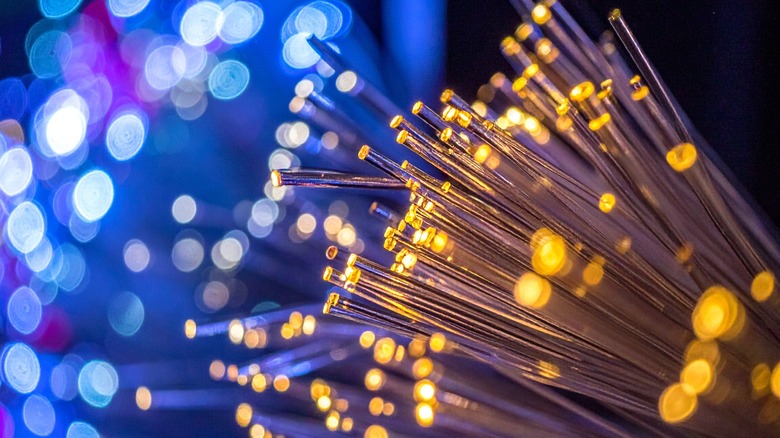
Fiber-optic cables rely on a physics principle called total internal reflection to transmit data through glass (or sometimes plastic) strands in the form of light. The glass core has a high enough refractive index so that when light hits the boundary at a sufficiently shallow angle, it reflects back into the core rather than passing through. This allows the light to travel long distances without experiencing significant energy loss or signal deterioration.
This is in stark contrast to Ethernet cables, which rely on twisted pairs of copper wires to transmit data in the form of electrical current. Like any metallic conductor, copper wires have some resistance, which means you can't use them for very long distances. The maximum recommended length for Cat5e Ethernet cables is just 100 meters or slightly over 300 feet. They're also affected by electromagnetic interference, affecting their reliability over long runs.
By comparison, fiber optic cables can carry data over several kilometers before the signal starts breaking down. A single fiber-optic cable can bundle multiple individual fibers, each capable of carrying its own data signals. This is why internet service providers advertise their use of fiber over traditional copper wiring when deploying city-wide networks. The end result is a much faster connection that's often more consistent.
However, fiber optic cables have limits too. Even with total internal reflection, a small amount of light is lost as it travels through the glass core due to absorption and scattering. This gradual reduction in signal strength is called attenuation. Over a long enough run, this weakens the signal until the receiver can no longer distinguish between useful data and noise.
How long can a single fiber-optic cable run be?
Imaginima/Getty Images
A single uninterrupted glass fiber can typically span several kilometers before signal loss becomes a limiting factor. Keep in mind, fiber-optic cables also come in two types: single-mode and multi-mode.
Single-mode fiber only allows one beam of light to travel through it at a time, while multi-mode fiber allows multiple light pulses (called modes) to propagate through the strands simultaneously. These pulses take slightly different paths within the strand, which means they can arrive at different times. This is called modal dispersion and eventually causes the receiver to struggle interpreting the data signal.
Single-mode fiber is capable of carrying signals over longer distances but requires specific equipment that can cost significantly more money. Multi-mode fiber cables have wider cores that makes optical alignment with transceiver equipment easier, so they're often the preferred choice for shorter fiber runs. With longer runs, though, single-mode fiber's stability can justify the higher equipment costs.
Regardless of the operating mode, you likely won't have to worry about signal loss in a typical home network. Even multi-mode fiber can cover hundreds of meters. The bigger problem in a domestic fiber cable run is often caused by bends that are too tight, which can cause light leakage from the core.
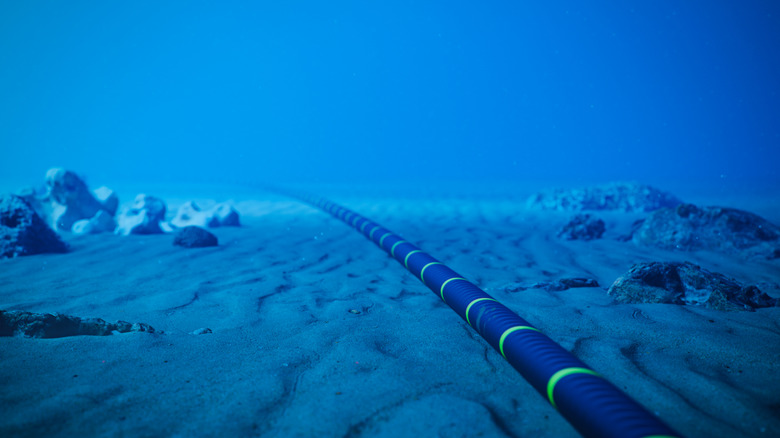
In the case of fiber optic systems running across continents, they use optical amplifiers to compensate for signal loss over long distances. These devices are installed along the seabed and designed to boost the optical signal. A technique known as multiplexing then allows multiple data streams to travel simultaneously over a single strand. Put simply: You never have a truly uninterrupted fiber optic cable running over such vast distances.
KioskNews shows a cleaned-up reading view extracted from the publisher’s page — the original always lives on their site, not ours.