Tax cuts for foreigners: How Labor says it will help first home buyers
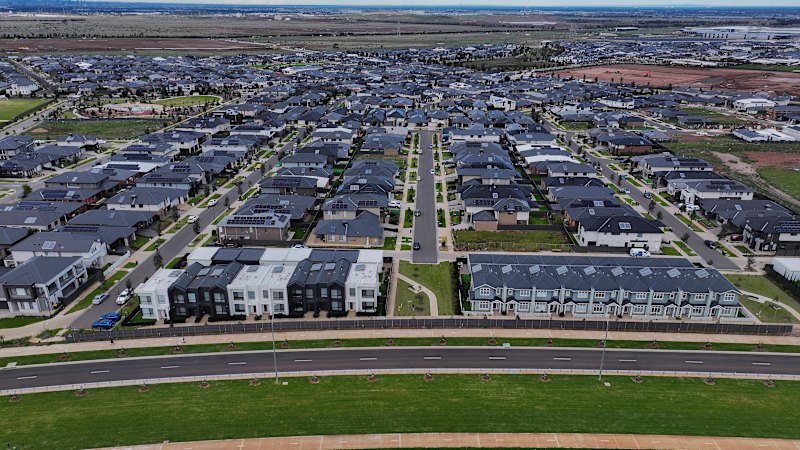
Labor will slash costs for foreign investors building homes in Victoria and review levies on overseas developers, as part of a renewed effort to roll back property taxes that industry chiefs have warned are holding back the state from meeting its housing targets.
But the tax cuts will further eat into revenue as the state government battles to gain control of the budget and ballooning debt, with falling property prices already slashing its expected collection of stamp duty revenue.
Treasurer Colin Brooks on Wednesday announced the government would cut the absentee owner surcharge, an additional land tax levied on overseas developers that was introduced in 2015 and doubled in 2023, for residential projects and developments that fit Labor’s priorities.
Overseas developers would be exempt from the tax during construction if their projects meet the criteria for the Development Facilitation Program – a fast-track approval system which applies to significant residential projects, and those that unlock strategic packages of land or build energy-efficient medium-density housing.
Foreign investors would also be exempt from the tax for two years after completion of residential developments.
Brooks promised an independent review of the tax and the foreign purchaser additional duty – an extra stamp duty impost on foreign investors – if Labor is re-elected in November. The review would examine whether the taxes are collected efficiently, how it affects foreign investment and the impact on first home buyers.
Fast-tracking the approval of new home builds has become a political priority for Labor, which in 2023 promised to build 800,000 homes in a decade. The government has already fallen 55,000 homes behind its target, with property groups blaming prohibitive taxes and red tape.
Brooks acknowledged that although more homes were built in Victorian than any other state, “there’s more to do”.
He said Labor had improved the planning system for developers but acknowledged a “more competitive tax setting here in Victoria” was needed.
“First home buyers are Labor’s priority – we want to make sure that the supply is there so that they can get a home,” Brooks said. “This will be a comprehensive review to make sure the settings are right for Victoria to continue to lead the nation.”
Brooks made the announcements at an event hosted by the Property Council, an industry group representing the sector. The government moved earlier this month to reverse a major Daniel Andrews-era policy to ratchet up land tax on the owners of second homes and investment properties.
The council has warned global investment in the Victorian property sector dropped from $10 billion to $5 billion in the three years to late 2025.
The group’s state executive director, Cath Evans, said on Wednesday that slashing the absentee owner surcharge would deliver a major boost to the economy, but Labor needed to do more.
“Anything that helps open the door to more capital coming into Victoria is important,” she said. “We need that investment to build the homes, workplaces and infrastructure our state urgently needs.”
Opposition housing spokesman David Southwick told attendees at the Property Council event that Labor had introduced 40 new taxes on the industry.
“You … have been squeezed like a lemon, so there’s no juice left, simply to prop up a budget,” he said.
A Business Council of Australia report, released late last year, ranked Victoria as the nation’s worst state for doing business, in part due to the high rate and wide scale of property taxes.
The Coalition is promising, if elected, to exempt first home buyers from stamp duty on properties worth up to $1 million, lift the land tax threshold to $300,000 at a rate faster than Labor, scrap the emergency services levy on residential homes, and wind back taxes on short-stay accommodation.
Brooks said the Coalition’s plan to further cut property taxes while also making savings across other parts of the budget did not fit with the economic reality.
“A five-year-old can tell you that this doesn’t add up. It’s not a budget it’s like something from Narnia,” he said.
Brooks indicated a further willingness to cut taxes, but said his immediate priority was “to deliver fiscal discipline”.
KioskNews shows a cleaned-up reading view extracted from the publisher’s page — the original always lives on their site, not ours.