Bank of England set to rise interest rates for first time since 2023
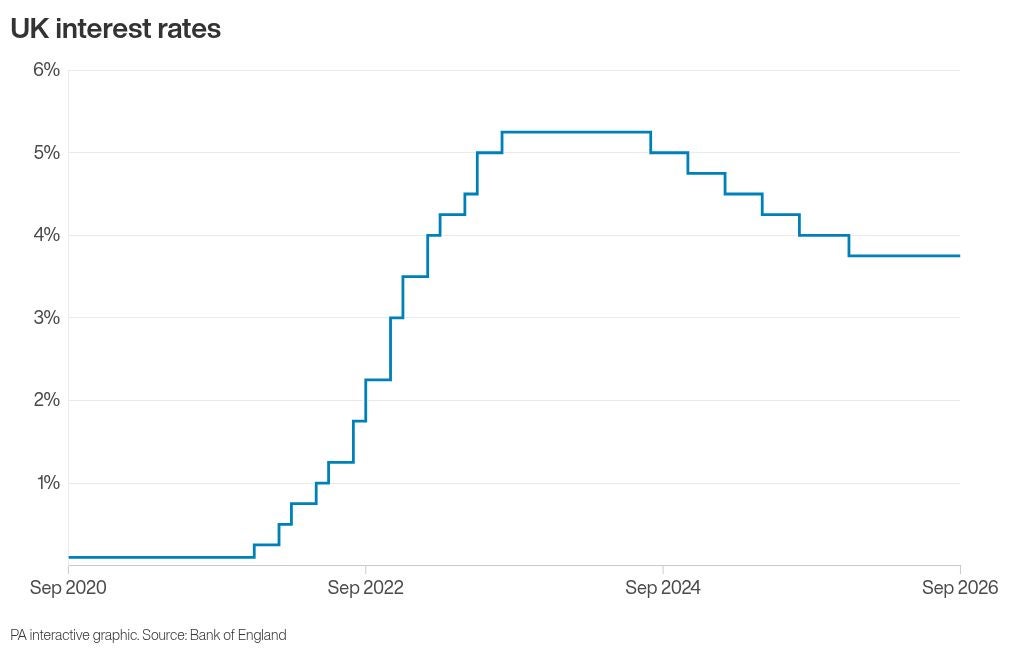
Interest rates are widely expected to rise to 4% from 3.75% when the Bank of England announces its next decision on Thursday November 5.
Traders in the financial markets are anticipating the increase, which would be the first time the central bank has raised borrowing costs since August 2023.
The move would come more than three years after the Bank last tightened policy, and borrowers could be facing a squeeze as a result.
Many economists think rate-setters will want to tackle rising inflation in the UK economy by tightening monetary policy.
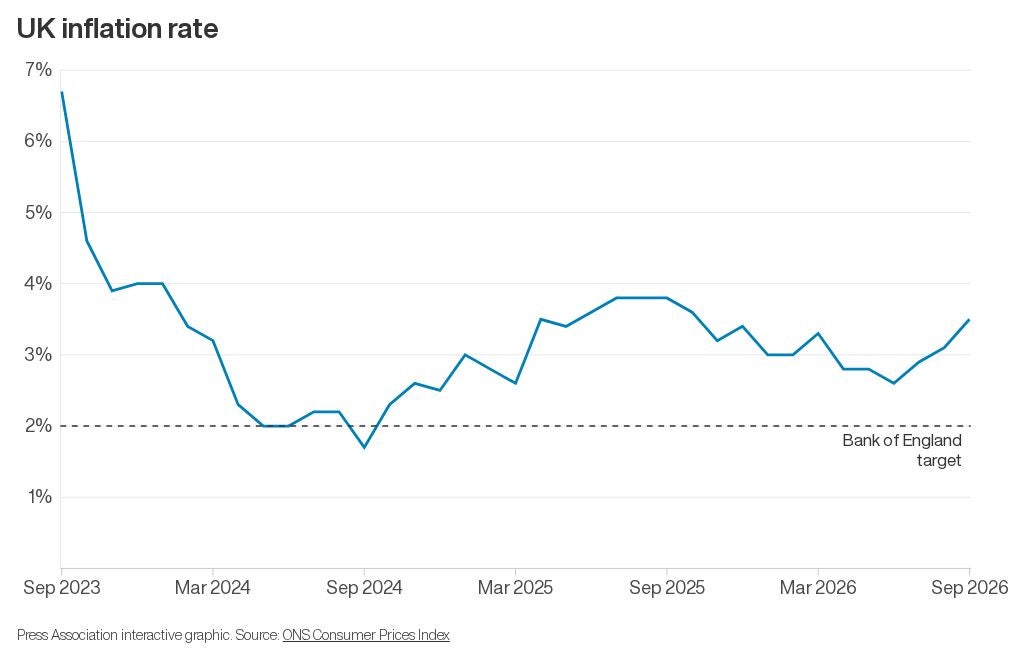
Pressure on the Bank's Monetary Policy Committee (MPC) to take action has grown since official figures showed the rate of Consumer Prices Index (CPI) inflation rose to 3.5% in September.
That was the highest level in 11 months.
The conflict in the Middle East has helped push CPI further away from the Bank's 2% target rate, with a surge in petrol and diesel prices a major driving force.
Inflation is expected to be pushed higher this winter after Ofgem's energy price cap rose by 3.6% for a typical household on October 1.
The cap is forecast to jump by a further 22% in January.
Ellie Henderson, an analyst for Investec, said: "We imagine that many committee members' patience with the recent rise in inflation has worn thin.
“The longer energy prices remain elevated, the greater the risk that a temporary price shock becomes more permanent; a ‘risk management’ hike could guard against this.”
She cautioned that producers might “not be willing or able to shoulder the burden of higher energy prices for much longer” and that this could push up prices in shops.
Suren Thiru, chief economist for the Institute of Chartered Accountants England and Wales (ICAEW), said an “interest rate rise to 4% looks all but certain”, agreeing that it would likely be viewed as a “precautionary hike to contain price pressures”.
“The Bank of England’s updated forecasts are likely to show a mixed picture of the UK economy, as slightly stronger growth this year is overshadowed by weaker growth further out as rising inflation and higher energy costs bite, keeping further rate rises on the table.”
The economy unexpectedly grew in August, by 0.1%, suggesting resilience in the UK despite pressure on consumer spending and wider volatility because of the Iran war.
The MPC will also take into account the UK's unemployment rate falling to the lowest level in more than a year in the three months to August, to 4.7%.
KioskNews shows a cleaned-up reading view extracted from the publisher’s page — the original always lives on their site, not ours.