Flu cases declining, but deaths still high
STILL AROUND: Although weekly medical visits for COVID-19 have been declining, high-risk groups are encouraged to get vaccinated as soon as possible, the CDC said
By Lee I-chia / Staff reporter


There were 144 severe flu cases and 46 flu-related deaths last week, and extra flu vaccines have been purchased for a government-funded program to meet high demand this season, the Centers for Disease Control (CDC) said yesterday.
Flu and COVID-19 activity is slowing down, but both are still in an epidemic period, CDC Epidemic Intelligence Center Deputy Director Lee Chia-lin (李佳琳) said.
Influenza viruses were the most common respiratory pathogens spreading locally in the past four weeks, with influenza A (H1N1) accounting for 91.8 percent of tested cases, she said.
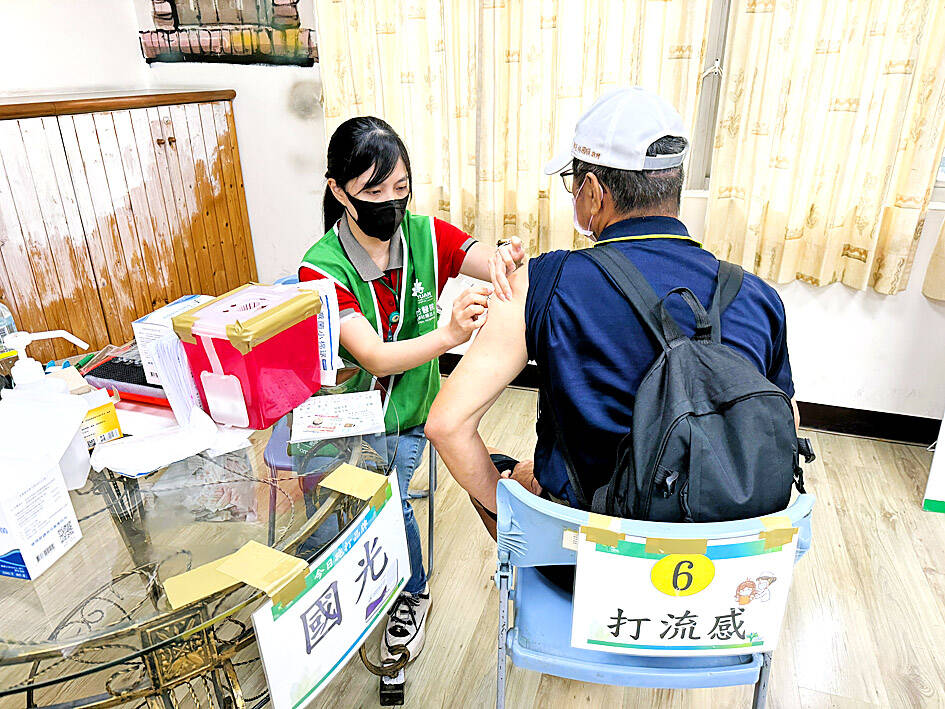
A healthcare worker administers a vaccine in an undated photograph.
Photo: Taipei Times
Of the 128,847 medical visits for flu-like illness last week, 11.9 percent were emergency visits, above the epidemic threshold of 11 percent, but the percentage is declining weekly, she said.
More than 86 percent of the severe cases have or had underlying health conditions, Lee said, adding that the risk of developing severe illness should not be overlooked, especially among high-risk groups.
Flu activity is rising in Japan, Singapore, the US, Canada and Europe, she said.
While the recent wave of flu infections has passed its peak, deaths are a lagging indicator, so the 46 flu-related deaths reported last week was the highest weekly number this year, CDC Deputy Director-General Lin Min-cheng (林明誠) said.
Flu activity is expected to continue slowing and the epidemic period could end in the middle or late next month, he said.
Meanwhile, weekly medical visits for COVID-19 have been declining in the past few weeks, dropping a significant 35 percent last week to 5,261, Lee said.
There were 21 severe COVID-19 cases and 15 deaths reported last week, most of whom were older people with chronic conditions who had been vaccinated, she said.
As public willingness to get vaccinated is exceptionally high since this season’s government-funded program started on Oct. 1, the CDC would purchase another 200,000 to 300,000 doses of flu vaccines and 174,000 doses of Novavax’s COVID-19 vaccine, Lin said.
Beginning on Monday, the first batch of Novavax’s COVID-19 vaccine would be available for people aged 12 or older and eligible for the first phase of government-funded vaccination, while the additional purchases of vaccines are expected to be available from the second half of next month, the CDC said.
As most of the severe cases were unvaccinated high-risk groups — including older people, young children, people with multiple underlying health conditions or immunocompromised people — who are already eligible for vaccination, the CDC encourages them to get vaccinated as soon as possible, Lin said.
Meanwhile, 9,001 medical visits for enterovirus infection were reported last week, the CDC said.
The most common strain was Coxsackievirus A6, followed by enterovirus D68 and Coxsackievirus A16, it said.
Although enterovirus is not in its epidemic period, weekly numbers remain high, Lin said, adding that the centers continue to encourage people to wash their hands thoroughly with soap.
KioskNews shows a cleaned-up reading view extracted from the publisher’s page — the original always lives on their site, not ours.