AI Agents To Outnumber Humans Soon? What Futurist Mike Walsh Told NDTV
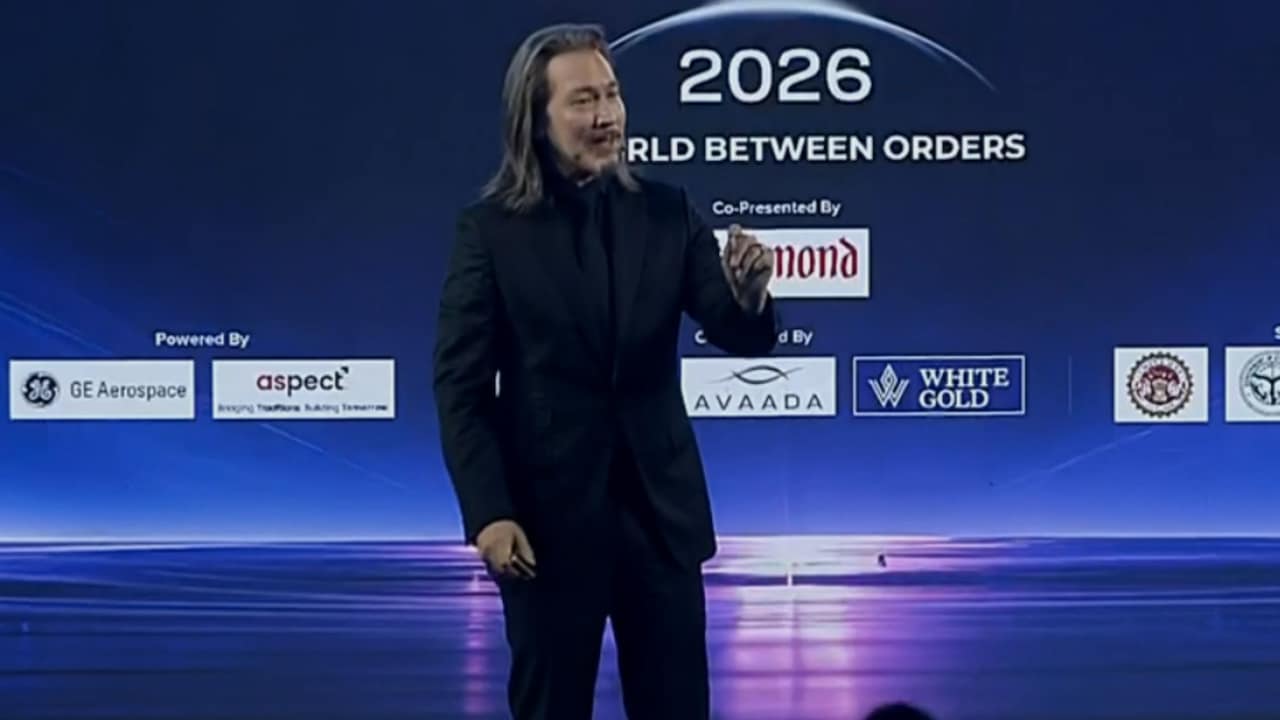
The next decade could see artificial intelligence move beyond its current role as a tool that responds to human instructions to become a vast workforce of autonomous agents, capable of carrying out tasks and interacting with businesses on behalf of individuals, futurist Mike Walsh said at the NDTV World Summit 2026 today.
Walsh said India was likely to emerge as one of the most important markets for this transformation.
"The most interesting development is that there could soon be more AI agents on the planet than people. We are already seeing the early signs through tools such as ChatGPT and other AI assistants, and India is likely to be one of the most important markets for how this transformation unfolds," Walsh said.
Walsh is an internationally recognised futurist who advises leaders on how organisations can use emerging technologies to reinvent themselves.
"These systems will enable AI agents to make low-value payments without requiring user approval every time, laying the foundation for an entire ecosystem of autonomous personal AI," he added.
In India, millions of young people enter the workforce every year and the cost of education remains a consideration for families, however, Walsh suggested that the transition could create opportunities that sit outside the conventional route from schools to universities to employment.
"Somewhere right now in India there is an incredibly bright teenager staring at a screen. On one window there is an offer letter from a very prestigious university for a degree in computer science. She and her parents have been working for years for this. It's gonna take four years; it is going to cost an extraordinary amount of money. And the other problem is, is that for many of the courses, use of AI may even cause some kind of academic punishment," Walsh said.
"On the other screen is another world. There's a swarm of AI agents now helping her put together a new small software company. It's writing the business plan, it's setting up a prototype, it's already contacting potential clients. Two very different worlds. And of course, the irony is that for many young Indians today, they may actually hire their first digital employee even before they get their first job. The funny thing is, a lot of the way we talk about AI today comes from a place of scarcity," he added.
Walsh said much of the current discussion about artificial intelligence was shaped by concerns about shortages, including whether there would be sufficient electricity and water to support the data centres required to run advanced AI systems.
"The funny thing is, a lot of the way we talk about AI today comes from a place of scarcity. We ask ourselves, will there be enough water and electricity to power the data centres we need? We ask whether there are going to be enough jobs for all the jobs that are going to be displaced. We even wonder whether our institutions can move fast enough for all the changes that we've even heard about at this conference," he said.
"But there's another world to think about as well, and that is the world of abundance. And we're not so good with dealing with problems of abundance because then ask yourself how many times in our history that we can remember have we had to deal with a world where knowledge, expertise and even intelligence is now widely available to just about everyone," he added at the NDTV World Summit.
KioskNews shows a cleaned-up reading view extracted from the publisher’s page — the original always lives on their site, not ours.