Expert calls for unified toll systems ahead of MLFF
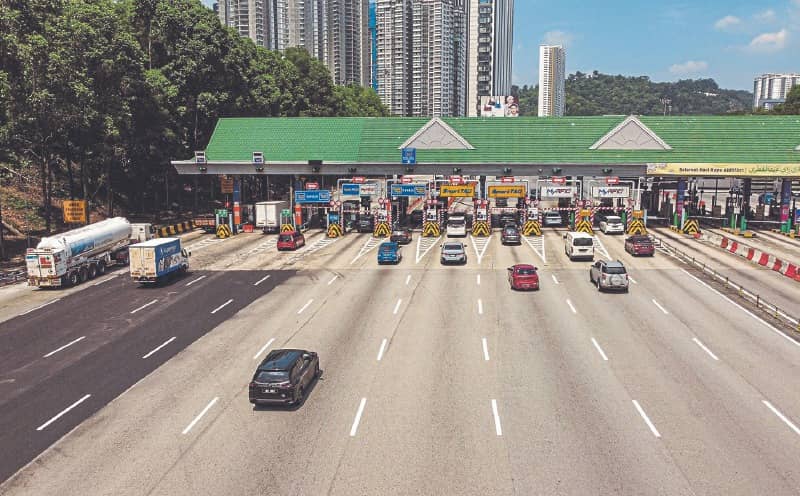
KUALA LUMPUR: The transition towards the Multi-Lane Fast Flow (MLFF) barrier-free tolling system is a step to get highway operators to integrate their toll collection process.
Transport and mobility policy analyst Wan Agyl Wan Hassan said any improvements must address current challenges and ensure different technologies and payment systems can work together as the industry evolves.
"We must ensure that innovations introduced today do not create dependence on a single technology or complicate future integration," he said.
Wan Agyl, who is also MYMobility Vision founder and senior adviser, said achieving this would require common industry standards rather than reliance on a single technology provider.
"Genuine interoperability cannot depend on a single technology provider.
"We need common standards that allow different systems to work together, with cooperation among highway concessionaires, technology providers, payment institutions and authorities."
As Malaysia prepares for MLFF, toll collection systems nationwide will also need to be upgraded to become interoperable.
Projek Lebuhraya Utara-Selatan (PLUS) Malaysia Bhd has come up with one such initiative.
Known as JustGO, the system is an automatic number plate recognition (ANPR) payment platform.
Unlike current toll payment methods, JustGO does not require any devices or radio tags to pass through toll booths.
Motorists just have to register their vehicles' number plate together with their bank account or any financial instrument, such as credit card or e-wallet, to process payments.
Powered by artificial intelligence, the system's cameras will capture registered vehicles every time they pass through a toll booth and deduct the fares accordingly.
The underlying machine-learning model allows its recognition accuracy to improve over time as it processes more data.
The platform has been deployed at 93 toll plazas, covering 966 lanes across the entire PLUS highway network.
It still operates within existing barrier-controlled toll plazas, allowing the technology to function under current tolling arrangements.
[[nid:1586760]]
However, through its #LaneFreedom concept, motorists with active ANPR status can use any supported lane without being restricted to lanes designated for specific payment methods.
Wan Agyl said such improvements should go hand-in-hand with other preparations for MLFF.
"That is why short-term improvements must be implemented alongside MLFF planning.
"We need to find ways to reduce waiting time and improve user safety now, without creating new systems that could ultimately complicate the transition to barrier-free technology."
Beyond addressing current toll limitations, he said JustGO's potential also lay in improving motorists' experience.
"In my view, the true potential of JustGO lies not merely in simplifying toll payments, but in how the technology can help create a smoother travel experience across the country's highway network.
"Imagine users travelling across several highways operated by different concessionaires without having to think about which application or payment method is being used. That is the experience that we should be aiming for."
At the same time, he said the transition to advanced tolling systems must continue to safeguard the interest of highway users.
"Consumer protection must also be a priority. Systems must ensure accurate charges, personal data security, accessible dispute resolution and payment options that do not burden users."
Wan Agyl said the industry's progress should ultimately be judged by the experience delivered to highway users rather than technological sophistication.
KioskNews shows a cleaned-up reading view extracted from the publisher’s page — the original always lives on their site, not ours.