Tougher rules for lead in drinking water would cost too much, Ontario says

The Ontario government’s continued refusal to adopt tough federal guidelines on lead in drinking water — guidelines accepted by eight other provinces — boils down to a question of cost, provincial documents show.
Sign In or Create an Account
Adopting the federal standard “would place substantial financial and implementation burdens on municipalities, potentially costing millions of dollars,” says an internal memo written by senior officials at the Ministry of the Environment, Conservation and Parks on March 17, 2026.
“Additionally, schools and child care centres would face significant expenses.”

Get a dash of perspective along with the trending news of the day in a very readable format.
By signing up you consent to receive the above newsletter from Postmedia Network Inc.
A welcome email is on its way. If you don't see it, please check your junk folder.
The next issue of NP Posted will soon be in your inbox.
We encountered an issue signing you up. Please try again
The provincial documents, obtained by the Investigative Journalism Bureau using freedom of information legislation, provide no financial breakdown of those costs, nor any analysis of potential health benefits or savings if the change were made.
But they do detail internal confusion over what one official called “misleading” statements to the media and the public about the health risks of lead in drinking water.
The effects of lead, a neurotoxin, are known to include reduced IQ and neurodevelopmental problems in children and adolescents, and health risks including cancer, kidney harm and cognitive decline in adults.
The federal safety guideline for lead in water, set by Health Canada in 2019, is five parts per billion (ppb), tougher than Ontario’s safety guideline, which allows up to 10 ppb, i.e. twice as much lead. There is no safe level of lead in drinking water, according to the World Health Organization.
The only other province that has not yet adopted the tougher federal standard is Saskatchewan, which is reviewing its policy.
Lead levels in pipes and plumbing can be a health risk in both public buildings and private dwellings. But there is particular concern about places where children spend time outside the home.
“Children up to six years old are more sensitive to the effects of lead because they are still developing, and their bodies can absorb it more easily than adults. Even small amounts of lead can be harmful to young children, infants and pregnant women,” the Ontario government’s own public website says.
A report earlier this year from the Canadian Environmental Law Association said dozens of tests showed high lead levels at some Ontario school boards, including the Ottawa-Carleton Public School Board, Dufferin-Peel Catholic District School Board; Peel District School Board; Toronto District School Board; and the Ottawa Catholic School Board.
An IJB investigation in 2026 using public data from the Ministry of the Environment analyzed more than 175,000 lead test results in schools between 2019 and 2025. It found that 10 per cent of tests overall exceeded the provincial guideline. More than half the schools tested had at least one test over the federal standard. Six years of lead test results from all Ontario schools and daycares are available through the IJB’s Lead Tracker.
Ontario cabinet ministers and officials have declined to publicly explain why the province has not followed others in adopting the federal guideline. Over the past month, reporters from the IJB tried calling or emailing environment ministry officials more than 40 times. The queries were unanswered. Queries to the office of Environment Minister Todd McCarthy also went unanswered.
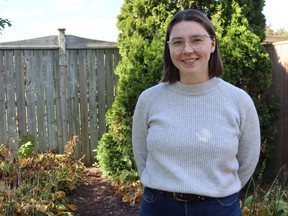
The new internal documents are “the first time I’ve seen them put [their reasons] in writing,” said Julie Mutis, community outreach worker with the Canadian Environmental Law Association.
“If Ontario is one of the only provincial or territorial governments that thinks the cost of protecting children’s health and adopting the five parts-per-billion limit is too high, they should be transparent with parents about what those costs are.”
Ontario’s Ministry of Health did not respond to detailed questions about the health impacts of maintaining the current guideline or the costs of lowering it. An unattributed statement from the ministry said, “Ontario requires operators of schools, private schools and child care centres to flush the plumbing regularly and sample the water to test for lead.”
Queries to the office of Health Minister Sylvia Jones went unanswered.
Michèle Prévost, a professor at Polytechnique Montréal specializing in the study of lead in drinking water, said costs associated with implementing federal guidelines on lead levels in drinking water include servicing or replacing problematic plumbing infrastructure, which is a key source of lead leaching into drinking water.
“But you would think that for municipalities to keep lead levels down in households would be more than desirable,” she said, calling it a “moral obligation.”
Schools have a particularly strong “duty of care” to protect the health of children from lead and its pernicious effects, said Prévost, “because they serve young children, who are the most vulnerable to the effects of lead.”
Education officials with several school boards in Quebec, British Columbia and Manitoba told the IJB they willingly made the shift to the tougher federal standard.
Sébastien Lecompte-Ducharme, spokesperson for the Fédération des centres de services scolaires du Québec, which represents all 61 francophone school boards in the province, said when school boards were asked to meet the stricter federal guideline there was a strong desire to comply.
“I don’t think there was any anger. Just a feeling of urgency,” said Lecompte-Ducharme.
In Ontario, Ottawa has consistently shown some of the highest drinking-water lead levels in schools and daycares, according to the IJB tracker.
Between 2019 and 2025, nearly 31 per cent of tests exceeded the federal standard at the Ottawa-Carleton District School Board — the highest rate of any board in Ontario. Twenty-one per cent of tests at the Ottawa Catholic School Board exceeded the federal standard.
At the Dufferin-Peel Catholic School District, one school with a troubling history of lead test results was St. Francis of Assisi, a Catholic elementary school in Mississauga with about 425 students.
From 2019 to 2025, the school was tested 52 times for lead in its drinking water with 23 of those tests exceeding the federal guideline of five ppb. Fourteen surpassed the provincial limit. In 2024-25 alone, St. Francis of Assisi had seven tests exceeding Ontario’s directive, and nine that were over Health Canada’s safety guideline.
The new internal provincial records also reveal a debate within Ontario’s environment ministry over how it publicly communicates the risk of lead on children.
In a series of responses to media inquiries in March surrounding lead in schools, ministry officials, including senior issues management and media relations advisers Darius Byrne and Lindsay Davidson, said the province’s oversight of lead in schools has ensured “there have been no reported cases of lead poisoning in children due to drinking water in the last 10 years.”
That response was vigorously debated by several ministry officials.
In an email on March 16, Rachel Melzer, a manager at the ministry’s Technical Assessment and Standards Development Branch (TASDB), wrote to her colleagues, “is there some way to flag to (communications) that they should not be recycling that bullet about reported cases of lead poisoning?”
Cumulative impacts of lead at low levels can still have serious health consequences, experts agree. Ontario has no program to test directly for lead in children’s bodies, making it highly unlikely such poisonings would be routinely detected, say experts.
Echoing Melzer’s concerns about public messaging of lead contamination, Olga Lyssiakova, a project coordinator within Melzer’s branch, responded the next day by email expressing frustration that the line had not yet been removed.
“I believe we explained that this one was problematic.”
Despite internal disapproval, the line continued to be circulated to various media outlets by the ministry’s communications team until the afternoon of March 18.
The sentence disappeared after an official of another division within the environment ministry flagged “a risk in suggesting the drinking water testing and mitigation within schools is the reason for no cases of lead poisoning within children.”
The accuracy of the sentence was debated by other officials long after it stopped being used in public messaging.
On March 24, Dr. Stefanie Maedler, an executive assistant in the assistant deputy minister’s office, asked Alexander Wood, then in charge of approving media messaging in his role as an assistant deputy minister, to remove the line for “future media … requests.” He responded: “I need to know whether the statement … is accurate or not. If it is, then it makes sense to keep it in.”
To this, Maedler retorted, “While the statement is correct that no lead poisoning has been identified, it is misleading as poisoning is not the main concern for lead exposure in children.”
The Canadian Environmental Law Association’s Mutis says a lack of lead poisonings “is not the metric of success we should be talking about, especially around children’s exposure. The most common concern, especially when we’re talking about schools, is the irreversible impacts of low levels of lead exposure.”
The Investigative Journalism Bureau (IJB) at the University of Toronto’s Dalla Lana School of Public Health is a collaborative investigative newsroom supported by Postmedia that partners with academics, researchers and journalists while training the next generation of investigative reporters.
Our website is the place for the latest breaking news, exclusive scoops, longreads and provocative commentary. Please bookmark nationalpost.com and sign up for our newsletters here.
Join the Conversation
This website uses cookies to personalize your content (including ads), and allows us to analyze our traffic. Read more about cookies here. By continuing to use our site, you agree to our Terms of Use and Privacy Policy.
KioskNews shows a cleaned-up reading view extracted from the publisher’s page — the original always lives on their site, not ours.