Christopher Nolan Reveals 10 Behind-The-Scenes Secrets About The Odyssey

Senior Music Editor at Screen Rant, Sarah's love of sound and story drive the beat. A globetrotting brand whisperer and award-winning journalist, she’s built cross-cultural narratives around the world—but music has always been her true north. She launched DJ Mag North America, successfully introducing the iconic UK brand to the U.S. market. Previously, she carved a space for EDM inside the pages of VIBE, blending electronic and hip-hop culture long before it was trendy.
Christopher Nolan spent years bringing one of the oldest stories in Western literature to the big screen. The monsters were an obvious challenge. The enormous ships were another matter entirely.
Following its extraordinary theatrical run, The Odyssey arrived on digital, 4K Ultra HD, and Blu-ray on November 17, complete with new behind-the-scenes material. Universal has also announced another theatrical engagement beginning December 11, including IMAX and IMAX 70mm screenings. For audiences who missed the film in its intended format, there's another chance to make that very long journey home with Odysseus.
To coincide with the home release, Nolan and producer Emma Thomas participated in a global press conference that revealed fascinating details about the production. Some concern the enormous practical challenges of filming on open water. Others explain creative decisions that might seem unusual in an adaptation of Homer's ancient Greek epic.
Nolan's movies have always invited close examination, whether he's exploring time, memory, or the science-fiction films that shaped his imagination. Yet The Odyssey presented a different challenge: creating a world whose historical foundations are fragmentary and whose most memorable inhabitants are often impossible.
Perhaps the biggest revelation is how personal the film became for its director. Beneath the spectacle, Nolan found a story about a marriage and two people returning to each other after years apart. That understanding informed decisions as ambitious as the filming locations and as intimate as the movie's most important conversation.
The Odyssey Used Real Viking Ships

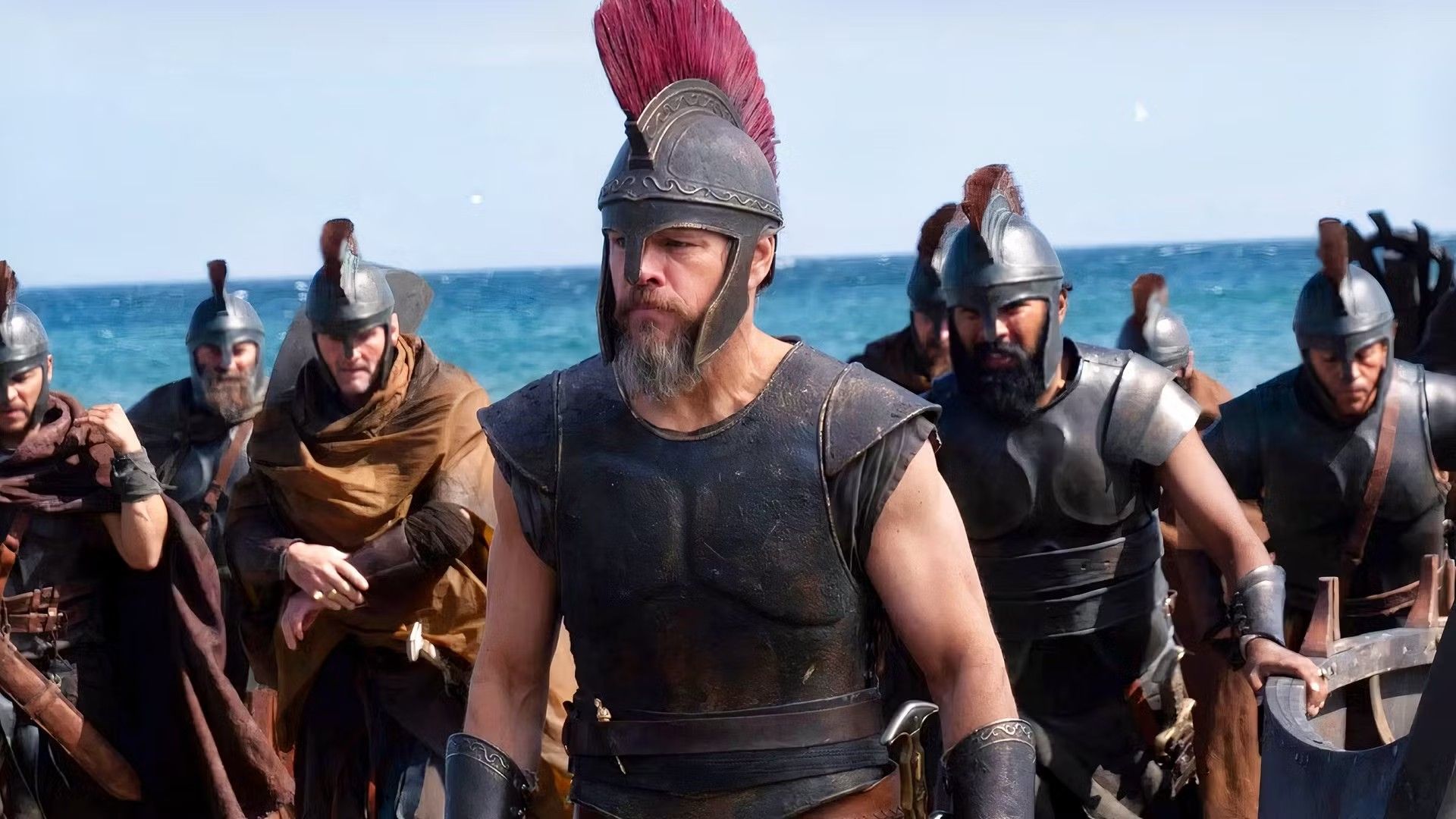
The ships carrying Odysseus and his men across the Mediterranean were real, but they weren't ancient Greek vessels. Nolan explained that historians have no surviving archaeological remains of Mycenaean ships to establish precisely how they were constructed. Looking at ancient artwork, his team noticed similarities between the likely hull shapes and those of Viking longships. That led the production to repurpose authentic Viking vessels for the film.
The most prominent was the Draken, a full-scale Norwegian longship built using historical materials and construction principles. Production designer Ruth De Jong and the marine team adapted it to suggest a vessel from the Bronze Age, even though the Viking era came many centuries later. It was an unusual compromise for a filmmaker so committed to practical authenticity. But Nolan's aim was to create something convincing within the world of the story, even where the historical record offered few definitive answers.
The Boats Were The Biggest Logistical Challenge
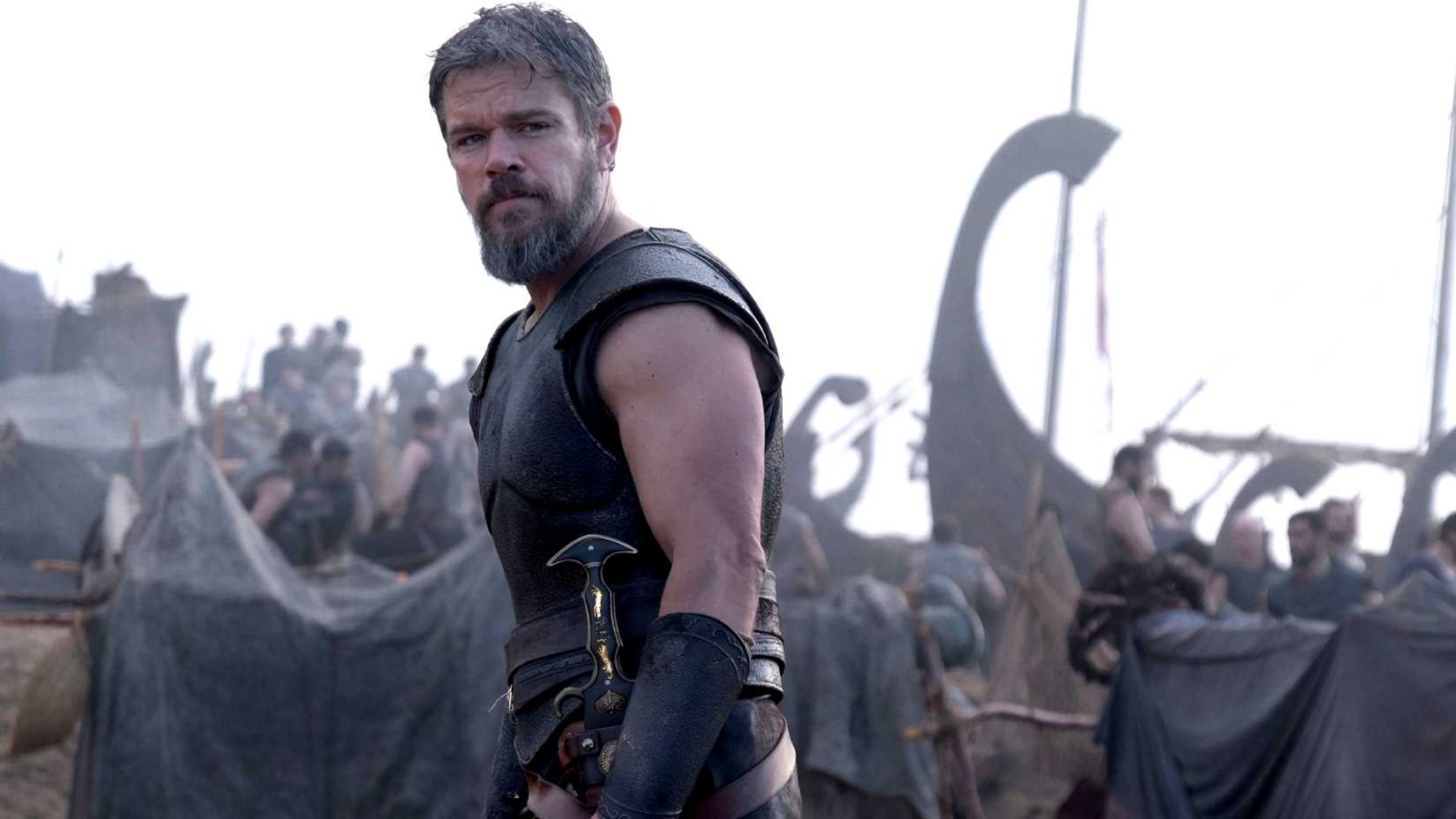
Emma Thomas admitted that the boats were among the most deceptively difficult elements of the entire production. A ship crossing the sea might look straightforward in a screenplay. In practice, moving massive working vessels between filming locations, coordinating marine crews, and getting actors safely aboard created enormous complications.
Thomas recalled that transporting the boats within the production schedule became an ordeal. Nolan, who had already confronted maritime logistics while making Dunkirk, nevertheless found himself surprised by the challenges of staging seemingly simple arrivals and departures.
The boats couldn't approach shallow water in the way a filmmaker might ordinarily imagine. Depending on the location, the vessels sometimes had to remain a considerable distance offshore. Every trip between ship and shore required careful planning.
Nolan wanted audiences to feel the difficulty of Odysseus's journey without becoming distracted by the mechanics of moving everyone around. Achieving that balance required considerable effort behind the camera.
The Movie's Most Unrealistic Moment Had Nothing To Do With Monsters

For all its mythical creatures, Nolan believes one of The Odyssey's least plausible moments involves a surprisingly ordinary action: pushing a ship off a beach. The director explained that the Draken weighed approximately 100 tons. Once a vessel of that size ran aground on sand, there was no realistic way for its crew to simply push it back into the water. They would have to wait for the tide to rise.
That presented a problem for scenes in which Odysseus and his men needed to make a hurried escape. The danger might be an approaching Cyclops, but the immediate obstacle was considerably less hard sci-fi. Nolan knew that most viewers would never question the practicality of the maneuver. He nevertheless found it amusing that the movie's most questionable physical feat might be something audiences barely noticed.
Nolan Sees The Odyssey As A Middle-Aged Love Story

Considering the scale of The Odyssey, Nolan's description of its emotional center is unexpectedly modest. While adapting Homer's poem, the director came to see it fundamentally as a middle-aged love story. Odysseus's return to Penelope mattered more to him than the spectacle surrounding their separation.
Their reunion represents two people meeting after years of radically different experiences. Nolan was especially drawn to the maturity of their relationship and the absence of judgment in their eventual conversation. Thomas agreed that the film's human dimension became increasingly powerful as the production developed. Beneath the monsters and warfare was a family whose greatest desire was simply to be reunited.
For Nolan, this realization changed the emphasis of the entire adaptation. The journey remained essential, but it was the destination—and the person waiting there—that gave it meaning.
Iceland Was Used To Create The Underworld

The production traveled across several countries, but one of its most striking locations was Iceland, which provided the setting for Odysseus's journey into the Underworld. Nolan wanted the landscapes to become increasingly unfamiliar as his protagonist traveled farther from home. Iceland offered a dramatic visual departure from the Mediterranean environments associated with Ithaca.
Its volcanic terrain and otherworldly atmosphere helped suggest a realm beyond ordinary human experience. Rather than relying entirely on constructed scenery, Nolan used the natural environment to establish the sense of estrangement that the story required. The choice also illustrates the film's approach to fantasy. Its most extraordinary settings were frequently rooted in real places, with the landscape itself carrying much of the imaginative burden.
The Filming Locations Were Chosen For Emotion, Not Historical Accuracy

Nolan was candid about the fact that The Odyssey was not designed as a precise geographical reconstruction of Odysseus's mythical route. He explained that scholars have debated the locations described in Homer's poem for centuries. Even places bearing familiar names today cannot necessarily be identified with certainty as the locations imagined in the ancient text.
Instead, Nolan arranged the production's landscapes around the audience's emotional experience. Sicily provided the Mediterranean atmosphere associated with home, while Morocco offered a contrasting setting for Troy. Scotland and Iceland became progressively more unfamiliar environments, reflecting the growing distance between Odysseus and Ithaca.
The director wanted viewers to experience that geographical disorientation alongside the characters. Historical accuracy informed the production, but emotional clarity ultimately determined where the cameras went.
Nolan Was Nervous About Filming Odysseus And Penelope's Reunion

Despite directing some of modern cinema's most technically demanding sequences, Nolan admitted that the reunion between Odysseus and Penelope was a scene he approached with considerable anxiety. He delayed writing it because he understood how much depended on getting the interaction right. After such an extraordinary journey, the conversation between husband and wife needed to justify everything that had preceded it.
The pressure continued when it came time to film the scene with Matt Damon and Anne Hathaway. Nolan was particularly conscious of capturing such intimate emotions with IMAX cameras, a format more readily associated with overwhelming spectacle. He described the reunion as the heart of his interpretation. The challenge was allowing the characters to confront their long separation without reducing their relationship to an easy resolution.
The Odyssey Has No Deleted Scenes On Its Home Release
Anyone hoping for a collection of abandoned scenes on The Odyssey's Blu-ray will be disappointed. Nolan explained that he rarely includes deleted material with his home releases. He recalled Insomnia as the notable exception, having included two deleted scenes among its extras.
His preference comes from working as both writer and director. Once he begins revising a screenplay, Nolan increasingly considers the practical demands of shooting what he has written. Because every filming day is expensive and difficult, he tries to eliminate unnecessary material before production begins. As he joked during the press conference, the deleted scenes are more likely to be found crumpled in his wastebasket than preserved on film. The home release does, however, contain extensive behind-the-scenes features exploring the production, which Nolan said he was extremely pleased with.
Nolan Researched The Real History Behind The Trojan War
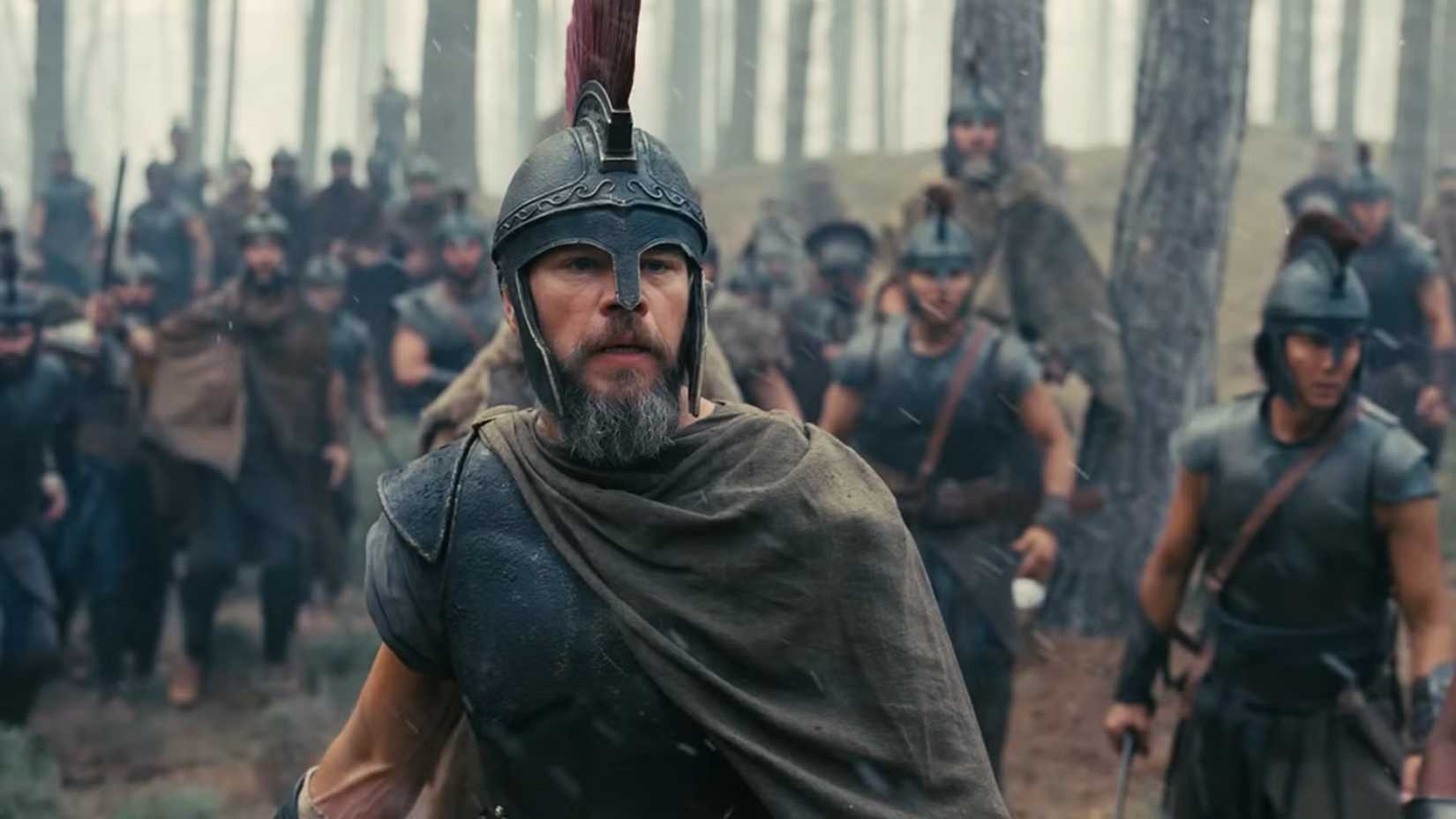
Although The Odyssey is rooted in mythology, Nolan spent considerable time examining what historians actually know about the Bronze Age. His research included archaeological sites, museums, and surviving evidence from the period associated with the Trojan War. Yet he found the historical record surprisingly incomplete. Nolan discussed the work of Heinrich Schliemann, whose excavations helped renew interest in Troy's possible historical foundations, while acknowledging the controversies surrounding the archaeologist's methods and conclusions.
The director was particularly fascinated by the centuries separating the world described in the poem from the era in which Homer is believed to have composed it. That gap helped inform the film's treatment of historical memory. Civilizations disappear, languages are lost, and stories survive long after the evidence needed to verify them has vanished. For Nolan, it was the uncertainty that made the adaptation more compelling. He was creating a world from fragments, much as generations of historians have attempted to reconstruct the distant past.
The Odyssey Is Returning To IMAX And 70mm On December 11

Despite the arrival of The Odyssey on home entertainment formats, Nolan isn't finished with the theatrical experience. The director confirmed that the film will return to IMAX and 70mm screens on December 11, giving audiences another opportunity to see it in the formats for which it was designed.
Nolan explained that the original IMAX film and 70mm prints continued attracting audiences for months. Their popularity demonstrated that demand remained even after the initial theatrical release. He also discussed the importance of longer theatrical windows, arguing that films benefit from having more time to build relationships with viewers.
For a filmmaker who spends years preparing each project, seeing a movie disappear from cinemas after only a few weeks would be frustrating. The Odyssey's extended theatrical life has been an especially gratifying experience for Nolan, who continues to champion large-format filmmaking. The December screenings offer a fitting final chapter to a production defined by its enormous ambition—and a reminder that some cinematic journeys are worth taking more than once.
KioskNews shows a cleaned-up reading view extracted from the publisher’s page — the original always lives on their site, not ours.