Amritpal Singh’s party seeks wider appeal, but Khalistan remains a faultline
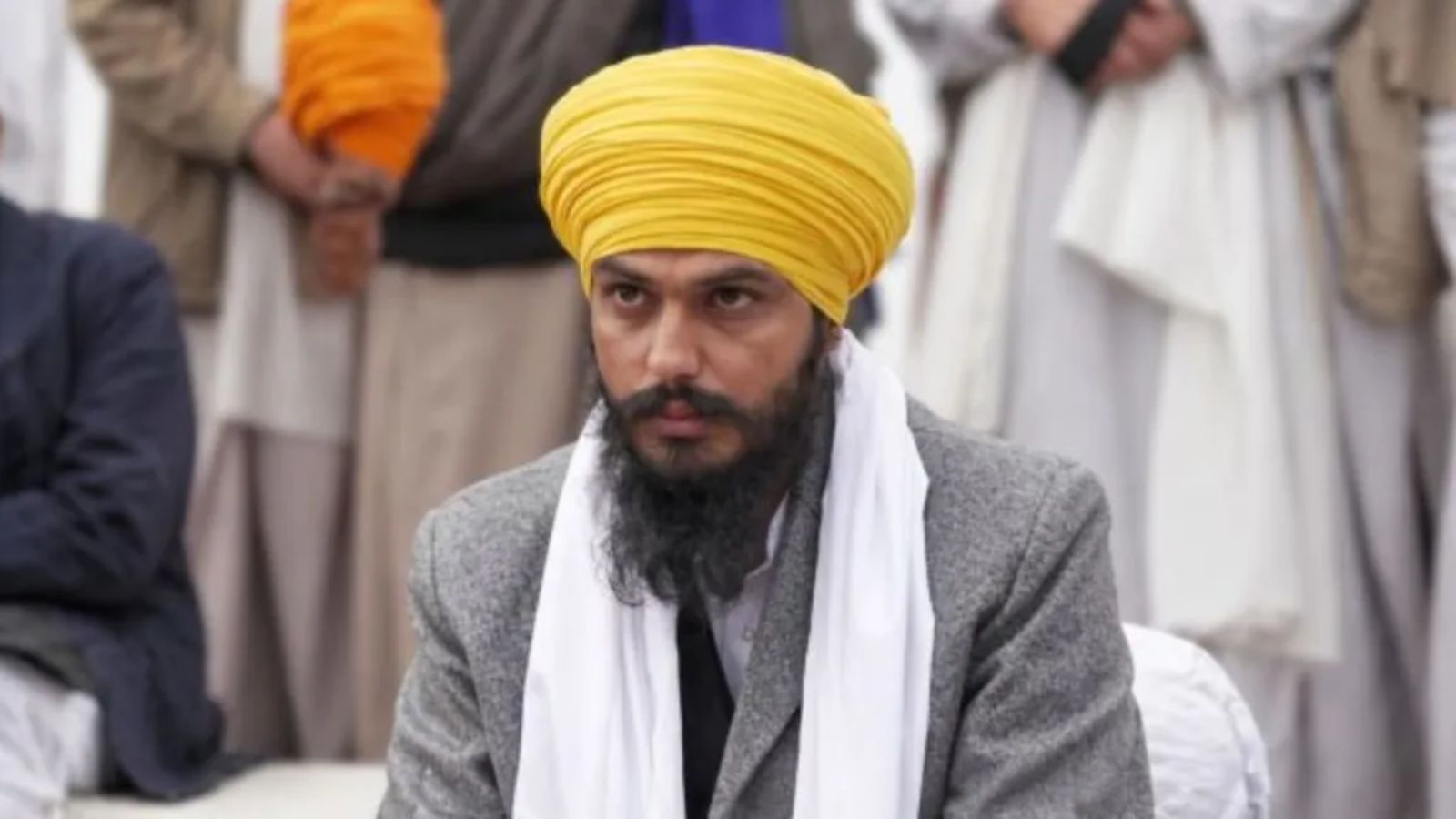
The Akali Dal Waris Punjab De is facing a political challenge of its own making on how to broaden its appeal while accommodating a constituency in which support for Khalistan remains visible.
The episode highlights a contradiction the party has sought to manage since its formation in January 2025, months after its chief and Khadoor Sahib MP Amritpal Singh won the 2024 Lok Sabha polls as an Independent.
While Amritpal, who is currently lodged in Dibrugarh Jail in connection with a police station attack case, has been unapologetic about his support for Khalistan, the party’s mainstream political discourse has largely focused on drugs and other issues.
While Amritpal’s position on Khalistan was well-known, tension surfaced soon after his election. In July 2024, his mother, Balwinder Kaur, said he was not a supporter of Khalistan. Amritpal subsequently issued a statement contradicting her.
Niranjan’s entry into the party briefly exposed the same fault line. Soon after joining, the former ED official said in several interviews that he rejected Khalistan and that there was no place in the party for anything outside the Constitution. The party did not publicly distance itself from his remarks, but Niranjan soon announced his departure, while wishing the party well.
Khalistan, the political issue
Story continues below this ad
The experience of the Shiromani Akali Dal (Amritsar) offers a wider political view with regard to the issue. The party, led by Simranjit Singh Mann, has consistently advocated Khalistan and has contested elections on the issue. Mann has been elected to Parliament three times, most recently from Sangrur in a 2022 bypoll, but the party has struggled to expand beyond a limited electoral base, particularly in Assembly elections.
For the WPD, the question is complicated further by its own political imagery. Its campaign material and rallies continue to feature Jarnail Singh Bhindranwale, Sikh militants and human rights activist Jaswant Singh Khalra. At the same time, references to Bhindranwale are not confined to parties associated with the Khalistan movement. The BJP has maintained relations with the Damdami Taksal, which reveres Bhindranwale, while leaders of the Shiromani Akali Dal (SAD) have also referred to him respectfully in speeches.
Amritpal’s Lok Sabha victory showed that voters were willing to elect him despite his known position on Khalistan. But Niranjan’s departure has highlighted the difficulty of reconciling that position with the party’s broader attempt to attract leaders and supporters with different views.
The WPD’s stance
Gangveer Singh Rathore, a Hindu leader and WPD spokesperson, defended the party’s use of the term “Khalsa Raj” and said it was compatible with the Constitution and that party leaders use the phrase as a synonym for Khalistan.
Story continues below this ad
“Raj Karega Khalsa”, he noted, has been part of Sikh prayers for centuries. Rathore argued that the idea of Khalsa Raj had been “criminalised” after 1947.
Rathore said he regarded Khalsa Raj as a legitimate historical concept centred on welfare and just governance. He pointed to the rule of Maharaja Ranjit Singh, under which Hindus and Muslims lived alongside Sikhs, as an example of what he described as a shared Punjabi experience.
Rathore also rejected the suggestion that Khalsa Raj was inherently incompatible with the Constitution. The party, he said, could operate only within the constitutional framework, while those who saw an inherent conflict between the two concepts had, in his view, a limited understanding of Punjab’s history.
The WPD leader also invoked BSP founder Kanshi Ram’s reference to the Guru Granth Sahib as a “manifesto” of the people and drew a parallel between its vision of Begampura and the party’s conception of Khalsa Raj.
Story continues below this ad
Rathore said the WPD wanted to bring people with different ideologies into its fold, but added that they would have to join with “an open heart” and that hatred towards other ideologies would not be allowed.
KioskNews shows a cleaned-up reading view extracted from the publisher’s page — the original always lives on their site, not ours.