Trump's $14 billion 'bargaining chip': Taiwan arms sale looms over Xi summit
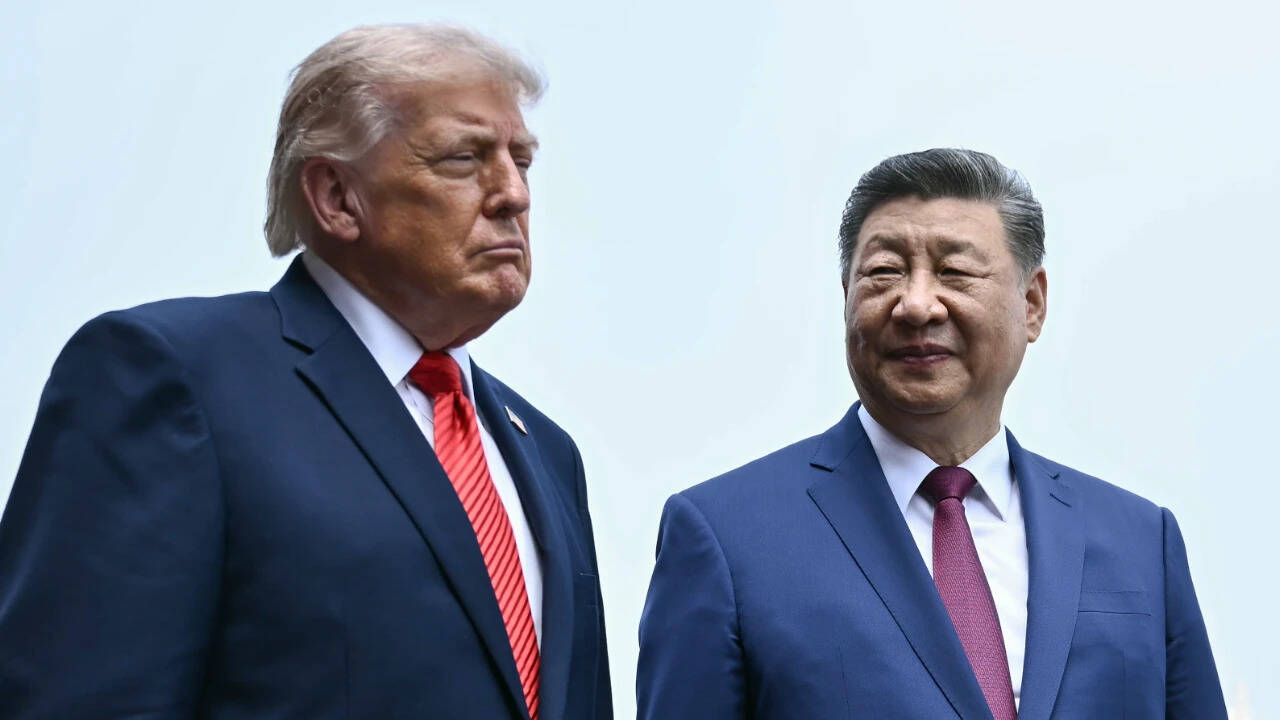
File photo: China's President Xi Jinping, right, and US President Donald Trump
A proposed $14 billion US arms sale to Taiwan is emerging as one of the most sensitive issues hanging over US President Donald Trump’s meeting with Chinese President Xi Jinping this week, with Beijing pressing Washington to keep the deal on hold while Taipei tries to make the case that its security is in US interests.According to a report by the New York Times, Xi is expected to push Trump to continue delaying the package, which includes missiles, anti-drone weapons and air-defence systems. Trump has already held off approving the sale and previously described the deal as a potential “negotiating chip” with China.China claims Taiwan as part of its territory and has consistently opposed US arms sales to the self-governed island.
The issue has become particularly sensitive ahead of the Trump-Xi summit in Washington, where the two leaders are expected to discuss trade, technology and other points of friction.
Why Taiwan arms are so sensitive
Taiwan relies heavily on US military support as it seeks to strengthen its defences against potential military pressure from Beijing. Xi warned Trump during their previous meeting that mishandling Taiwan could have serious consequences for US-China relations.
Xin Qiang, director of the Center for Taiwan Studies at Fudan University, told NYT that Taiwan was the issue most capable of causing relations between Washington and Beijing to deteriorate sharply. He said securing a continued delay in US arms sales could therefore be one of Beijing’s most important objectives.Trump, meanwhile, has treated the weapons package as leverage in negotiations with China. After his May meeting with Xi in Beijing, Trump called the proposed sale a “very good negotiating chip” for the United States.Beijing could also have other ways of signalling its displeasure if Washington approves the sale. Xi could potentially threaten tighter restrictions on Chinese rare-earth exports or indicate that he might skip the Group of 20 summit in Miami in December, which Trump is due to host.
Taiwan worries about Trump's stance
For Taiwan President Lai Ching-te, the continued delay is creating a political problem. Lai has pushed for higher defence spending and greater purchases of US weapons, partly in response to pressure from the Trump administration for allies and partners to contribute more to their own defence.Ryan Hass, a former China director at the US National Security Council and now a Brookings Institution fellow, told NYT that Beijing's strategy could be to prolong the process so that China can improve its military position faster than Taiwan can acquire new capabilities.At the same time, the broader US-Taiwan security relationship remains active. Taiwan's defence minister Wellington Koo recently indicated that American military advisers had become more visible during the island's annual Han Kuang exercises.Chen Ming-chi, a deputy Taiwanese foreign minister handling relations with the US, told The New York Times that American officials understood the importance of continued arms sales to Taiwan.
Trump has changed his approach to China
The current uncertainty marks a shift from Trump's first term, when his administration approved about $18 billion in arms sales to Taiwan.In his second term, Trump has placed greater emphasis on maintaining pragmatic ties with Beijing.
His administration has also reduced public references to Taiwan, with officials including defence secretary Pete Hegseth avoiding the island in some major speeches, NYT analysed.The arms issue is therefore arriving at a particularly delicate moment. Trump and Xi are scheduled to meet in Washington this week, with Taiwan expected to be one of several issues competing for attention alongside trade, rare earths, artificial intelligence and the war in Iran.
KioskNews shows a cleaned-up reading view extracted from the publisher’s page — the original always lives on their site, not ours.