Young Americans are key for the US to better understand China
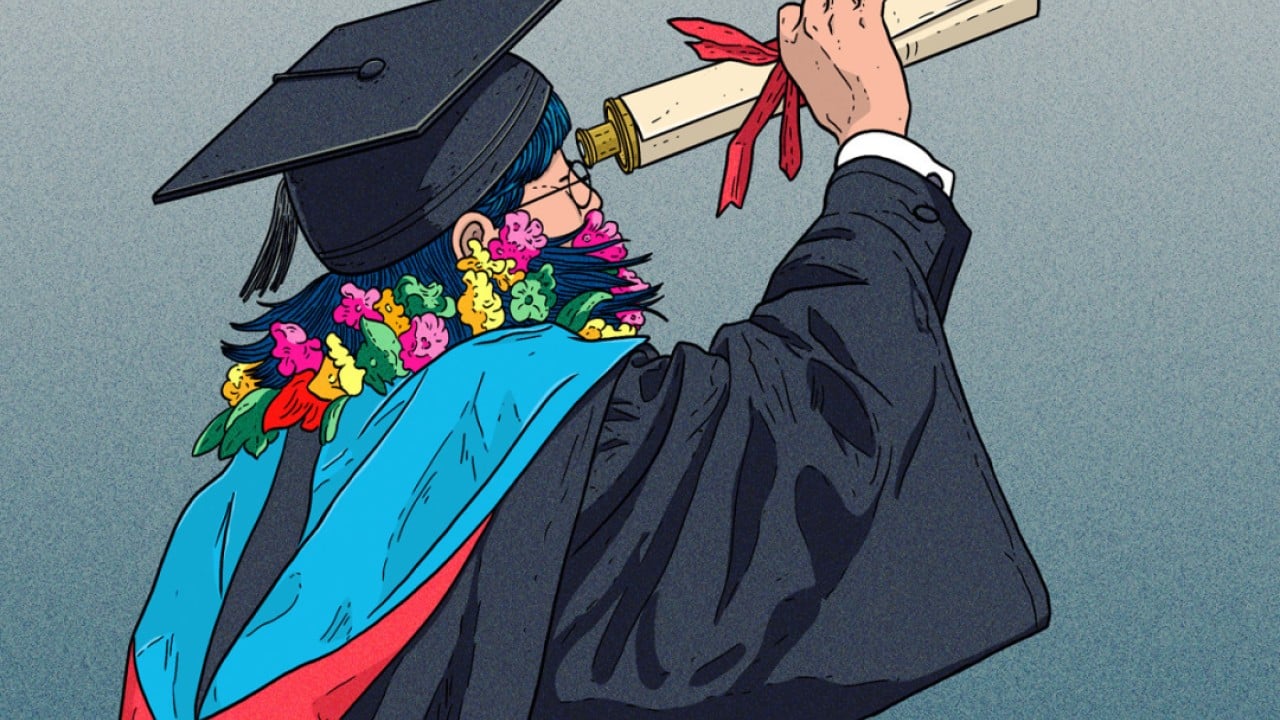
When US President Donald Trump and Chinese President Xi Jinping meet again in Shenzhen next month, and then in Miami in December, the world will watch for signs of progress on trade, technology, security and other contentious issues. Such high-level diplomacy is indispensable.
But the future of the US-China relationship also depends on something less visible: whether their people, especially the young, can still understand one another.
As Washington and Beijing navigate intensifying strategic competition, academic exchanges and opportunities for grass-roots engagement have come under unprecedented strain. This is far more than a niche educational concern.
It directly threatens America’s capacity to comprehend China, while quietly eroding the guard rails required for a stable bilateral relationship.
The decline in American students studying in China illustrates the problem. Numbers peaked at nearly 15,000 in 2011, fell to just 211 during the pandemic and have only recovered to about 880 in 2024, according to former US ambassador Nicholas Burns. The pandemic caused the collapse, but a deterioration in bilateral relations has made recovery harder.
Compounding the problem are escalating national security anxieties. The US Justice Department’s China Initiative, launched in 2018 and later discontinued, heightened scrutiny of researchers with ties to China and fuelled lasting concerns over racial profiling.
08:30
Why are more Chinese scientists leaving the US to return to China?
More recent legislative investigations and funding restrictions involving American universities have only deepened the uncertainty surrounding US-China academic collaboration.
The consequences extend well beyond university campuses. If fewer Americans study in China, the United States risks losing a generation of people equipped to interpret Chinese politics, society and policy. In an analysis released in September, the Council on Foreign Relations warned that America’s capacity to train China specialists is eroding just as the need for such expertise grows.
China, too, faces the costs of this deteriorating climate. Chinese students and scholars encounter growing uncertainty over whether academic engagement with American institutions can proceed without becoming entangled in geopolitical disputes.
This month, the Trump administration launched investigations into nine universities, including Harvard, Yale and the Massachusetts Institute of Technology, over alleged visa fraud, with officials citing concerns involving Chinese scholars and the Chinese government.
There are, however, reasons not to surrender to this pessimism. At the recent summit in Washington, Xi announced a plan to invite 100,000 young Americans to China over the next five years. This expands on the November 2023 initiative to bring 50,000 young Americans to the mainland – a target Chinese officials said was met two-and-a-half years ahead of schedule.
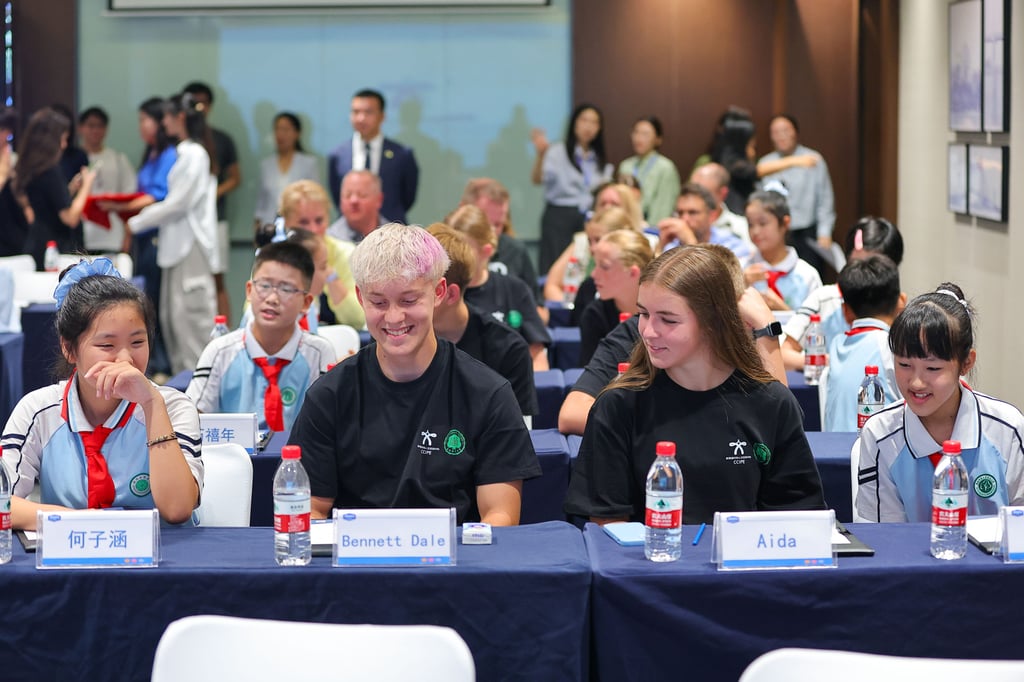
That these exchanges continue to grow suggests there is still substantial interest in direct engagement, even as the broader relationship remains difficult.
SCMP Plus is a new premium news platform that gives you an
all-inclusive edge to stay ahead on China news.
To access our exclusive content you’ll need to subscribe.
Already a subscriber?
LOG IN
US-China joint academic programmes continue to attract students. Both the Schwarzman Scholars programme at Tsinghua University and at Duke Kunshan University received a record number of applications this year, with the latter also welcoming its most diverse class in August. Their experience shows international education can remain valuable even when governments disagree.
China’s broader opening to international visitors has created further opportunities. Visa-free entry for eligible travellers has made visiting China easier for many nationalities, including Americans under applicable arrangements. Social media has also allowed young visitors to share experiences that differ from the images of China commonly encountered in their home countries.
Attitudes may be shifting. A September Pew Research Centre survey revealed that Americans under 50 view China notably more warmly than their older counterparts do, though overall sentiment remains negative.
08:22
Why ‘becoming Chinese’ has gone viral among Americans despite US-China tensions
Younger Americans have come of age in a world where China’s economic, technological and geopolitical weight is a foundational reality. Their world view is not anchored to the rigid expectations that defined earlier generations’ encounters with China’s rise.
For many veteran American sinologists, their formative lens was shaped by China’s opening up under Deng Xiaoping – an era when many in the West hoped economic integration would ring in political liberalisation. China’s subsequent, distinct path challenged those expectations, fostering deep establishment disillusionment and mistrust.
The lesson is not that older experts have failed, or that younger people will automatically find common ground. It is that each generation needs the opportunity to encounter China as it actually is, rather than through inherited assumptions. Younger Americans, with fewer preconceptions, could be the generation that breaks through the mistrust built up over decades.
Xi cites Thucydides trap to Trump during summit
To realise this, however, requires shared responsibility. Beijing must ensure its academic engagements are predictable and transparent, and allow foreign students the freedom to experience authentic Chinese society beyond a curated state narrative.
Washington, for its part, must carefully distinguish sensitive military research from ordinary educational pursuit, avoiding the trap of treating nationality as a proxy for espionage risk. Both capitals should expand reciprocal scholarships, fund area studies and lower the financial barriers to studying abroad.
The coming meetings between Trump and Xi in Shenzhen and Miami can help stabilise the relationship and establish the political conditions for cooperation. But leaders cannot manufacture mutual understanding by themselves. That requires sustained contact between people who will live with the consequences of today’s decisions long after the current leaders have left office.
Young Americans and Chinese will not resolve every dispute between Washington and Beijing, but they can ensure competition does not define their relationship. Through education, shared research and lasting friendships, they can challenge stereotypes, foster mutual understanding and prevent mistrust from escalating into conflict.
Sometimes the road to a better relationship between two great powers begins not in a summit room, but in the eyes of the next generation.
KioskNews shows a cleaned-up reading view extracted from the publisher’s page — the original always lives on their site, not ours.