Rubio hails ‘great’ meeting with Jaishankar, UAE foreign minister on regional energy security
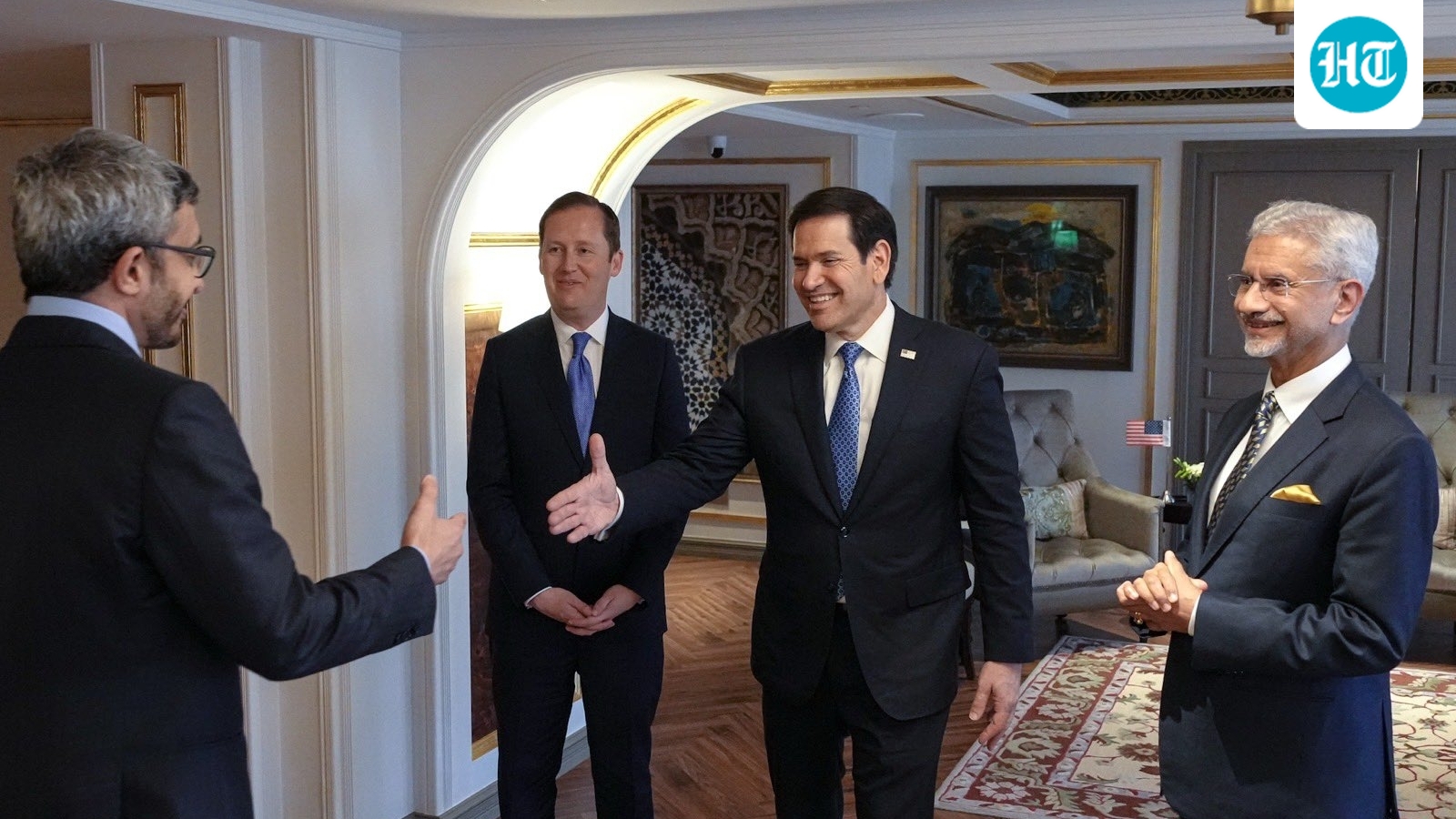
US secretary of state Marco Rubio, who is in India on a three-day visit, held a trilateral meeting with India's minister of external affairs S Jaishankar and UAE's foreign minister Sheikh Abdullah bin Zayed Al Nahyan on Tuesday. Rubio later said he held a ‘great’ meeting with the two leaders where they discussed regional energy security and way ahead on shared economic priorities.
Track live updates on Day 1 of Rubio's India visit
The UAE leader arrived in India for a two-day visit on Monday evening, following which he attended the meeting with Rubio and Jaishankar on Tuesday.
Rubio also expressed support for India's efforts to diversify its energy portfolio despite its continued purchases of Russian crude oil.
He said, “I think what India has expressed repeatedly is its desire to diversify its energy portfolio, which is a smart thing to do. It's not easy to do that from one day to the next. I think they've made some substantial progress in that regard, and we're happy to see that.”
On India's purchase of Russian oil, Rubio said, "But in the end, it's not just about Russian oil; it's about India's desire to diversify, and we think we can be a source of some of its energy inputs. We've discussed Venezuela and other countries, and I think it's in our interest to have strong allies with diverse energy portfolios."
Rubio's India visit
Rubio arrived in Mumbai on Tuesday for his second visit to India this year. India and the US are expected to explore ways to strengthen cooperation in key areas, including defence, security, technology and critical minerals.
Also read: 'Very, very close, some items left': Marco Rubio on India-US trade deal
The US leader also backed the idea of talks between the United States, Russia and China on arms control, saying dialogue among the three major nuclear powers would be beneficial for global peace.
Speaking in Mumbai, Rubio said US President Donald Trump had expressed openness to discussions at the leaders’ level.
He said communication was essential to diplomacy, even between countries with strong disagreements, but added that he was unsure whether China was willing to participate. Rubio said Beijing had historically maintained that it would discuss arms control only after catching up with other nuclear powers.
KioskNews shows a cleaned-up reading view extracted from the publisher’s page — the original always lives on their site, not ours.