US midterms could trigger a debt ceiling showdown worse than 2011
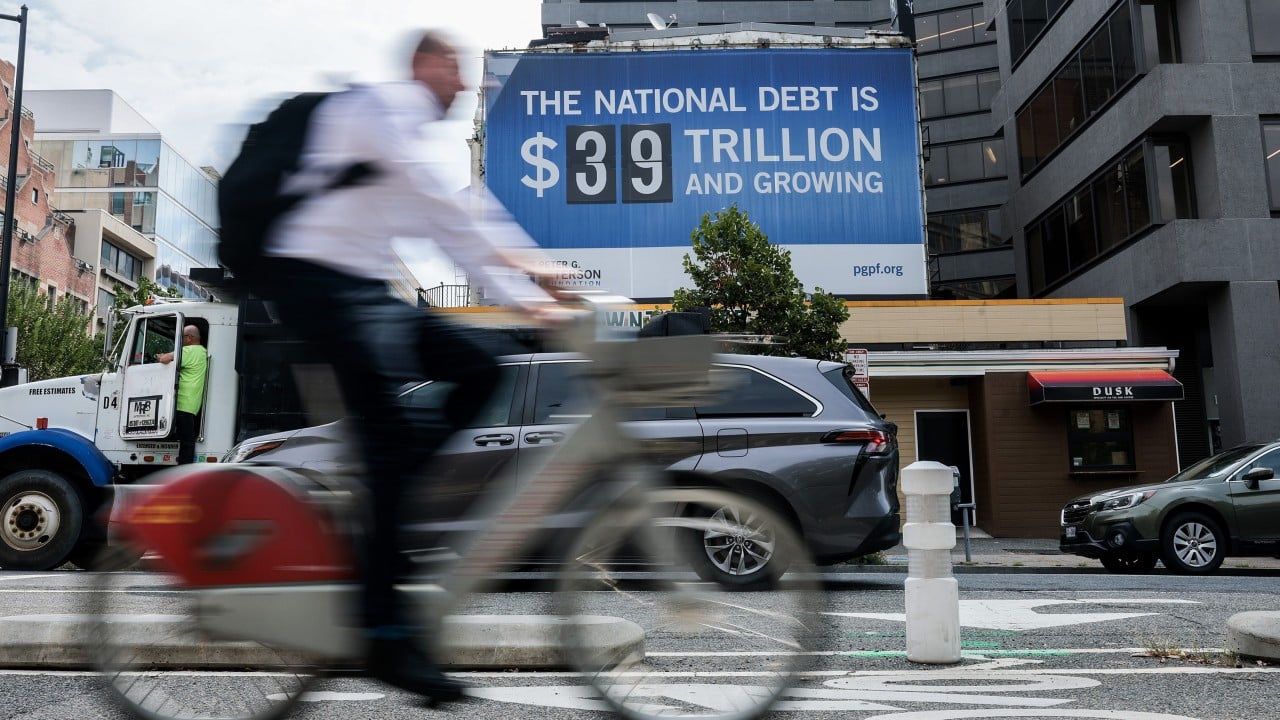
Some readers, especially non-Americans, might wonder what the recurring squabbles in Washington over the debt ceiling and government shutdowns mean. That’s understandable. In virtually every country in the world, when the legislature approves a budget that results in net new borrowing of, say, 50 billion euros (US$55.8 billion), the government is thereby authorised to take on that debt to finance the budget.
Not so in the United States. There, the budget and borrowing authorisation are two separate legislative processes. Congress approves the budget in one decision, and in a second it sets a ceiling up to which the administration is entitled to borrow.
Don’t ask me what the point of this convoluted and slightly illogical process is; that’s just the way it is. Before 1917, it was even worse: Congress had to approve every instance of government borrowing separately. Traditionally, raising the debt ceiling has happened quietly. Since World War II, the debt ceiling has been raised over a hundred times, usually without any fuss.
But with the increasing polarisation in Washington, as well as society at large, the debt ceiling has increasingly become a political weapon when the House of Representatives and the president belong to different parties. That is when things can get dangerous. A persistent refusal by the House majority to raise the debt ceiling could, in the worst-case scenario, result in a technical default by the US federal government.
Things were particularly tight in the summer of 2011. At that time, a certain Barack Obama was the occupant of the White House. Meanwhile, the Republicans won a majority in the House of Representatives in the 2010 midterm elections.
The “Tea Party” movement, which was launched in 2009, was the first movement within the modern Republican Party geared towards conflict and disruption in Congress. With the debt ceiling, they had discovered an effective way to attack and impede the despised Obama. The president offered tax increases to help reduce the deficit, but the Tea Party rejected that. It wanted to force Obama to cut spending programmes that were close to Democrats’ hearts.
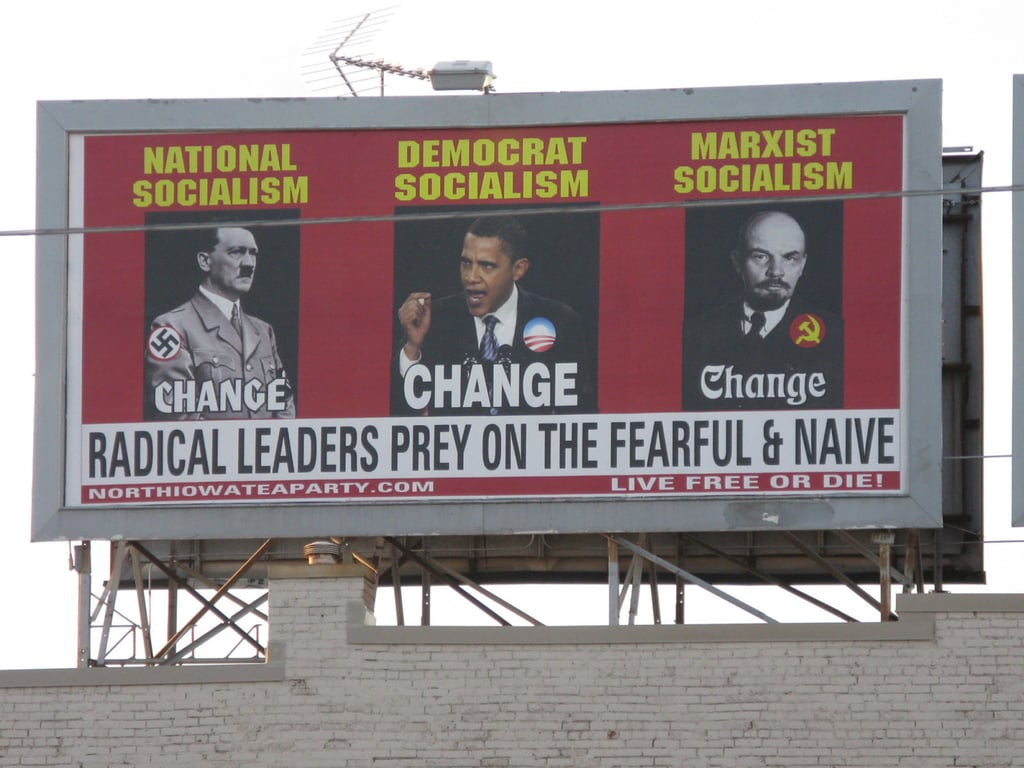
This showdown came very close to a default. It was only a matter of days before the government would no longer be able to service the US debt. Obama eventually gave in, and the House of Representatives raised the debt ceiling. The Republicans won. Congress held the upper hand here.
I vividly remember this episode because it coincided with the time I was working at the rating agency Standard & Poor’s. I was part of the committee that downgraded the US credit rating from top-notch AAA to AA+ for the first time. The risk of a crisis triggered by political polarisation was simply too high in the view of the committee. Getting so close to a default because of a seemingly insurmountable political conflict is no way to run a country.
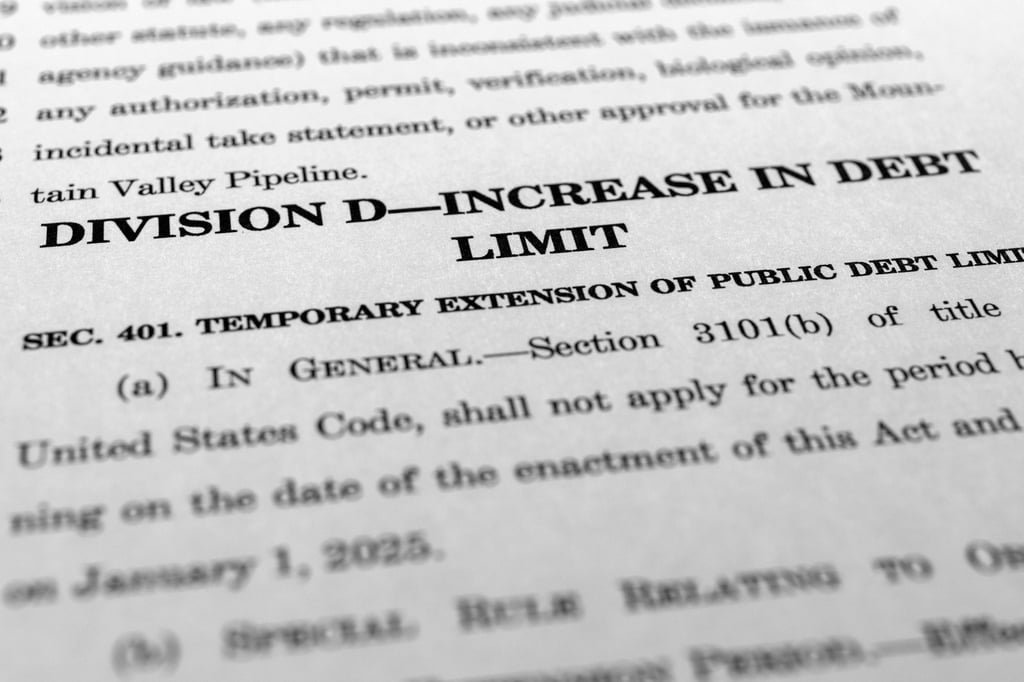
Currently, the authorised debt ceiling stands at US$41.1 trillion. At the current rate of new borrowing, this threshold is likely to be reached soon. You might recall that the US national debt surpassed the US$40 trillion mark in August.
If the Democrats win a majority in the House of Representatives in the midterm elections in early November, a fresh conflict over the debt ceiling seems inevitable. That is, unless the Republican majority raises the debt limit significantly once more before the new Congress convenes in January to last until the end of US President Donald Trump’s term.
If a conflict does arise, it is likely to unfold even more dramatically than in 2011. The hostilities between the two major US parties are more intense than they were during Obama’s presidency, and so far Trump has not shown much of an inclination towards reaching across the aisle to forge compromise. It is doubtful that a Democratic majority would be able to constructively work with a president who has repeatedly insulted them and called them radical extremists, jihadists and terrorists.
We must hope there are still enough politicians in Congress who will put the national interest ahead of partisan tactics. A US default would truly be the worst-case scenario for capital markets. US Treasury bonds have served as a safe haven throughout many financial crises, but if this supposedly safe haven is awash with sea mines and serves as the origin of trouble, we can only speculate about the dire consequences.
Many securities are priced against the benchmark of US government bonds. If that benchmark was in default because of an unresolved debt ceiling conflict, financial mayhem is almost certain to follow. Compared with the ensuing financial crisis that would engulf us if the technical default persisted, the current concerns about higher bond rates at the long end of the curve will appear in hindsight like a leisurely walk in the park.
That crisis will not be confined to the US, either. Much like the 2008 global financial crisis that morphed into the euro zone debt crisis, Europe would not be spared. Let’s keep our fingers crossed that cool heads prevail in Washington.
KioskNews shows a cleaned-up reading view extracted from the publisher’s page — the original always lives on their site, not ours.