Why some kids line up toys instead of playing, per psychology
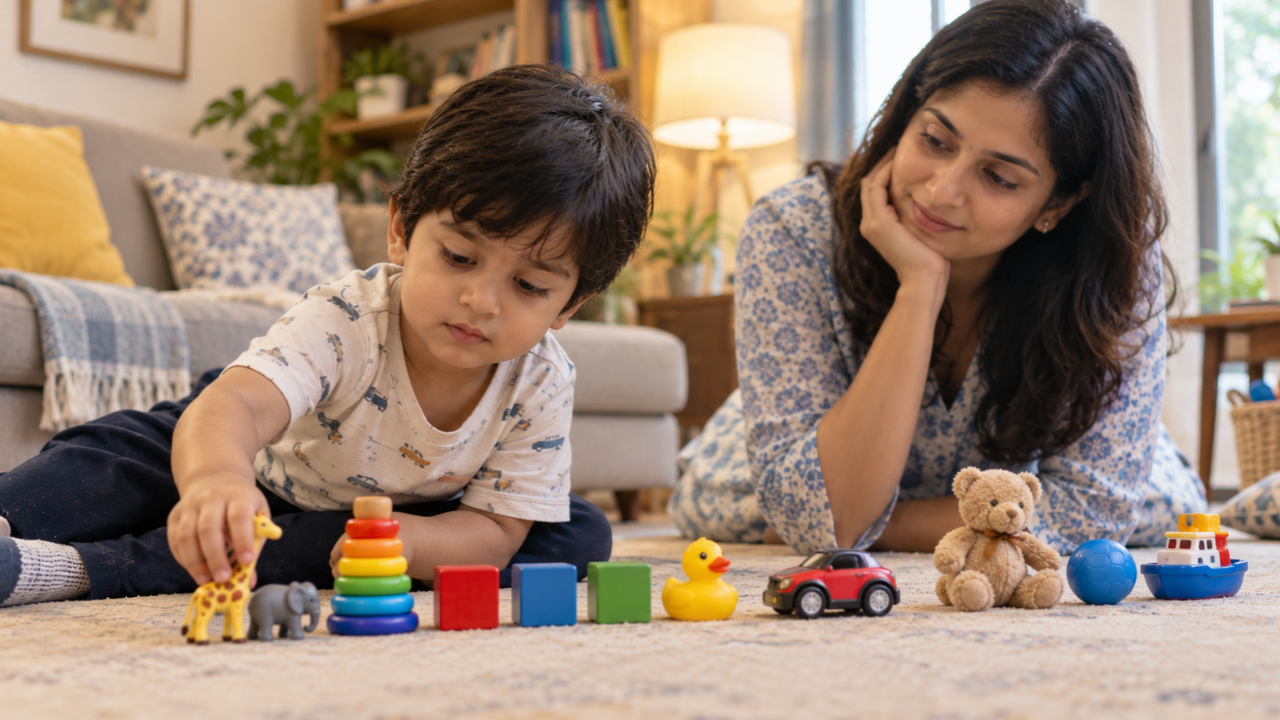
Some toddlers line up toys as a way of exploring patterns, order and repetition.
There is a particular kind of toddler play that can leave parents wondering what exactly is going on.Instead of making the toy cars race across the floor, a child places them in a perfectly straight line.
Instead of feeding the toy animals, they arrange them by size. Blocks are stacked in the same sequence, crayons are placed carefully next to one another and, if someone moves one object, the child may quietly put it back where it was.
4 Oct 2026 | 12:50
What do you do with all the drawings your child brings home from school? How do you preserve them?
To an adult, it may look less like “playing” and more like organising.But developmental psychology suggests that the important question is not simply why is my child lining up toys? It is what the child is doing before, during and after the arrangement.For some toddlers, arranging objects is simply one way of exploring the physical world. Young children naturally repeat actions, experiment with objects and discover patterns. Research on early object play describes exploratory play as involving simple, sometimes repetitive actions through which babies and toddlers learn about how objects behave and relate to one another.As play develops, children generally move towards more functional ways of using objects - pushing a car, pretending to drink from a cup or feeding a doll - and eventually towards symbolic or pretend play.
That means a toddler who spends some time lining up cars is not necessarily doing anything unusual.
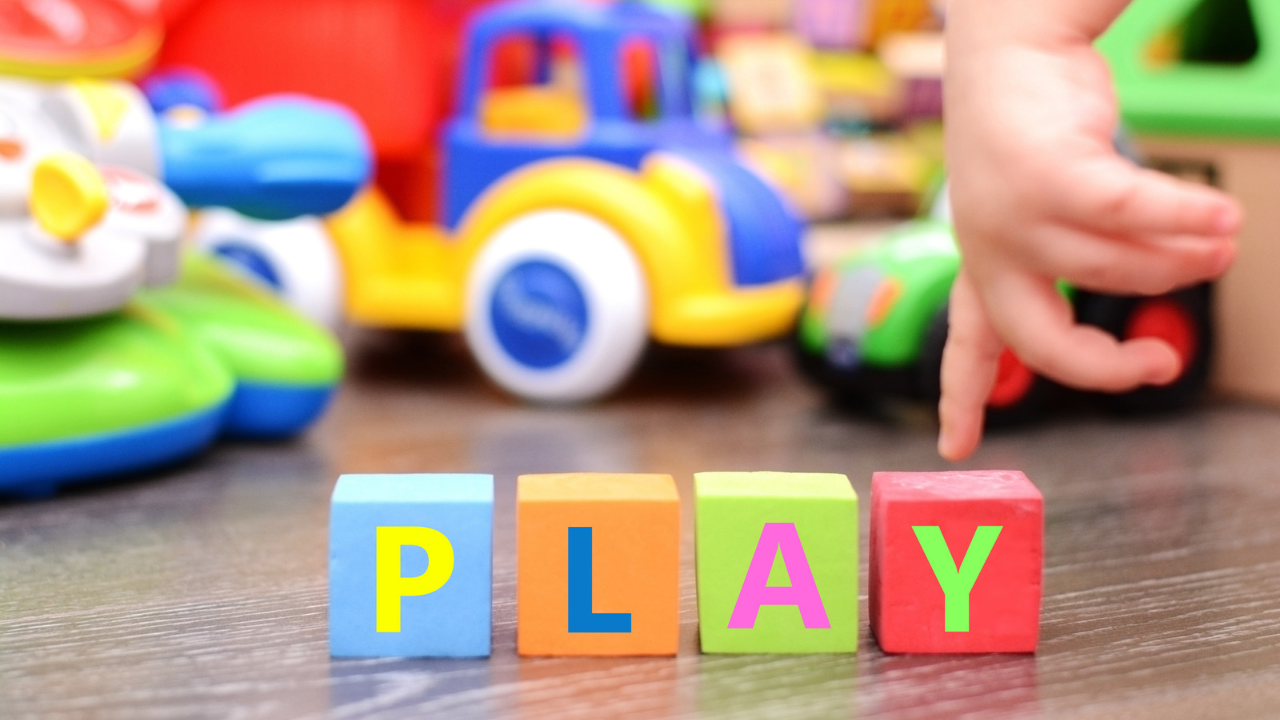
Lining up toys can be a normal part of toddler play and exploration.
Sometimes, the row is the game
Adults often assume that a toy has one obvious purpose. A car is meant to be driven. A doll is meant to be fed. Blocks are meant to become a tower.Toddlers do not necessarily see it that way.For a young child, placing five cars in a row can itself be an interesting experiment: How many fit? Which one comes next? What happens if the blue car is moved? Can the arrangement be made symmetrical?The repetition can also be satisfying. The child knows what comes next and can control the outcome.This is one reason parents need to resist the urge to immediately interrupt and demonstrate the “correct” way to play.The American Academy of Pediatrics recommends child-centred, interactive play and notes that toys are most developmentally useful when they create opportunities for children and caregivers to play together, rather than when the toy itself is expected to teach a particular skill.So if a toddler is lining up animals, a parent can simply join the game.“You have made a long line.”“First the elephant, then the lion.”“Where should the little dog go?”The goal is not to dismantle the child's arrangement. It is to enter the child's world and gently expand it.
A child's reaction when the toy arrangement is changed can offer useful developmental clues.
But there is another reason psychologists pay attention to this behaviour
Lining up toys can also form part of the restricted or repetitive behaviours seen in autism spectrum disorder (ASD).The US Centers for Disease Control and Prevention lists lining up toys or other objects and becoming upset when their order is changed among examples of restricted or repetitive behaviours associated with autism.The American Academy of Pediatrics has similarly described repetitive play patterns such as lining up cars rather than driving them, arranging crayons rather than using them for colouring, or repeatedly stacking blocks in the same sequence.But there is an important distinction here: lining up toys does not mean a child has autism.A behaviour has to be understood in the wider developmental picture.Research has repeatedly found that repetitive behaviours can occur in young children without autism too. What becomes more meaningful is the extent, persistence and combination of behaviours, particularly when repetitive play occurs alongside differences in social communication, language, flexibility or pretend play.
Look at what happens when the line is disturbed
One useful thing for parents to observe is the child's reaction when the arrangement changes.If a sibling accidentally moves a car and the toddler simply moves it back, that tells you something different from a child who becomes extremely distressed every time the order changes.The CDC specifically highlightsbecoming upset when the arrangement of lined-up objects is changed as a behaviour that can occur in autism.Researchers have also found that repetitive behaviour in toddlers who later receive an autism diagnosis can be more frequent or pronounced than in children who do not.A longitudinal study of 250 toddlers - including 190 children at high familial likelihood for autism and 60 low-risk controls - found that children later diagnosed with autism showed higher rates of repetitive behaviours from around 12 months. The researchers also stressed that some repetitive behaviour is part of typical early development; the difference was in the extent of these behaviours.That distinction matters.A toddler who occasionally organises toys may simply enjoy patterns.
A toddler who spends much of their play repeatedly arranging objects, becomes highly distressed when the arrangement changes and shows little interest in other forms of play may warrant a closer developmental look.
The bigger clue may be what the child does after lining them up
Developmental researchers are increasingly interested not just in whether a child repeats an action, but in the range and complexity of their play.A child might line up six cars and then suddenly push them around the room, make engine noises, give one car to a parent and pretend that another has crashed.That is a much broader play repertoire.Another child might line up the cars, stare at their wheels, repeat the arrangement and show little interest in using the cars for other kinds of play.These patterns are not equivalent.A study published in Research in Autism Spectrum Disorders that examined object play in infants found that children later diagnosed with autism showed less sophisticated play than typically developing children.
Other research has found differences particularly in the development of symbolic or pretend play.At the same time, studies have also shown that children with autism can demonstrate functional play skills. In other words, there is no single “autistic way” of playing, and play differences can vary considerably from child to child.This is why parents should avoid turning one behaviour into a diagnosis.
What parents can do instead of saying “Don't play like that”
The simplest response is often to follow the child's lead first and gently add possibilities later.If a child lines up cars, sit beside them.Count the cars.Describe their colours.Ask which one should go first.Then, when the child is receptive, introduce a small variation: “Shall we make this one drive to the garage?”If the child joins in, follow that interest.If they reject it, there is no need for a battle.The CDC's guidance on child-led play similarly encourages parents to praise, imitate, describe and reflect the child's actions, while reducing unnecessary questions, directions and criticism.This approach also gives parents something valuable: information.Over several days or weeks, they can observe whether the child gradually moves between different types of play or remains unusually fixed on one repetitive pattern.
When should parents speak to a paediatrician?
Parents do not need to panic because a toddler likes straight lines.But it is worth discussing the behaviour with a paediatrician if repetitive play is persistent and unusually rigid, particularly when it appears alongside other developmental concerns.These can include limited response to name, reduced pointing or sharing of interests, limited eye contact or social engagement, delayed language, little pretend play for the child's developmental stage, strong distress over small changes, or repetitive movements and sensory behaviours.The CDC and AAP both emphasise that autism involves a broader pattern of social-communication differences and restricted or repetitive behaviours - not one isolated habit.And there is a reason developmental professionals encourage parents to raise concerns early rather than simply “wait and see”. Early evaluation can help identify whether a child needs support, even when the eventual explanation is not autism.For parents, perhaps the most useful shift is this: don't ask only what the toddler is doing with the toys. Watch what the toddler is learning, communicating and trying to do with them.A perfectly straight row of cars may be nothing more than a toddler discovering order.Sometimes, however, that row is one small piece of a much larger developmental picture.The row itself is not the answer. The child's relationship with the row is what parents should notice.
KioskNews shows a cleaned-up reading view extracted from the publisher’s page — the original always lives on their site, not ours.